
Below is the complete list of Carolyn Keene’s Nancy Drew books in order. For this series, the chronological reading order is the same as the order of publication.
Publication Order of Nancy Drew Mystery Books







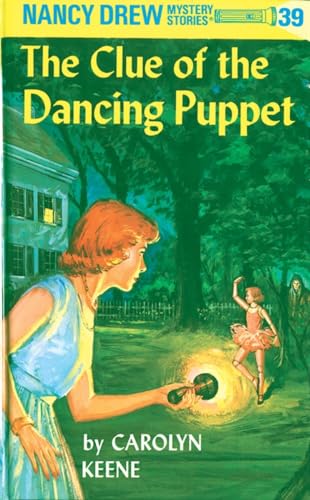





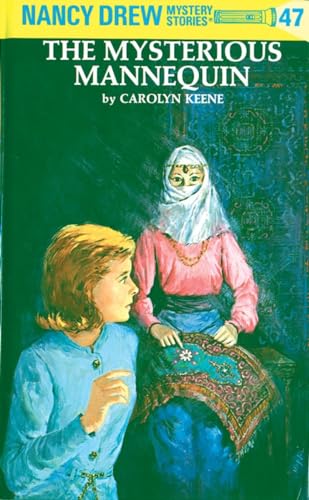







- Race Against Time (1982)
Race Against Time was published in 1982 and is listed as book #66 in the Nancy Drew Mystery series. 
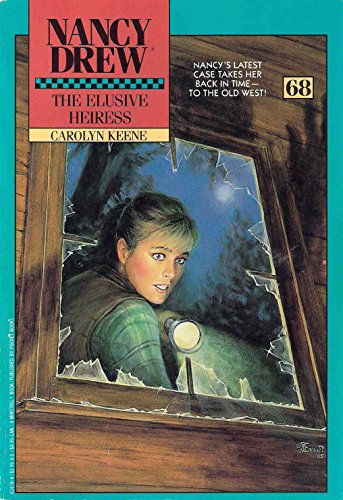



- The Double Horror of Fenley Place (1987)
In the Nancy Drew Mystery series, The Double Horror of Fenley Place is book #79 and was published in 1987. 
- The Mardi Gras Mystery (1988)
The Mardi Gras Mystery was published in 1988 and is listed as book #81 in the Nancy Drew Mystery series. - The Clue in the Camera (1988)
Published in 1988, The Clue in the Camera is listed as book #82 in the Nancy Drew Mystery series. - The Case of the Vanishing Veil (1988)
The Case of the Vanishing Veil is a 1988 release and appears as book #83 in the Nancy Drew Mystery series. 

- The Mystery of Misty Canyon (1988)
The Mystery of Misty Canyon was published in 1988 and is listed as book #86 in the Nancy Drew Mystery series. 








- The Mystery at Magnolia Mansion (1990)
Published in 1990, The Mystery at Magnolia Mansion is listed as book #97 in the Nancy Drew Mystery series. 
- The Secret at Seven Rocks (1991)
In the Nancy Drew Mystery series, The Secret at Seven Rocks is book #99 and was published in 1991. - A Secret in Time (1991)
A Secret in Time was first published in 1991; within the Nancy Drew Mystery series, it is listed as book #100. 








- The Suspect in the Smoke (1993)
The Suspect in the Smoke was first published in 1993; within the Nancy Drew Mystery series, it is listed as book #115. 





- The Message in the Haunted Mansion (1994)
Published in 1994, The Message in the Haunted Mansion is listed as book #122 in the Nancy Drew Mystery series. 


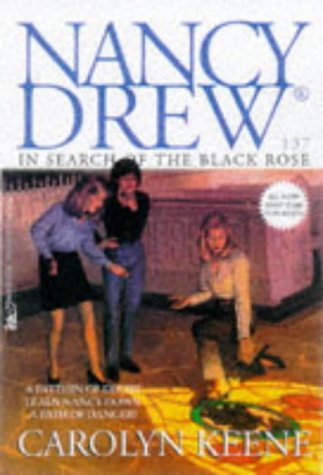


- The Wild Cat Crime (1998)
The Wild Cat Crime was published in 1998 and is listed as book #141 in the Nancy Drew Mystery series. 

- The E-Mail Mystery (1998)
In the Nancy Drew Mystery series, The E-Mail Mystery is book #144 and was published in 1998. 

- The Clue of the Gold Doubloons (1999)
In the Nancy Drew Mystery series, The Clue of the Gold Doubloons is book #149 and was published in 1999. 







- The Secret of the Fiery Chamber (2001)
In the Nancy Drew Mystery series, The Secret of the Fiery Chamber is book #159 and was published in 2001. 
- Lost in the Everglades (2001)
Lost in the Everglades was published in 2001 and is listed as book #161 in the Nancy Drew Mystery series. 
- The Clues Challenge (2001)
The Clues Challenge is a 2001 release and appears as book #163 in the Nancy Drew Mystery series. 

- The Case of the Creative Crime (2002)
The Case of the Creative Crime was published in 2002 and is listed as book #166 in the Nancy Drew Mystery series. 



- Intrigue at the Grand Opera (2003)
Intrigue at the Grand Opera was published in 2003 and is listed as book #171 in the Nancy Drew Mystery series. 




About Nancy Drew Mystery
Nancy Drew is one of the longest-running juvenile mystery characters in American publishing, first appearing in 1930 in The Secret of the Old Clock. Created through Edward Stratemeyer’s Stratemeyer Syndicate, Nancy was conceived as a teenage counterpart to the already successful Hardy Boys. The name Carolyn Keene was created as a house pseudonym, allowing many writers to contribute while every book appeared to come from the same author. Mildred Wirt Benson wrote the first Nancy Drew manuscript and 23 of the first 30 books, giving the early detective much of the independence, courage, and determination that became her defining personality.
The classic mysteries establish Nancy in River Heights, where she lives with her widowed lawyer father, Carson Drew, and housekeeper Hannah Gruen. Her investigations regularly involve her close friends and cousins Bess Marvin and George Fayne, while Ned Nickerson becomes her enduring romantic interest. Nancy has no formal police position; she becomes involved because someone needs help, an unexplained event catches her attention, or one of Carson’s legal matters opens the door to a larger mystery. Hidden inheritances, missing people, coded messages, secret passages, stolen valuables, impersonation, old houses, and apparently supernatural disturbances give the early books their recognizable mixture of detection and adventure.
The original Nancy Drew Mystery Stories also changed substantially during their long publication life. After Edward Stratemeyer’s death, his daughter Harriet Stratemeyer Adams became increasingly responsible for directing the series, preparing outlines, editing manuscripts, and writing stories herself. Beginning in 1959, many early books were extensively revised and shortened. The newer texts modernized language and pacing and removed objectionable racial and ethnic stereotypes, but they also changed scenes, characterization, clues, and sometimes large portions of the original plots. Consequently, an early printing and a later edition carrying the same title can represent noticeably different reading experiences rather than simple cosmetic reissues.
Nancy herself proved remarkably adaptable. The classic books generally present an exceptionally capable young detective who drives, travels independently, questions suspects, follows physical clues, and repeatedly places herself in dangerous situations without surrendering control of the investigation to adults. Later publishing lines retained that essential confidence while altering the surrounding world. The Nancy Drew Files introduced more contemporary teenage relationships and darker crimes, including murder, alongside familiar mystery plots. Nancy Drew Notebooks and later Nancy Drew and the Clue Crew reimagined Nancy as a younger detective for beginning readers.
Nancy Drew: Girl Detective provided another substantial modernization, placing Nancy in contemporary settings and changing aspects of the storytelling while retaining Bess, George, River Heights, and Nancy’s compulsion to investigate. Nancy Drew Diaries subsequently offered another refreshed interpretation, again presenting Nancy, Bess, and George solving sabotage, kidnappings, thefts, disappearances, and other mysteries for a new generation. These branches should be viewed as separate incarnations of the character rather than one uninterrupted chronology in which Nancy continually ages and remembers every previous case.
That publishing history explains the unusual scale of the Nancy Drew bibliography. There is a recognizable classic foundation beginning with The Secret of the Old Clock, but surrounding it are revisions, spin-offs, younger-reader series, more mature mysteries, crossovers, special editions, and successive modernizations. The continuity is therefore the character rather than a single developing life story. Across changing writers and eras, Nancy remains recognizable through her curiosity, resourcefulness, independence, loyalty to her friends, and refusal to leave an unexplained mystery alone—qualities strong enough to keep the Carolyn Keene identity and Nancy Drew herself in print for generations.