
Below is the complete list of Blake Crouch books in order. For each series, the chronological reading order is the same as the order of publication.
Publication Order of Wayward Pines Books


Publication Order of Andrew Z. Thomas/Luther Kite Books


Publication Order of Letty Dobesh Books

Publication Order of Letty Dobesh Chronicles Collections Books
Publication Order of Serial Books
with Jack Kilborn, J.A. Konrath


Publication Order of Standalone Books





Publication Order of Short Stories/Novellas Books
- ’69 (2010)
’69 was published in 2010 and is listed as book #1 in the Short Stories/Novellas series. - Shining Rock (2010)
Published in 2010, Shining Rock is listed as book #2 in the Short Stories/Novellas series. 


- Unconditional (2011)
Published in 2011, Unconditional is listed as book #7 in the Short Stories/Novellas series. 
Publication Order of Short Story Collections Books
- Four Live Rounds (2010)
Four Live Rounds was published in 2010 and is listed as book #1 in the Short Story Collections series. 
Publication Order of Forward Books


Publication Order of Jacqueline “Jack” Daniels Books




About Blake Crouch
Blake Crouch is an American bestselling novelist and screenwriter whose work combines psychological suspense, science fiction, horror, and high-concept thrillers. Best known for the Wayward Pines trilogy, Dark Matter, Recursion, and Upgrade, he creates stories in which ordinary people confront extraordinary circumstances that challenge their understanding of reality. His fiction frequently explores identity, memory, free will, and the consequences of scientific discoveries, balancing complex ideas with fast-paced narratives and emotionally compelling characters.
Born William Blake Crouch on October 15, 1978, in Statesville, North Carolina, he grew up in the surrounding area and attended North Iredell High School. He later studied at the University of North Carolina at Chapel Hill, graduating in 2000 with degrees in English and creative writing.
Crouch began his literary career writing dark crime fiction and psychological horror. His debut novel, Desert Places (2004), introduces Andrew Z. Thomas, a successful novelist whose life collapses when a mysterious blackmailer forces him into a confrontation with a sadistic killer. Its sequel, Locked Doors (2005), continues the disturbing storyline involving Thomas and serial murderer Luther Kite.
These early works established Crouch’s interest in morally complicated characters, escalating danger, and situations where familiar assumptions about personal safety suddenly become meaningless. He subsequently expanded into standalone thrillers, including Abandon (2009), which explores the mysterious disappearance of an entire Colorado mining community, and Snowbound (2010), a suspense novel involving a husband’s desperate search for his missing wife.
His international breakthrough came with Pines (2012), the opening novel of the Wayward Pines trilogy. The story follows Secret Service agent Ethan Burke, who arrives in the isolated town of Wayward Pines, Idaho, while investigating the disappearance of two federal agents. What initially resembles a conventional mystery gradually reveals a disturbing reality involving surveillance, imprisonment, and the future of humanity.
The trilogy continued with Wayward (2013) and The Last Town (2014), establishing Crouch’s reputation for blending psychological suspense with ambitious science-fiction concepts. The novels inspired the Fox television series Wayward Pines, which premiered in 2015, with M. Night Shyamalan serving as an executive producer.
Crouch achieved further recognition with Dark Matter (2016), a science-fiction thriller centred on physicist Jason Dessen, whose ordinary family life is disrupted when he encounters an alternative version of his existence. Drawing upon ideas associated with quantum mechanics and the multiverse, the novel examines how different choices might reshape a person’s identity and relationships.
Recursion (2019) explores another challenging scientific concept through a mysterious condition that causes people to experience memories of lives they never lived. Its intertwining narratives examine the consequences of manipulating memory and altering reality, particularly when technological discoveries threaten the stability of the world.
In Upgrade (2022), Crouch turned his attention to genetic engineering. The novel follows Logan Ramsay, whose DNA is unexpectedly modified, granting him extraordinary cognitive and physical abilities. Through Logan’s experiences, Crouch considers the ethical problems surrounding human enhancement and the possibility of using biotechnology to reshape civilisation.
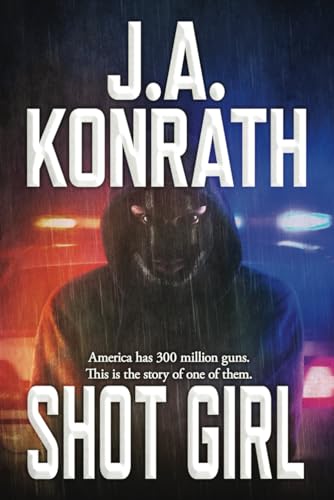
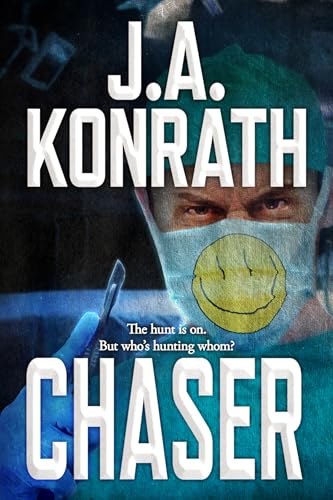
His bibliography also includes collaborations with fellow thriller writers, particularly J.A. Konrath. These projects include Draculas and Stirred, demonstrating his willingness to experiment with collaborative storytelling and different forms of horror.
Crouch has written shorter fiction featuring Letty Dobesh, a skilled thief whose criminal activities frequently place her in dangerous situations. The stories inspired Good Behavior, a TNT television series starring Michelle Dockery, which Crouch co-created with screenwriter Chad Hodge.
His work in television expanded significantly through the Apple TV+ adaptation of Dark Matter, which premiered in 2024. Crouch created the series, served as showrunner, and wrote its episodes, allowing him to develop his original narrative for a different medium.
Although his later novels are frequently classified as science fiction, Crouch approaches speculative concepts through the structure of suspense thrillers. Scientific theories establish the central dilemmas, but personal relationships, difficult decisions, and the fear of losing loved ones provide the emotional foundation.
His novels have been translated into approximately forty languages, reflecting an international readership. He lives in Colorado, whose mountainous landscapes have influenced several of his fictional settings.
Across his career, Crouch has developed a distinctive approach to speculative suspense, exploring extraordinary possibilities through characters facing recognisable human fears. Whether examining alternate realities, unreliable memories, or technological transformation, his stories repeatedly return to the question of what makes a life meaningful when everything familiar can suddenly change.