
Below is the complete list of John D. MacDonald books in order. For each series, the chronological reading order is the same as the order of publication.
Publication Order of Travis McGee Books






Publication Order of Standalone Books









- Death Trap (1957)
Published in 1957, Death Trap is listed as book #22 in the Standalone series. 


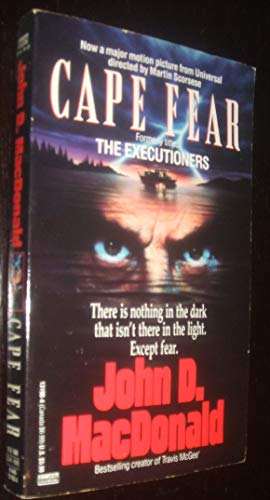


- On the Run (1962)
On the Run is a 1962 release and appears as book #38 in the Standalone series. 
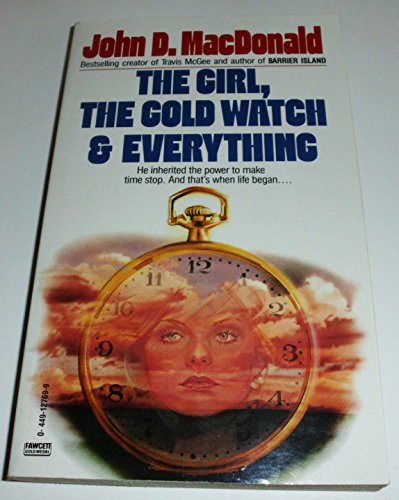


Publication Order of Short Story Collections Books

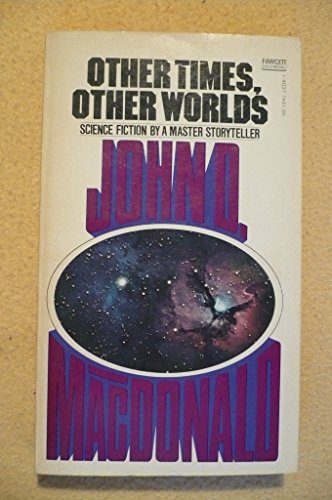


Publication Order of Short Stories/Novellas Books
- Murder Run-Around (2015)
Murder Run-Around was published in 2015 and is listed as book #1 in the Short Stories/Novellas series. - In a Small Motel (2017)
Published in 2017, In a Small Motel is listed as book #2 in the Short Stories/Novellas series. - What Christmas Did for Jerusha Grumble (2019)
What Christmas Did for Jerusha Grumble is a 2019 release and appears as book #3 in the Short Stories/Novellas series.
Publication Order of Non-Fiction Books


About John D. MacDonald
John D. MacDonald was an American novelist and short-story writer best known for the Travis McGee series, though his career encompassed dozens of stand-alone crime, suspense, and mainstream novels. A prolific postwar writer with an acute interest in greed, corruption, environmental destruction, and the darker consequences of American prosperity, MacDonald became an important bridge between hard-boiled crime fiction and the modern psychological thriller. His best-known books include The Deep Blue Good-by, The Executioners, A Flash of Green, The Last One Left, and The Girl in the Plain Brown Wrapper.
MacDonald was born in Sharon, Pennsylvania, in 1916. He studied at the Wharton School of the University of Pennsylvania before earning an undergraduate degree from Syracuse University and an MBA from Harvard Business School. During World War II, he served in the U.S. Army, including service in the China-Burma-India theater.
His fiction career began during the war after he sent a short story home to his wife. She submitted it for publication, and its acceptance helped convince MacDonald that writing could become a profession. After leaving the Army, he pursued fiction seriously and became extraordinarily productive in the magazine and paperback markets. During the late 1940s and 1950s, he published hundreds of short stories while developing a parallel career as a novelist.
His first novel, The Brass Cupcake, appeared in 1950. It was followed by a rapid succession of books exploring crime, marriage, business, social ambition, and moral compromise. MacDonald wrote within the paperback-original market without allowing its conventions to restrict his subject matter. Novels such as The Damned, Dead Low Tide, The Crossroads, and Cry Hard, Cry Fast demonstrated his ability to combine suspense with close observation of ordinary people under pressure.
One of his most enduring stand-alone works is The Executioners, published in 1957. Its story of a family terrorized by a dangerous ex-convict was adapted as Cape Fear in 1962, starring Gregory Peck and Robert Mitchum, and again in 1991 by director Martin Scorsese, with Robert De Niro and Nick Nolte.
MacDonald created Travis McGee in 1964 with The Deep Blue Good-by. Living aboard a houseboat called The Busted Flush in Fort Lauderdale, McGee describes himself as a “salvage consultant.” He recovers money or property that has been taken from people who have little conventional hope of getting it back, retaining a portion of what he retrieves. The premise gave MacDonald enormous flexibility, allowing McGee to move through different levels of Florida society while encountering fraud, exploitation, murder, and organized criminal schemes.
Twenty-one Travis McGee novels appeared between The Deep Blue Good-by and The Lonely Silver Rain in 1985. Their titles famously incorporate colors, from Nightmare in Pink and A Purple Place for Dying to The Green Ripper and Cinnamon Skin. McGee’s economist friend Meyer becomes a particularly important recurring character, providing both intellectual companionship and a counterweight to McGee’s solitary tendencies.
Florida is fundamental to MacDonald’s work. Long before environmental concerns became routine in popular crime fiction, he wrote critically about uncontrolled development, disappearing wilderness, speculative construction, pollution, and the transformation of the state’s coastline. The changing Florida surrounding Travis McGee becomes almost a continuing character in the series.
MacDonald received the Mystery Writers of America’s Grand Master Award in 1972, recognition of an influence that extended well beyond his own generation. Writers including Carl Hiaasen and Stephen King have acknowledged his importance, and the Travis McGee novels helped establish Florida as one of the major landscapes of modern American crime fiction.
MacDonald died in 1986 at the age of seventy. He left behind a remarkably large body of novels and short fiction, but Travis McGee remains his defining creation. Through McGee—and through his darker stand-alone novels—MacDonald wrote about more than solving crimes. His enduring subject was what people do when money, desire, fear, and opportunity loosen the restraints of ordinary morality, and what those choices reveal about the society that made them possible.