
Below is the complete list of John D. MacDonald’s Travis McGee books in order. For this series, the chronological reading order is the same as the order of publication.
Publication Order of Travis McGee Books






About Travis McGee
John D. MacDonald’s Travis McGee series is a landmark of American crime fiction, comprising twenty-one novels published between The Deep Blue Good-by in 1964 and The Lonely Silver Rain in 1985. Set largely in Florida, the books follow McGee, a self-described “salvage consultant” who recovers money and property for people who have been cheated or robbed when conventional legal remedies offer little hope. Part detective, part adventurer, and deliberately outside ordinary professional life, McGee became MacDonald’s defining character and an important influence on later generations of crime writers.
McGee lives aboard The Busted Flush, a houseboat he won in a poker game and keeps at Bahia Mar marina in Fort Lauderdale. He rejects the conventional pattern of working continuously toward retirement, preferring to take his retirement “in installments.” When his money begins running low—or when someone’s predicament captures his attention—he accepts another salvage job.
His usual arrangement is straightforward: if something valuable has been wrongfully taken and McGee can recover it, he keeps half. The cases, however, rarely remain simple financial recoveries. They lead him toward con artists, violent criminals, manipulators, corrupt businessmen, predators, and people whose respectable appearances conceal considerably darker behavior.
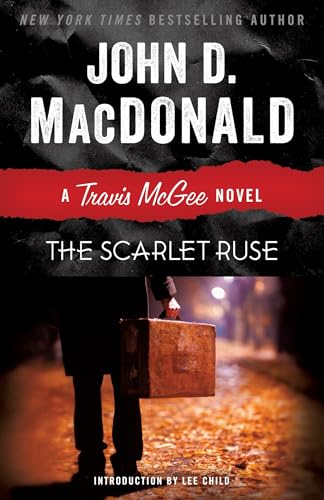
The Deep Blue Good-by establishes the formula as McGee attempts to recover a hidden fortune taken from a woman by the dangerous Junior Allen. It also establishes the mixture that would sustain the series: investigation, physical danger, psychological observation, sexuality, social criticism, and McGee’s extensive reflections on the changing world around him.
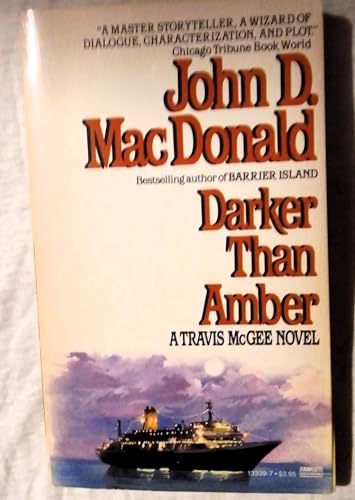
The early books followed rapidly, including Nightmare in Pink, A Purple Place for Dying, The Quick Red Fox, A Deadly Shade of Gold, and Bright Orange for the Shroud. MacDonald gave every McGee title a color reference, creating one of crime fiction’s most recognizable naming patterns. Later entries include Darker than Amber, The Girl in the Plain Brown Wrapper, The Long Lavender Look, The Turquoise Lament, The Green Ripper, and Cinnamon Skin.
Although each novel presents a largely self-contained case, McGee is not reset to his original condition after every adventure. Relationships, injuries, grief, friendships, and accumulated experience carry forward. The consequences of violence matter, and his attitudes evolve as he grows older. For that reason, publication order provides a richer reading experience even though many individual books can be enjoyed independently.
The most important recurring relationship is McGee’s friendship with Meyer, an economist who lives aboard another boat at Bahia Mar. Meyer is thoughtful and analytical where McGee is more instinctive and physically capable, but he is far more than a convenient source of information. Their conversations about economics, society, human behavior, and Florida give the series much of its intellectual character, while later events demonstrate the depth of their friendship.
Florida itself undergoes an equally important transformation across the twenty-one novels. McGee watches development consume coastline and wilderness as condominiums, roads, speculative real estate, and commercial interests reshape the state. MacDonald’s concern with environmental destruction appears throughout the series, giving the books a continuing historical dimension beyond their individual crimes.
Later installments increasingly confront McGee with the cost of the life he has chosen. The Green Ripper pushes him into an unusually personal and violent struggle, while Free Fall in Crimson and Cinnamon Skin continue to test his relationships and assumptions. The final novel, The Lonely Silver Rain, makes discoveries about McGee’s personal life that suggest significant changes ahead rather than providing a conventional farewell.
MacDonald died in 1986 without writing another installment, leaving The Lonely Silver Rain as the conclusion to the series. There is therefore no separately written finale resolving every possibility raised by the last book.
The Travis McGee novels endure because their central character is more complicated than the series’ adventure framework suggests. McGee can fight, investigate, and outmaneuver criminals, but he is also an observer troubled by what he sees happening to people and places around him. Across twenty-one books, his salvage work becomes MacDonald’s means of examining an America transformed by money, development, consumption, and opportunism—with The Busted Flush providing McGee a temporary refuge from a world he knows he can never completely escape.