
Below is the complete list of Blake Pierce’s Amber Young books in order. For this series, the chronological reading order is the same as the order of publication.
Publication Order of Amber Young Books

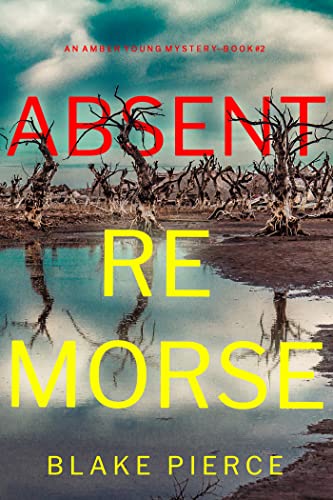
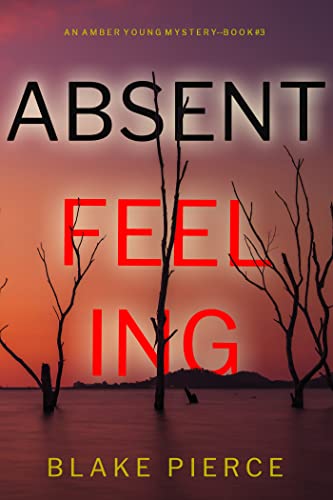


About Amber Young
Blake Pierce’s Amber Young series gives the familiar FBI serial-killer thriller an unusual intellectual center. Amber begins not as a law-enforcement officer, behavioral profiler, or field investigator, but as a brilliant newspaper puzzle editor who prefers quiet work and little public attention. Her talent for recognizing concealed structures becomes unexpectedly valuable when she detects a cipher hidden in plain sight and realizes that a murderer is communicating through coded clues. The discovery draws her into an FBI investigation and begins her transformation from reclusive civilian specialist to federal agent.
That professional transition defines more than the opening premise. Amber possesses an exceptional ability to identify patterns, test possible solutions, and recognize when an apparently meaningless detail belongs to a larger design. These skills allow her to approach crime scenes differently from investigators trained primarily through conventional police work. Where others may see disconnected symbols, drawings, letters, or arrangements, she searches for rules governing how those elements fit together.
The killers she confronts deliberately exploit that ability. Their crimes frequently include riddles, ciphers, visual symbols, word games, or carefully constructed physical puzzles that reveal something about the next intended victim. One case turns on a mysterious drawing, another on a seemingly incoherent word search, while later investigations involve an “impossible” puzzle, an elaborate arrangement of ropes, and murders structured around Zodiac imagery. The clues are not merely decorative signatures. They create deadlines, turning the act of interpretation into a race against another death.
Amber’s intelligence does not make her naturally comfortable with the role she acquires. She begins as shy, private, and accustomed to solving problems at a distance, while FBI work places her inside violent situations where mistakes have immediate human consequences. A newspaper puzzle allows time for reflection and correction; a killer’s challenge may be designed to mislead her, flatter her confidence, or punish hesitation. The series repeatedly tests whether analytical brilliance remains reliable when fear, exhaustion, and responsibility distort the process.
This contrast also distinguishes Amber from Pierce’s more experienced FBI protagonists. She must learn the practical demands of investigation while adapting abilities developed in a very different environment. Pattern recognition may produce the crucial insight, but it does not automatically teach her how to interview witnesses, operate within a federal team, assess physical danger, or understand a murderer who changes the rules deliberately. Her growth comes from integrating her specialized mind with the judgment required in the field.
The individual novels generally introduce separate killers and central investigations, allowing each installment to deliver a complete contest of clues and deduction. Publication order nevertheless provides the strongest progression because Amber’s identity changes across the sequence. She moves from an obscure editor unexpectedly assisting the Behavioral Analysis Unit to an FBI special agent increasingly recognized for expertise few colleagues can duplicate. The cases become tests not only of whether she can solve a puzzle, but of what repeated exposure to calculated violence does to someone whose mind cannot easily stop searching for patterns.
The series currently extends beyond the seven books displayed on Pierce’s original series page, with Absent Humanity published as the eighth installment. That later case retains the essential structure established at the beginning: a highly organized killer leaves cryptic material, conventional investigation reaches its limits, and Amber must determine whether the puzzle is a path to the truth or another mechanism of control.
At its core, the Amber Young series treats intelligence as both an advantage and a vulnerability. Amber can see connections that remain invisible to others, but every murderer who recognizes her gift gains an opportunity to challenge, manipulate, or personally target the person attempting to decode them.