
Below is the complete list of Blake Pierce’s Zoe Prime books in order. For this series, the chronological reading order is the same as the order of publication.
Publication Order of Zoe Prime Books
as Stella Gold




About Zoe Prime
Blake Pierce’s Zoe Prime series is a six-book FBI thriller sequence built around an agent who experiences the world through numbers. Zoe instinctively notices measurements, distances, sequences, proportions, and mathematical relationships that remain invisible to most people. The ability makes her exceptionally valuable when serial killers construct crimes around hidden patterns, but it also isolates her socially and places enormous strain on her private life. What colleagues see as remarkable intuition is actually the result of a condition Zoe conceals because she fears being judged incapable of serving in the FBI.
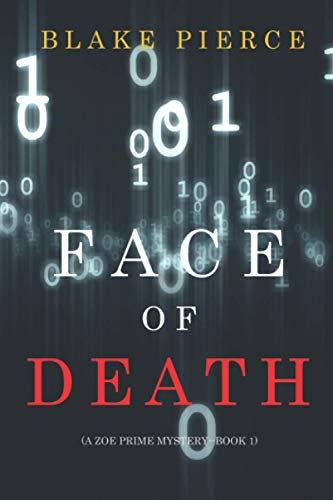
Face of Death introduces that conflict through a series of apparently random murders across the Midwest. Women are strangled in remote locations, leaving investigators unable to identify a connection between the victims or crime scenes. Zoe expects numbers to reveal the design, as they usually do, but the absence of an obvious pattern unsettles her. The case becomes a contest between two obsessive minds, forcing her to consider whether the killer is using mathematics deliberately or creating disorder specifically to frustrate someone who depends upon structure.
That tension continues throughout the series. Numbers are both Zoe’s investigative language and the source of her distress. She cannot simply switch off the calculations shaping how she perceives rooms, people, objects, and movement. Patterns provide clarity during an investigation, yet they interfere with ordinary conversation, intimacy, and emotional judgment. Zoe understands evidence more comfortably than social behavior, making killers motivated by jealousy, humiliation, desire, or family conflict especially difficult for her to interpret.
The individual cases repeatedly challenge the limits of her talent. Victims are branded with unexplained numbers around Washington, D.C., while murders involving heavily tattooed women in Los Angeles appear to contain no meaningful connection. A case in Zoe’s home state of Nebraska resembles the methods of a notorious real-world killer but may depend more on social motives than mathematical order. Later crimes involve a carved symbol that could relate to pi and murders in Salem staged according to dates and details associated with the historic witch trials.
These investigations prevent the numerical premise from becoming a simple device that automatically produces answers. Patterns can be incomplete, accidental, or deliberately misleading. A theory may fit several crime scenes and then collapse when another victim is found. Zoe must learn to combine calculation with behavioral analysis, witness testimony, and the less predictable motives governing human relationships. Her development lies not in abandoning the way her mind works, but in accepting that numbers cannot explain every form of violence.
Her psychological health creates the larger continuity between the cases. Therapy, professional pressure, difficult family relationships, and fear of exposure accumulate across the six novels. Returning to Nebraska forces Zoe to confront parts of her background she would rather avoid, while repeated immersion in patterned murder threatens to intensify the very tendencies she struggles to control. Publication order preserves that gradual strain and the changing way she understands her condition.
The books were initially released under the author name Stella Gold before being reassigned to Blake Pierce. Editions carrying either name belong to the same Zoe Prime sequence rather than separate versions of the story.
Zoe’s central struggle is not whether she is intelligent enough to catch another murderer. It is whether she can use the relentless order inside her mind without allowing it to consume the parts of life that refuse to behave like an equation.