
Below is the complete list of Blake Pierce’s Kari Blackhorse Suspense Thriller books in order. For this series, the chronological reading order is the same as the order of publication.
Publication Order of Kari Blackhorse Suspense Thriller Books


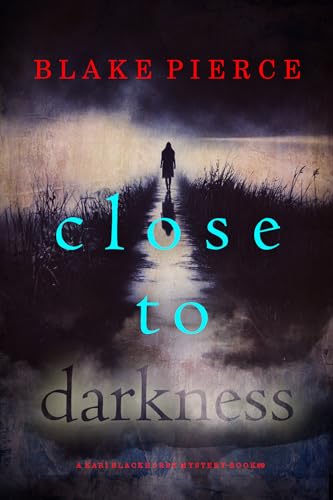


About Kari Blackhorse Suspense Thriller
Blake Pierce’s Kari Blackhorse series follows a Navajo tribal detective investigating ritualized murders across Arizona’s deserts, reservation communities, and contested landscapes. The novels combine police procedure with psychological suspense, placing Kari between modern forensic investigation and cultural traditions that outsiders may misunderstand, exploit, or deliberately imitate. Beginning with Close By, the published sequence extends through twelve installments, each built around a distinct case while maintaining Kari’s personal connection to the land and people affected by the crimes.
The opening investigation establishes the series’ central tension. A succession of desert murders appears to have been staged with ceremonial precision, confronting Kari with symbols that may reflect genuine belief, calculated deception, or a killer’s distorted interpretation of tradition. Her task is not simply to recognize cultural references but to determine why they were chosen and who benefits when fear of the supernatural distracts attention from human motives.
Kari’s heritage gives her knowledge that many investigators lack, yet it does not provide effortless answers. She understands that traditions cannot be reduced to clues in a murder puzzle and that communities accustomed to outside scrutiny may have good reasons to distrust official questioning. At the same time, she cannot allow respect, family loyalty, or uncertainty to prevent her from following evidence. The series repeatedly places her in situations where cultural understanding and professional responsibility support one another but can also pull in different directions.
The landscape is an active part of the investigations. Abandoned mines preserve evidence connected to older violence, pipeline routes cross sacred ground, and isolated desert spaces allow killers to conceal bodies or create scenes intended to appear mystical. Other cases lead Kari toward tribal boarding-school history, disputed development, wealthy resorts built on desecrated land, suburban communities disconnected from their Indigenous ancestry, and victims whose lives carry them beyond the reservation.
These settings allow the books to connect present-day murder with unresolved historical pressures. In Close Call, a crime at an abandoned mine exposes links to Kari’s father and the land’s violent past. Close to Him begins with bodies found near an old tribal boarding school, while later stories involve a reservation runaway drawn into the Los Angeles modeling world and Indigenous artists transformed into macabre installations across New Mexico. The crimes remain fictional thriller constructions, but their motives often grow from exploitation, suppressed history, commercial ambition, or the deliberate misuse of cultural identity.
Most installments resolve their central investigation, making the immediate mystery understandable without extensive preparation. Publication order nevertheless gives Kari’s development greater weight. Her family history, relationship with ancestral traditions, standing within law enforcement, and experience navigating distrust accumulate across the series. Later cases assume a detective who has repeatedly seen how symbols can carry authentic meaning while also being manipulated by murderers seeking camouflage or control.
Pierce writes the novels as rapid suspense thrillers, emphasizing unusual crime scenes, urgent searches for the next victim, escalating danger, and revelations that repeatedly change the apparent pattern. What distinguishes Kari from his many FBI and police protagonists is the responsibility she carries when a crime touches Indigenous belief or history. She must pursue justice without allowing victims and communities to become merely exotic elements within someone else’s story.
The Kari Blackhorse series is therefore strongest when its mysteries force her to interpret two forms of evidence at once: the physical traces left by the killer and the deeper history surrounding the place where the violence occurred. Her challenge is not to choose between tradition and modern investigation, but to recognize when either one is being distorted to hide the truth.