
Below is the complete list of Susan Mallery’s Buchanans books in order. For this series, the chronological reading order is the same as the order of publication.
Publication Order of Buchanans Books



About Buchanans
Susan Mallery’s Buchanans series is a four-book contemporary romance sequence centered on the Buchanan family, a powerful Seattle restaurant dynasty shaped by ambition, rivalry, obligation, and old emotional damage. The books are Delicious, Irresistible, Sizzling, and Tempting, and together they form one of Mallery’s earlier family-based romance series before the broader community worlds of Fool’s Gold, Happily Inc, Blackberry Island, and Wishing Tree. The series is compact, but it has many of the ingredients that would become familiar in her later work: complicated siblings, difficult family loyalty, second chances, guarded hearts, and the belief that love forces people to become more honest about who they are.
The Buchanan family business gives the series its structure. Restaurants are not only settings for food, work, and social glamour; they represent inheritance, control, expectation, and the weight of a family name. The Buchanans are successful, but success has not made them emotionally healthy. Much of the series’ tension comes from the gap between public polish and private resentment. These are people who know how to run businesses, protect reputations, and perform competence, but who are much less skilled at admitting fear, hurt, or need.
Delicious opens the series with a second-chance romance rooted in professional and personal history. Its restaurant setting lets Mallery combine workplace tension with old attraction, using food, kitchens, and business pressure as the backdrop for unresolved feelings. That first book establishes the series’ interest in romance as something that disrupts control. The characters may think they understand the practical arrangement in front of them, but old love and unfinished pain refuse to stay neatly in the past.
Irresistible shifts the focus within the family while continuing the pattern of guarded people being pushed toward vulnerability. Mallery often writes heroes who carry responsibility like armor, and that is especially true in the Buchanan world, where duty to family can become a way of avoiding emotional risk. The romance works not because attraction is surprising, but because trust is difficult. In this series, love usually requires characters to loosen their grip on self-protection and admit that independence has sometimes become loneliness.
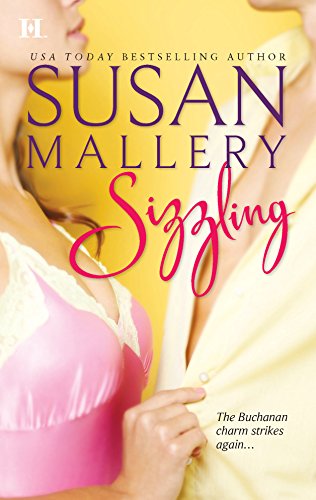
Sizzling adds another angle to the family dynamic, bringing glamour, physical attraction, and personal reinvention into contact with deeper insecurity. Mallery’s romances in this period often move quickly and warmly, but they are not only about chemistry. They are about the stories people tell themselves to survive rejection, disappointment, or family judgment. The Buchanan siblings and those drawn into their orbit have to decide whether they want the appearance of a successful life or the risk of a more truthful one.
Tempting closes the sequence by widening the emotional consequences of the Buchanan family history. Like many final books in a family romance series, it carries extra weight because it must satisfy both the central couple’s story and the larger sense of family resolution. The novel completes the series’ movement from control toward connection, allowing the Buchanan name to mean something more than pressure, wealth, and old wounds.
The Buchanans books are best read in publication order because each romance stands on its own while contributing to the larger family portrait. The emotional continuity matters: siblings, business ties, resentments, and family revelations build across the four novels. Readers can enjoy an individual book as a self-contained romance, but the full series works best as a progression through a family learning, imperfectly, how to stop treating love as another problem to manage.
The series remains a useful entry point into Mallery’s earlier contemporary romance voice. It is less expansive than Fool’s Gold and less women’s-fiction-oriented than Blackberry Island, but it shows her interest in the same enduring subject: people who look capable from the outside, yet still need love, forgiveness, and a place where they no longer have to perform.