
Below is the complete list of Anne Perry’s Charlotte and Thomas Pitt books in order. For this series, the chronological reading order is the same as the order of publication.
Publication Order of Charlotte & Thomas Pitt Books


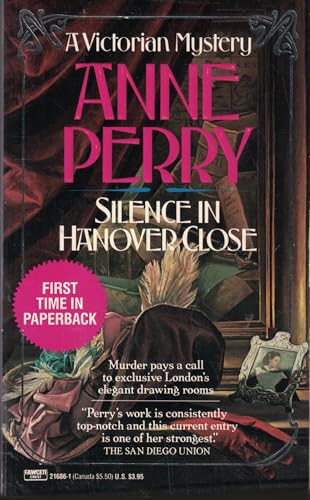
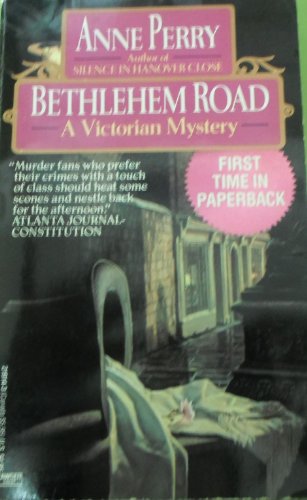


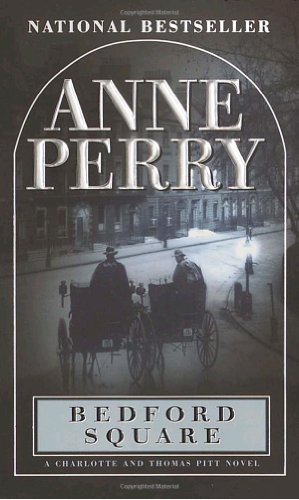
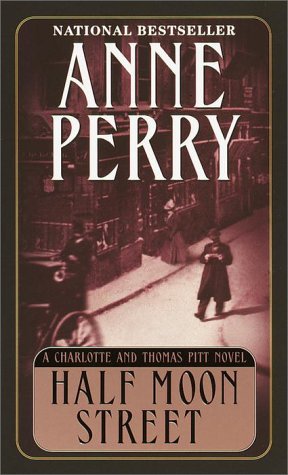


About Charlotte & Thomas Pitt
Anne Perry’s Charlotte and Thomas Pitt novels form one of the central achievements in modern historical mystery. The series begins with The Cater Street Hangman and unfolds across Victorian London, but its staying power comes from more than period atmosphere. What makes these books distinctive is the way Perry uses crime to expose the tensions inside respectable society: class anxiety, family pressure, sexual hypocrisy, political power, religious influence, and the quiet brutality hidden behind good manners. The murders matter, but so does the world that produces them.
At the center are Thomas Pitt and Charlotte, whose partnership gives the series its shape and range. Thomas begins as a police inspector moving through a society that does not fully welcome him. He is intelligent, observant, and professionally steady, but his work constantly brings him into drawing rooms and institutions built to keep men like him at a distance. Charlotte, first introduced from within that more privileged world, becomes just as important to the series’ identity. She is not merely an observer attached to the detective. Her social position, curiosity, and independence allow the books to investigate the domestic and conversational spaces that formal police work cannot easily reach. Over time, the series becomes as much about their marriage and shared moral intelligence as it is about any single case.
Publication order matters here because this is not a static mystery series where the detective resets after every novel. The relationship between Charlotte and Thomas develops across the books, and so do their family connections, social standing, and responsibilities. Perry gradually deepens the emotional architecture of the series, so later novels carry more weight when read with the earlier ones behind them. The progression is not only personal. Pitt’s career changes over time, which subtly alters the scale of the stories. The earliest books often feel rooted in particular neighborhoods, households, and social circles; later entries widen into matters involving government, special branches, diplomacy, and national security. That expansion feels earned when followed in sequence.
Another reason order matters is tonal development. Early novels such as The Cater Street Hangman, Callander Square, and Paragon Walk establish the core pleasures of the series: a richly observed Victorian setting, sharp social reading, and investigations that depend on what people fear becoming known. As the series continues, the books often grow denser in political and institutional concerns, without losing the domestic and moral tensions that made the opening volumes work. What begins as a murder series set among the respectable and the compromised gradually becomes a wider portrait of how power operates in late-Victorian England.
The naming of the series can cause minor confusion. Many of the earlier volumes were commonly referred to simply as the Thomas Pitt novels or Inspector Pitt mysteries, especially because Thomas is the official investigator. But Charlotte has always been fundamental to the books, and later branding increasingly reflected that by presenting them as the Charlotte and Thomas Pitt series. That is not a separate sequence or a spin-off label; it is the same core series viewed with fuller emphasis on the partnership at its heart.
The books are also notable for how strongly they connect setting and title. Many titles are tied to London locations, which reinforces Perry’s interest in the city as more than backdrop. Streets, squares, crescents, and districts become markers of social geography. Each case is rooted in a particular corner of Victorian life, and each setting reveals its own codes of silence.
For readers who already have the list in front of them, the real reward of this series is watching how Perry builds continuity without sacrificing the force of the individual mysteries. These novels are not only about solving crimes. They are about reading a society that depends on concealment, and about a marriage that becomes more compelling because both partners learn, across book after book, how much truth costs.