
Below is the complete list of Joyce Carol Oates’ The Gothic Saga books in order. For this series, the chronological reading order is the same as the order of publication.
Publication Order of The Gothic Saga Books


About The Gothic Saga
Joyce Carol Oates’s Gothic Saga is a five-novel cycle in which American history is filtered through haunted families, grotesque violence, social hypocrisy, supernatural suggestion, and deliberately exaggerated forms of nineteenth-century storytelling. Beginning with Bellefleur and ultimately extending to The Accursed, the books do not form a continuous narrative with recurring protagonists. Instead, Oates uses each novel to reinvent a different branch of Gothic fiction while returning to persistent concerns with wealth, gender, power, repression, ambition, and the darker mythology surrounding American progress.
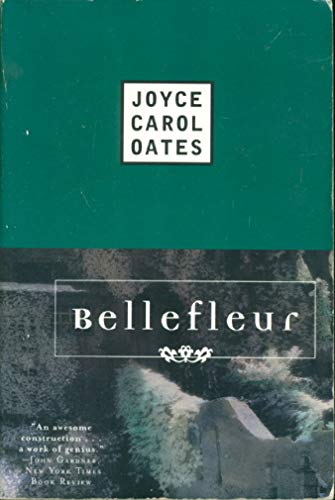
Bellefleur establishes the scale of the project through the sprawling Bellefleur family and their imposing estate in upstate New York. Generations of family history, feuds, obsessions, strange occurrences, and supernatural elements accumulate without being confined to conventional chronology. The novel has the dimensions of a dynasty saga but refuses the orderly realism normally associated with that form. Family memory becomes unstable, the fantastic exists alongside the everyday, and inherited privilege carries its own forms of corruption and menace.
Oates changes both tone and literary model in A Bloodsmoor Romance. Set in the nineteenth century and centered largely on the five Zinn sisters, it borrows the voice and conventions of sentimental and domestic fiction while simultaneously parodying them. Courtship, feminine propriety, marriage, science, sexuality, and expectations about respectable womanhood become material for a much sharper examination of the restrictions surrounding women. Its deliberately old-fashioned narration is part of the joke, but also part of the critique.
Mysteries of Winterthurn turns toward detective fiction. Its central investigator, Xavier Kilgarvan, confronts a series of disturbing crimes in the fictional Winterthurn City, yet Oates refuses to make detection synonymous with reassuring rationality. The apparent promise of the mystery form—that disorder can be explained and contained—repeatedly collides with Gothic irrationality, religious anxiety, family secrets, and violence. The result resembles a Victorian detective novel viewed through a distorted mirror.
With My Heart Laid Bare, the focus shifts to the Licht family, whose talent for deception and confidence schemes gives Oates a different route into American ambition. Their movements through changing social environments turn fraud, self-invention, money, and performance into central concerns. Rather than presenting identity as something stable, the novel treats it as something that can be manufactured, sold, altered, or weaponized. The criminal family saga consequently becomes a broader meditation on the opportunities and moral compromises associated with reinventing oneself in America.
The Accursed takes the cycle into early twentieth-century Princeton, New Jersey, where fictional characters intermingle with historical figures including Woodrow Wilson, Upton Sinclair, Jack London, and Mark Twain. Supernatural disturbance is woven into questions of class, racial prejudice, sexuality, institutional authority, and elite respectability. Although it appeared decades after the earlier volumes, the novel grew from material Oates had begun developing much earlier, making it a culmination of ideas long associated with the cycle rather than an unrelated late addition.
The Gothic Saga is therefore unified more by method and preoccupation than by plot. Oates repeatedly adopts recognizable literary forms—family chronicle, romance, detective story, criminal saga, historical Gothic—and pushes them toward parody, nightmare, and excess. The books can be read independently because their characters and central stories are separate, but together they reveal a sustained project: using Gothic distortion to expose the fears, inequalities, desires, and contradictions concealed beneath idealized versions of American history.