
Below is the complete list of Mary Kubica books in order. For each series, the chronological reading order is the same as the order of publication.
Publication Order of Standalone Books






About Mary Kubica
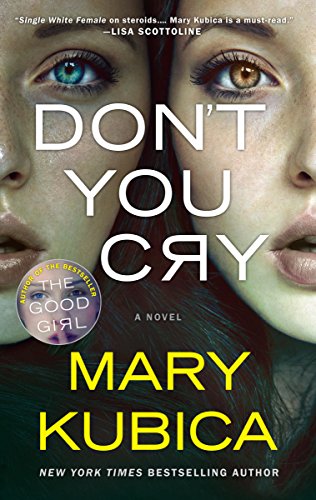
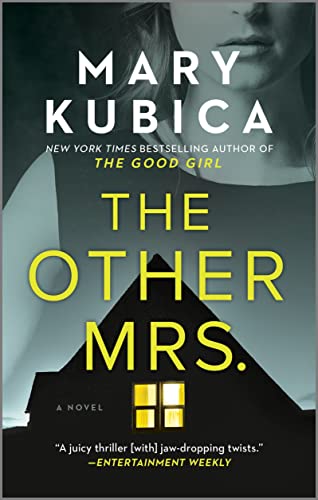
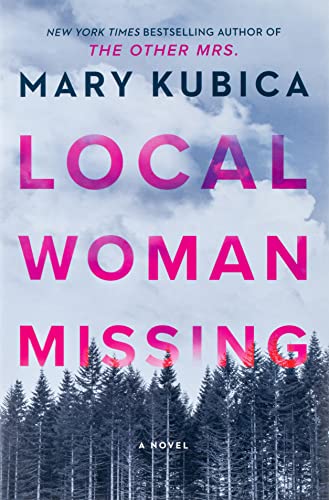
Mary Kubica is an American novelist best known for psychological thrillers built around domestic secrets, unreliable perspectives, missing people, fractured relationships, and crimes whose apparent explanations rarely survive close scrutiny. Her breakthrough came with The Good Girl in 2014, and she has since become a major name in contemporary suspense with novels including Pretty Baby, Don’t You Cry, Every Last Lie, When the Lights Go Out, The Other Mrs., Local Woman Missing, Just the Nicest Couple, and She’s Not Sorry.
Kubica grew up in the Chicago area and studied history and American literature at Miami University in Ohio. Before becoming a full-time writer, she worked in education. She has spoken about writing early in the morning and fitting fiction around family responsibilities during the years when she was trying to establish herself, a working routine that eventually produced the manuscript that became her debut.
The Good Girl introduced many of the qualities that would define her later fiction. The novel begins with the disappearance of Mia Dennett, a young woman from a prominent Chicago family, and unfolds through multiple viewpoints and shifting timelines. Rather than presenting kidnapping as a straightforward crime plot, Kubica gradually destabilizes what readers think they know about the victim, her family, and the man responsible for taking her.
That interest in perspective remains central across her work. Kubica frequently divides a story among several narrators, allowing each character to reveal only part of the truth. Memories can be incomplete, assumptions can be wrong, and apparently reliable people may be concealing information for reasons that do not become clear until much later. Her suspense often comes from reinterpretation: a detail introduced early in the novel acquires a different meaning once another character’s version of events emerges.
Chicago and its surrounding suburbs recur frequently in her fiction, giving the books a recognizable Midwestern setting even when the individual stories are otherwise unrelated. Ordinary homes, neighborhoods, schools, workplaces, and family relationships become sources of unease because danger usually develops inside environments that should feel safe.
Local Woman Missing became one of Kubica’s most widely discussed novels, using disappearances across different time periods to examine a neighborhood in which secrets have accumulated beneath an outwardly ordinary community. Just the Nicest Couple similarly begins with relationships among spouses and friends before a disappearance exposes how unreliable those relationships may be.
Her novels are generally stand-alone thrillers rather than parts of a recurring detective series. This allows Kubica to build each book around a new cast, setting, and psychological problem without requiring characters to return for another case. The common thread is tone and structure rather than continuity.
Kubica has been particularly effective at blending domestic fiction with crime. Marriage, parenthood, friendship, guilt, infidelity, grief, and resentment often matter as much as the central disappearance or murder. The crime works because it destabilizes relationships that were already carrying tension before violence entered the story.
Across her bibliography, Kubica’s strongest signature is the controlled release of information. She writes about people who believe they understand the person beside them, only to discover that familiarity is not the same as knowledge. Her thrillers repeatedly ask how well anyone can truly know a spouse, friend, neighbor, or family member—and what happens when the answer arrives only after someone has disappeared or died.