
Below is the complete list of Steve Higgs’ Blue Moon Australia books in order. For this series, the chronological reading order is the same as the order of publication.
Publication Order of Blue Moon Australia Books
with S.C. Stokes

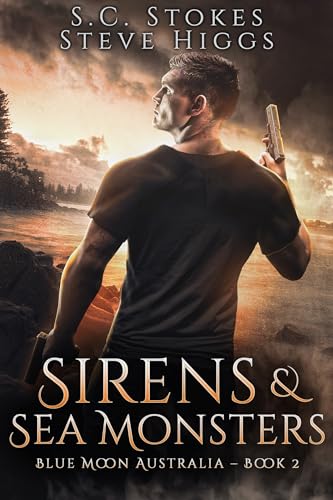




About Blue Moon Australia
Steve Higgs’s Blue Moon Australia series is an Australian branch of the wider Blue Moon Investigations universe, carrying the franchise’s combination of mystery, comedy, paranormal claims, and eccentric investigations into a new setting. Like the original British books and the other Blue Moon spin-offs, the series revolves around cases that appear to involve supernatural creatures or impossible events, only for the investigators to discover that identifying what is really happening can be considerably more complicated—and dangerous—than accepting the obvious paranormal explanation.
The series follows private investigators in Australia working under the Blue Moon banner. Their cases fit the unusual niche established by the original agency: when a client believes a ghost, monster, curse, or other supernatural force is responsible for a problem, Blue Moon is prepared to investigate. That premise gives Higgs considerable freedom to combine conventional crimes with folklore and apparent paranormal activity.
Moving the concept to Australia provides an entirely different source of legends and environments. The country’s enormous distances, isolated communities, bushland, beaches, wildlife, and distinctive folklore create natural settings for stories involving unexplained sightings, disappearances, suspicious deaths, and local tales that have acquired a life of their own.
The Australian landscape is particularly useful for Blue Moon’s style of mystery. An unexplained sound or strange figure in an English town may attract attention quickly; the same event in a remote area can remain uncertain for much longer. Distance, darkness, unfamiliar wildlife, and difficult terrain can make perfectly natural events seem extraordinary—and can also provide excellent cover for people who would prefer their activities to remain undiscovered.
As elsewhere in the Blue Moon universe, the paranormal premise does not mean that the books abandon detective work. The investigators must examine evidence, question witnesses, test competing explanations, and decide which parts of an apparently unbelievable story deserve serious attention. Higgs frequently builds humor from the contrast between what frightened witnesses believe they encountered and what an investigator thinks must have happened.
That skepticism is one of the defining characteristics of the larger franchise. Blue Moon cases often begin because conventional investigators have little interest in taking claims about supernatural activity seriously. Yet dismissing the supernatural explanation does not make the underlying problem disappear. Someone may genuinely be missing, injured, threatened, or dead, regardless of whether a legendary creature had anything to do with it.
Human manipulation therefore remains an important possibility. Folklore can be useful to a criminal because frightened people become less reliable witnesses, avoid particular locations, or explain suspicious activity for themselves. A supposed haunting or monster sighting may consequently conceal motives involving money, property, revenge, or another recognizably human concern.
The Australian branch retains Higgs’s preference for humor alongside danger. Blue Moon stories are not designed as grim horror even when their premises borrow imagery from supernatural fiction. Banter, eccentric clients, improbable situations, and the investigators’ reactions to increasingly bizarre claims keep the tone light enough to remain consistent with his other comic mysteries.
Blue Moon Australia is also designed to function as its own branch rather than requiring readers to complete the entire original Blue Moon Investigations sequence first. The shared concept connects the books to Higgs’s larger fictional world, while the Australian location and its own investigations provide a separate point of entry. Readers already familiar with Blue Moon will recognize the mixture of skepticism, supernatural possibilities, and comedy, but knowledge of every Tempest Michaels case is not necessary to understand the basic premise.
Within the Australian series, however, publication order is the strongest approach. The mysteries may focus on different cases, but recurring characters and relationships develop as the books progress. Following the sequence from the beginning preserves that development while allowing the Blue Moon operation in Australia to establish its own personality.
Blue Moon Australia demonstrates how flexible Higgs’s original concept became once it expanded beyond a single investigator and country. The setting changes, the folklore changes, and the apparent monsters change, but the central challenge remains intact. When witnesses insist that something impossible is roaming nearby, a Blue Moon investigator has to determine whether the explanation is supernatural, misunderstood, deliberately manufactured—or whether the truly dangerous creature involved is simply human.