
Below is the complete list of Joel C. Rosenberg’s Marcus Ryker books in order. For this series, the chronological reading order is the same as the order of publication.
Publication Order of Marcus Ryker Books




About Marcus Ryker
Joel C. Rosenberg’s Marcus Ryker series is a six-book geopolitical thriller sequence following a former Marine and United States Secret Service agent who becomes one of the CIA’s most valuable covert operatives. The novels move through Russia, Iran, North Korea, Israel, Lebanon, Libya, Pakistan, China, and the corridors of American power, placing Marcus inside crises capable of triggering regional wars or direct conflict between nuclear-armed nations. The sequence concludes with The Beijing Betrayal, which Rosenberg and his publisher identify as its final installment.
The Kremlin Conspiracy establishes Marcus as a man trained to protect national leaders but forced into a situation where preventing catastrophe may require killing one. A powerful Russian president is consolidating authority, eliminating opposition, and preparing an attack designed to fracture NATO before the United States can respond effectively. Marcus becomes connected to the threat through both his government service and his relationship with Oleg Kraskin, a Russian intelligence officer trapped inside the regime’s machinery. Their uneasy alliance gives the opening novels a personal center beneath the larger struggle between Washington and Moscow.
The crisis carries directly into The Persian Gamble. Russia’s aggression creates an opportunity for North Korea to transfer nuclear weapons to Iran, forcing Marcus to work with people his government has reason to distrust. His movement from former presidential protector to international operative becomes decisive here. He is no longer responsible for keeping one leader alive; he must interpret shifting alliances, recover weapons of mass destruction, and act before political leaders possess enough confirmed intelligence to authorize a response.
The Jerusalem Assassin moves the series toward the Middle East as an American peace initiative becomes the target of a sophisticated assassination campaign. Marcus and his CIA team must protect a summit in Jerusalem while senior officials associated with the plan are being killed. The novel expands the recurring conflict between diplomacy and covert action: public leaders attempt to create historic agreements while intelligence officers confront enemies who can destroy years of negotiation through one carefully timed attack.
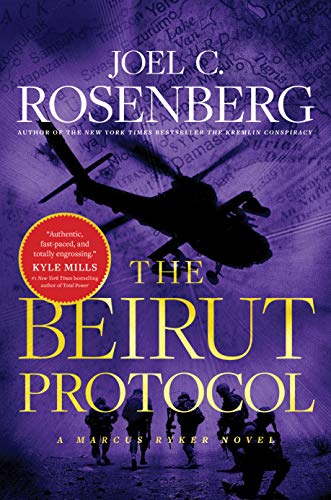
That tension becomes intensely personal in The Beirut Protocol. While preparing for a diplomatic visit connected to a potential Israeli-Saudi peace agreement, Marcus and other American operatives are ambushed along the Israel-Lebanon border and captured by Hezbollah. Stripped of institutional support and dragged toward Beirut and Tehran, Marcus must rely on endurance, fieldcraft, and responsibility toward wounded colleagues rather than the intelligence resources that usually give him an advantage.
The Libyan Diversion begins with an apparent counterterrorism success that may instead be a disastrous intelligence failure. Marcus has recommended the strike believed to have killed Abu Nakba, leader of the Kairos terror organization, only for evidence from Libya to suggest that the wrong target was destroyed. The investigation forces him to confront the human cost of decisions made through incomplete information while pursuing a network responsible for attacks in several major cities.
The final novel, The Beijing Betrayal, widens the conflict to the Pacific. As China prepares to invade Taiwan, Kairos develops a biological attack intended to kill millions of Americans and prevent Washington from defending its ally. Marcus’s pursuit of Abu Nakba converges with a superpower confrontation involving trade negotiations, military deception, and the possibility of nuclear escalation.
Publication order is essential because political administrations, intelligence partnerships, terrorist networks, personal losses, and earlier operations carry forward. Marcus changes from a disciplined protector shaped by duty into a covert operative forced to make decisions whose consequences extend far beyond his own survival. The series’ momentum comes from large geopolitical threats, but its deeper tension lies in whether one principled man can keep acting morally when every available choice risks innocent lives.