
Below is the complete list of Kim Harrison’s Peri Reed Chronicles books in order. For this series, the chronological reading order is the same as the order of publication.
Publication Order of Peri Reed Chronicles Books

- A Very Peri Reed Thanksgiving (2016)
A Very Peri Reed Thanksgiving is a 2016 release and appears as book #3 in the Peri Reed Chronicles series. 
About Peri Reed Chronicles
Kim Harrison’s Peri Reed Chronicles is a near-future science-fiction thriller series centered on an elite operative whose unusual ability to alter recent events comes with a severe cost: she cannot reliably remember what happened before reality changed. Set primarily in a technologically advanced Detroit, the series combines espionage, conspiracy, psychological suspense, and speculative science while repeatedly questioning whether memory can be trusted when other people have the power to manipulate it.
Peri Reed is a drafter, one of a rare group capable of jumping back roughly forty seconds when circumstances go badly wrong. Drafting allows her to alter the immediate past, but afterward she loses her memory of both versions of events. To function effectively, she depends on an anchor—a trained partner who helps reconstruct what occurred and stabilizes her memories. That relationship requires extraordinary trust, making betrayal particularly dangerous for someone whose own mind cannot always tell her what is real.
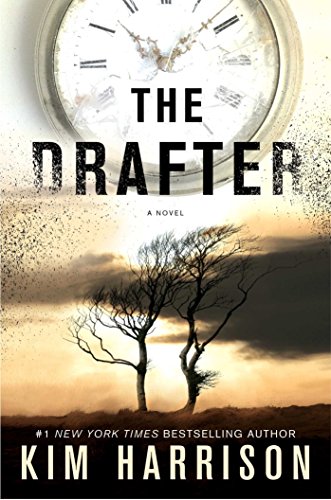
The Drafter begins with Peri working for Opti, a powerful covert organization that has shaped almost every aspect of her adult identity. She is highly trained, wealthy, confident, and accustomed to operating beyond the restrictions imposed on ordinary agents. Her certainty collapses when evidence suggests that Opti is corrupt and that she herself may have been used as part of that corruption.
The discovery leaves Peri trapped between conflicting memories and competing versions of her past. Silas Denier, a psychologist and researcher associated with the opposition to Opti, becomes important because of his understanding of drafting and memory. His theory suggests that drafters may not literally be reversing time at all, but temporarily shifting into alternate realities. Harrison deliberately keeps the speculative mechanics connected to Peri’s psychological vulnerability: the more extraordinary her ability becomes, the less certain she can be about her own experiences.
The Operator continues directly from those events. Peri has abandoned the privilege and protection of Opti and is attempting to live anonymously, but memory gaps and uncertainty make independence difficult. A drug capable of changing the way drafters retain memories appears to offer freedom from dependence on anchors. The possibility comes with another form of control, however, because addiction could make the person controlling the drug effectively control the drafter.
That conflict sharpens one of the series’ central ideas. Peri’s ability appears to make her extraordinarily powerful, yet nearly every institution around her is interested in turning that power into leverage. Opti, rival organizations, researchers, anchors, and people claiming to protect her may all have reasons to influence what she remembers and what she believes.
The novella Sideswiped provides additional background on the technology and characters before the main novels, particularly Silas and the early development of drafting research. Harrison has said it can be read before or after The Drafter, although she personally prefers it afterward. Waylaid is a separate crossover novella bringing Peri together with Rachel Morgan and Jenks from Harrison’s Hollows universe; it is supplementary rather than necessary to the main storyline.
The Peri Reed Chronicles was conceived as a trilogy, but only The Drafter and The Operator have been published as full-length novels. The intended concluding volume, The Agent, has been written but remains unpublished. Harrison has continued to list it as the third Peri Reed novel and has stated that she hopes to find a suitable route to publication.
That unfinished status leaves Peri’s larger story without its planned conclusion, but the published books still form a distinctive branch of Harrison’s bibliography. Instead of supernatural magic, they use speculative technology to create a similar problem: tremendous power becomes dangerous when using it makes the protagonist increasingly dependent on people she cannot safely trust.