
Below is the complete list of Kim Harrison’s The Shadow Age books in order. For this series, the chronological reading order is the same as the order of publication.
Publication Order of The Shadow Age Books

About The Shadow Age
Kim Harrison’s The Shadow Age is a contemporary fantasy series built around Petra Grady, a woman raised in a magical society that has always regarded her as useful but fundamentally powerless. Beginning with Three Kinds of Lucky, the series introduces a distinctive system in which casting magic produces a dangerous residue called dross. Petra’s unusual ability to handle that waste has made her a skilled sweeper, but discoveries surrounding dross eventually challenge centuries of accepted magical history and reveal that her supposed lack of talent may represent an entirely different kind of power.
Petra works at St. Unoc University, where mages study and practice magic while sweepers clean up what their spellwork leaves behind. The hierarchy seems natural to almost everyone within that society: mages create, while sweepers manage the hazardous consequences. Petra has accepted her place despite possessing an instinctive understanding of dross that more conventionally powerful magic users lack.
That balance collapses in Three Kinds of Lucky when researcher Benedict Strom recruits Petra for an experiment intended to make dross safer. Benedict understands magical theory, but Petra understands the substance itself, and their reluctant collaboration exposes weaknesses in assumptions that have governed magic for generations. After a disastrous experiment, the pair seek help from an exile associated with using dross in ways their society considers forbidden.
The deeper revelation involves shadows, intelligent beings connected to the magical waste that mages have spent centuries treating as something to destroy or contain. Petra forms an extraordinary bond with Pluck, becoming the first weaver in roughly a thousand years to openly work with shadow magic. What initially looks like an occupational distinction between mages and sweepers therefore develops into a much larger historical conflict involving suppressed knowledge, fear, and the relationship between two forms of magical power.
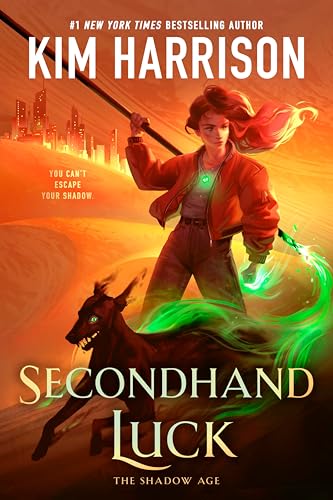
Secondhand Luck continues directly from that transformation. Months after bonding with Pluck, Petra has established an uneasy position at St. Unoc with Benedict’s support. Recognition does not mean acceptance, however. A shadow-and-weaver partnership threatens beliefs and institutions built upon the old magical order, and Petra and Pluck become convenient suspects whenever something goes wrong.
The arrival of another inexperienced weaver brings an older danger with her. Pluck recognizes the presence of Thoth, an ancient shadow connected to the original rupture between mages and weavers thousands of years earlier. His return forces Petra to investigate history that has been distorted or forgotten while confronting institutions already predisposed to distrust what she represents.
That continuing conflict gives The Shadow Age a different structure from a sequence of independent magical adventures. Petra’s discovery in the first novel fundamentally changes her position in the second, while revelations about shadows, dross, and the origins of magical prejudice carry forward. Benedict and Pluck likewise remain essential rather than functioning as temporary companions assigned to individual stories.
The series also differs substantially from Harrison’s Hollows despite sharing her interest in contemporary societies shaped by magic. The Hollows begins with supernatural species already publicly established, whereas The Shadow Age is built around people discovering that the accepted explanation of their own magical system may be wrong. Its central tension comes from who has been allowed to define legitimate magic and what happens when supposedly useless waste proves to possess intelligence and power.
At its heart, The Shadow Age is therefore about reassessing value. Petra begins as someone whose society has classified her according to what she cannot do. Her progression reveals that the more important question is whether the categories themselves were ever accurate.