Redwall Books In Order

Below is the complete list of Brian Jacques’ Redwall books in order. For this series, the chronological reading order is the same as the order of publication.

Publication Order of Redwall Books

  1. Redwall (1986)
    by Brian Jacques
    Redwall was published in 1986 and is listed as book #1 in the Redwall series.
  2. Mossflower (1988)
    by Brian Jacques
    Published in 1988, Mossflower is listed as book #2 in the Redwall series.
  3. Mattimeo (1990)
    by Brian Jacques
    Mattimeo is a 1990 release and appears as book #3 in the Redwall series.
  4. Mariel of Redwall (1991)
    by Brian Jacques
    In the Redwall series, Mariel of Redwall is book #4 and was published in 1991.
  5. Salamandastron (1992)
    by Brian Jacques
    Salamandastron was first published in 1992; within the Redwall series, it is listed as book #5.
  6. Martin the Warrior (1993)
    by Brian Jacques
    Martin the Warrior was published in 1993 and is listed as book #6 in the Redwall series.
  7. The Bellmaker (1994)
    by Brian Jacques
    Published in 1994, The Bellmaker is listed as book #7 in the Redwall series.
  8. Outcast of Redwall (1995)
    by Brian Jacques
    Outcast of Redwall is a 1995 release and appears as book #8 in the Redwall series.
  9. The Pearls of Lutra (1996)
    by Brian Jacques
    In the Redwall series, The Pearls of Lutra is book #9 and was published in 1996.
  10. The Long Patrol (1997)
    by Brian Jacques
    The Long Patrol was first published in 1997; within the Redwall series, it is listed as book #10.
  11. Marlfox (1998)
    by Brian Jacques
    Marlfox was published in 1998 and is listed as book #11 in the Redwall series.
  12. The Legend of Luke (1999)
    by Brian Jacques
    Published in 1999, The Legend of Luke is listed as book #12 in the Redwall series.
  13. Lord Brocktree (2000)
    by Brian Jacques
    Lord Brocktree is a 2000 release and appears as book #13 in the Redwall series.
  14. Taggerung (2001)
    by Brian Jacques
    In the Redwall series, Taggerung is book #14 and was published in 2001.
  15. Triss (2002)
    by Brian Jacques
    Triss was first published in 2002; within the Redwall series, it is listed as book #15.
  16. Loamhedge (2003)
    by Brian Jacques
    Loamhedge was published in 2003 and is listed as book #16 in the Redwall series.
  17. Rakkety Tam (2004)
    by Brian Jacques
    Published in 2004, Rakkety Tam is listed as book #17 in the Redwall series.
  18. High Rhulain (2005)
    by Brian Jacques
    High Rhulain is a 2005 release and appears as book #18 in the Redwall series.
  19. Eulalia! (2007)
    by Brian Jacques
    In the Redwall series, Eulalia! is book #19 and was published in 2007.
  20. Doomwyte (2008)
    by Brian Jacques
    Doomwyte was first published in 2008; within the Redwall series, it is listed as book #20.
  21. The Sable Quean (2010)
    by Brian Jacques
    The Sable Quean was published in 2010 and is listed as book #21 in the Redwall series.
  22. The Rogue Crew (2011)
    by Brian Jacques
    Published in 2011, The Rogue Crew is listed as book #22 in the Redwall series.

Publication Order of Tribes of Redwall Books

  1. Badgers (2001)
    by Brian Jacques
    Badgers was published in 2001 and is listed as book #1 in the Tribes of Redwall series.
  2. Otters (2002)
    by Brian Jacques
    Published in 2002, Otters is listed as book #2 in the Tribes of Redwall series.
  3. Mice (2003)
    by Brian Jacques
    Mice is a 2003 release and appears as book #3 in the Tribes of Redwall series.
  4. Hares (2006)
    by Brian Jacques
    In the Tribes of Redwall series, Hares is book #4 and was published in 2006.
  5. Squirrels (2006)
    by Brian Jacques
    Squirrels was first published in 2006; within the Tribes of Redwall series, it is listed as book #5.

Publication Order of A Tale of Redwall Books

  1. Redwall: The Graphic Novel (2007)
    by Brian Jacques
    Redwall: The Graphic Novel was published in 2007 and is listed as book #1 in the A Tale of Redwall series.

Publication Order of Redwall Picture Books

  1. The Great Redwall Feast (1996)
    by Brian Jacques
    The Great Redwall Feast was published in 1996 and is listed as book #1 in the Redwall Picture series.
  2. A Redwall Winter’s Tale (2001)
    by Brian Jacques
    Published in 2001, A Redwall Winter’s Tale is listed as book #2 in the Redwall Picture series.

Publication Order of Redwall Non-Fiction Books

  1. Redwall Map & Riddler (1997)
    by Brian Jacques
    Redwall Map & Riddler was published in 1997 and is listed as book #1 in the Redwall Non-Fiction series.
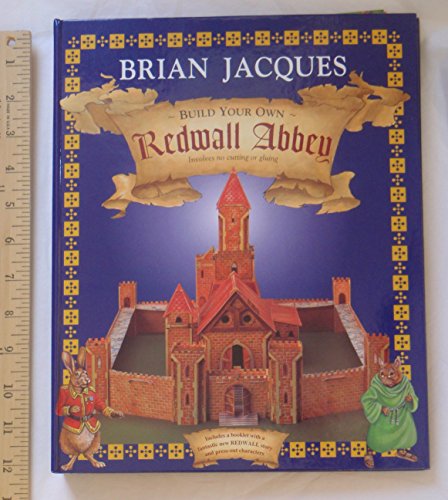
  2. Redwall Abbey (1998)
    by Brian Jacques
    Published in 1998, Redwall Abbey is listed as book #2 in the Redwall Non-Fiction series.
  3. Redwall Friend and Foe (2000)
    by Brian Jacques
    Redwall Friend and Foe is a 2000 release and appears as book #3 in the Redwall Non-Fiction series.
  4. The Redwall Cookbook (2005)
    by Brian Jacques
    In the Redwall Non-Fiction series, The Redwall Cookbook is book #4 and was published in 2005.

About Redwall

Brian Jacques’s Redwall series is a large children’s fantasy saga set in a richly imagined world of woodland creatures, abbeys, fortresses, seacoasts, mountains, vermin armies, riddles, songs, feasts, and heroic quests. The books are often associated with Redwall Abbey itself, but the series is not confined to one building or one generation. It moves across time, following different mice, badgers, hares, otters, squirrels, moles, shrews, and other creatures as they defend homes, recover lost histories, face invaders, and discover what courage requires of the small as well as the strong.

The first published book, Redwall, introduces the Abbey as a place of peace threatened by Cluny the Scourge and his horde. Matthias, a young mouse, becomes the heart of the story as he grows into a defender shaped by the legend of Martin the Warrior. That connection between present danger and remembered heroism becomes one of the series’ defining patterns. Redwall’s heroes rarely act in isolation; they inherit songs, prophecies, weapons, stories, and moral examples from those who came before them.

One point that can confuse new readers is that Redwall’s publication order is not the same as its internal chronology. Mossflower, published after Redwall, is set earlier and explores the story of Martin the Warrior and the liberation of Mossflower from the rule of Tsarmina. Later books continue to jump through the timeline. Some are prequels, some follow descendants or later Abbey generations, and others move to distant locations before returning to the larger Redwall world. Because Jacques built the series through legends and eras rather than one continuous protagonist, the world feels like a tapestry of heroic memory.

Martin the Warrior is the closest thing the series has to a central mythic figure. He appears directly in books focused on his life, and his spirit or legacy influences many later characters. His sword, courage, and example help bind the sequence together even when the main cast changes. Yet the series is not only about warriors. Its best stories also celebrate cooks, healers, wanderers, riddlers, scouts, abbey elders, dibbuns, and ordinary creatures who rise to danger when their homes are threatened.

The tone of Redwall is distinctive because Jacques combines epic adventure with domestic warmth. Battles can be fierce, villains can be cruel, and quests can carry real danger, but the books are also famous for hospitality, humor, songs, dialect, seasonal celebration, and lavish descriptions of food. Feasts at Redwall Abbey are not decorative pauses; they express the kind of community the heroes are fighting to protect. The contrast between abundance and invasion, welcome and cruelty, home and exile gives the series much of its emotional clarity.

Villains are usually drawn from “vermin” species such as rats, stoats, ferrets, foxes, weasels, and wildcats, while the Abbey and woodland communities are associated with more peaceful creatures. Modern readers may notice that this moral pattern is broad and archetypal rather than psychologically subtle. The books operate in the mode of legend, where courage, treachery, greed, loyalty, cowardice, and sacrifice are made vivid through action, speech, and role.

Reading in publication order shows how Jacques developed the world over time, while chronological order highlights the long history behind the Abbey and Martin’s legend. Either approach can work, but publication order preserves the way the mythology was revealed to readers. Across the full series, Redwall endures because it offers a powerful fantasy of home defended by courage, memory, fellowship, and the belief that even the smallest creature can stand against darkness.

Leave a Reply

Your email address will not be published. Required fields are marked *