
Below is the complete list of Lee Hollis’ Hayley Powell Food and Cocktails Mysteries books in order. For this series, the chronological reading order is the same as the order of publication.
Publication Order of Hayley Powell Food and Cocktails Mysteries Books
with Leslie Meier, Peggy Ehrhart


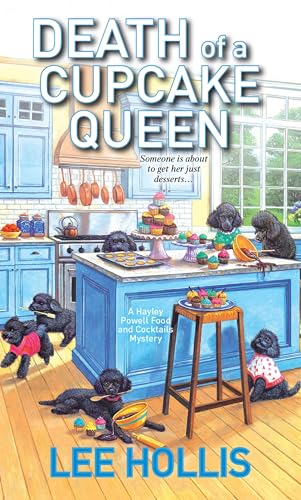

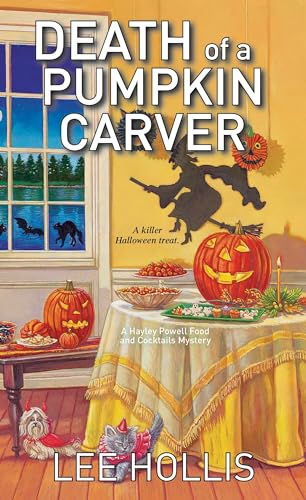


About Hayley Powell Food and Cocktails Mysteries
The Hayley Powell Food and Cocktails Mysteries is a cozy mystery series by Lee Hollis, the pen name used by screenwriter and novelist Rick Copp for books written with contributions from his sister, Holly Simason. Set in Bar Harbor, Maine, the series follows Hayley Powell as an unexpected newspaper assignment turns her into a food-and-cocktails columnist—and an equally unexpected succession of murders turns her into an amateur sleuth. The coastal setting, Hayley’s family and friendships, local rivalries, food culture, and humorous voice give the mysteries their character beyond the crimes themselves.
When Death of a Kitchen Diva introduces Hayley, she is a divorced mother working as office manager for the Island Times and struggling financially. Taking over the newspaper’s food column seems like an opportunity to earn additional income, even though she has never considered herself a professional food writer. Her new role immediately becomes hazardous when rival columnist Karen Appelbaum is found murdered in a bowl of Hayley’s clam chowder. Clearing her own name requires Hayley to investigate, establishing the combination of food writing and amateur detection that drives the series.
Hayley never transforms into a detached professional detective. Much of the appeal comes from watching an ordinary working mother become involved because the victim, suspect, or circumstances touch someone within her community. Her closest friends, relatives, coworkers, romantic relationships, and increasingly familiar Bar Harbor residents provide continuity between cases. Over time, changes in Hayley’s personal life are allowed to remain in place rather than being reset after each mystery, so the character gradually moves beyond the financially stressed single mother introduced at the beginning.
Bar Harbor is equally important to the series. Its restaurants, tourism industry, seasonal celebrations, seafood traditions, businesses, and tightly connected residents repeatedly create the circumstances from which mysteries develop. Lobsters, blueberries, cupcakes, Italian food, ice cream, clam digging, holiday cooking, and other culinary subjects are incorporated into individual cases without making every murder simply about a recipe. Hayley’s newspaper work gives her a natural reason to know local restaurateurs and residents and to ask questions that can lead somewhere considerably more dangerous than a restaurant review.
Food columns and recipes are another defining feature. The novels frequently include recipes connected to Hayley’s cooking and the culinary themes appearing in the story. Humor also remains prominent even when Hayley is investigating murder, with family complications and Bar Harbor personalities preventing the series from becoming overly grim.
The bibliography includes full-length Hayley Powell novels as well as shorter stories published in multi-author holiday mystery collections. Those anthology appearances can create misleading author credits in some catalogs because the complete collection may also contain stories by writers such as Leslie Meier, Barbara Ross, or Peggy Ehrhart. Peggy Ehrhart, however, is not the author of the Hayley Powell series; the Hayley stories themselves are credited to Lee Hollis. Kensington identifies the series directly with Hollis and his collaboration with Holly Simason.
The series has continued well beyond its original run of culinary mysteries, allowing Hayley’s relationships, career, and place within Bar Harbor to evolve while preserving the basic pleasures of the premise. What began with an inexperienced columnist trying to avoid being blamed for murder has developed into a long-running portrait of a woman whose curiosity, loyalty, appetite, and familiarity with her Maine community repeatedly place her close to crimes that are much harder to digest than anything appearing in her food column.