
Below is the complete list of John Connolly books in order. For each series, the chronological reading order is the same as the order of publication.
Publication Order of The Book of Lost Things Books


Publication Order of Charlie Parker Books
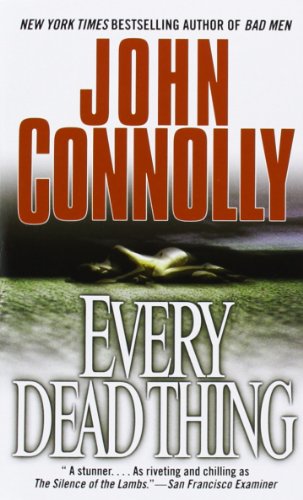


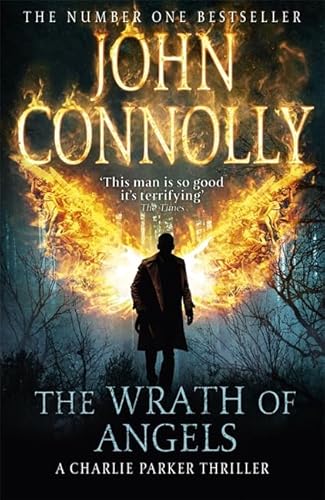
- The Charlie Parker Collection 2 (2013)
The Charlie Parker Collection 2 is a 2013 release and appears as book #13 in the Charlie Parker series. 




Publication Order of Charlie Parker Non-Fiction Books


Publication Order of Nocturnes Books

Publication Order of Samuel Johnson Books


Publication Order of Chronicles of the Invaders Books


Publication Order of Standalone Books


Publication Order of Short Stories/Novellas Books

- The Museum of Literary Souls (2013)
Published in 2013, The Museum of Literary Souls is listed as book #2 in the Short Stories/Novellas series. 

- The Sisters Strange (2020)
The Sisters Strange was published in 2020 and is listed as book #6 in the Short Stories/Novellas series. 
Publication Order of Short Story Collections Books

Publication Order of Non-Fiction Books

Publication Order of Bibliomysteries Books

Publication Order of Mysterious Profiles Books

About John Connolly
John Connolly is an Irish novelist best known for the Charlie Parker series, a distinctive body of crime fiction that blends private investigation, serial-killer suspense, Gothic horror, and increasingly overt supernatural elements. Beginning with Every Dead Thing in 1999, Connolly developed Parker’s story into a long-running exploration of grief, evil, guilt, and redemption. He has also written standalone novels, supernatural fiction, the Samuel Johnson books for younger readers, and the science-fiction series The Chronicles of the Invaders with Jennifer Ridyard.
Connolly was born in Dublin, Ireland, on May 31, 1968. He studied English at Trinity College Dublin and later journalism at Dublin City University. Before becoming a full-time novelist, he worked in several occupations and spent time as a journalist for The Irish Times. His journalism included assignments in the United States, helping deepen his familiarity with the American locations that would become central to his fiction.
His debut, Every Dead Thing, introduced former New York police detective Charlie “Bird” Parker. Parker is devastated by the brutal murders of his wife and young daughter and becomes obsessed with finding their killer. The novel combines a deeply personal revenge story with an investigation that takes Parker into a wider landscape of violent crime. It won the Shamus Award for Best First Private Eye Novel, making Connolly the first author from outside the United States to receive that particular honor.
Charlie Parker subsequently became the center of Connolly’s career. Although the early novels can be approached as dark private-eye thrillers, the series gradually reveals a world in which some forms of evil may have genuinely supernatural origins. Parker encounters killers and predators whose crimes cannot always be explained comfortably through conventional psychology, while recurring hints about his own nature become increasingly important.
This blending of genres distinguishes Connolly from many contemporary crime writers. His novels retain investigations, witnesses, suspects, firearms, police work, and criminal conspiracies, yet they also draw on ghost stories, religious imagery, folklore, and Gothic traditions. The supernatural is not merely an occasional decorative effect; as the Parker series develops, it becomes fundamental to the mythology underlying the books.
Recurring characters provide another major source of continuity. Louis and Angel, professional killers who become Parker’s closest allies, are among the most prominent. Their friendship with Parker gives the series moments of loyalty and dark humor amid its often brutal subject matter. Other investigators, law-enforcement officers, criminals, and figures associated with the supernatural mythology reappear across multiple novels.
Connolly stepped outside the Parker series with Bad Men, a supernatural thriller set on a Maine island, and The Book of Lost Things, a dark fantasy about a boy named David who enters a disturbing world shaped by fairy tales. The Book of Lost Things became one of his best-known non-Parker novels and was later followed by The Land of Lost Things, which returns to the imaginative territory of the earlier book without simply repeating David’s story.
He also created the Samuel Johnson series, beginning with The Gates. These books combine fantasy, horror, science, and comic absurdity as the young Samuel encounters demonic threats and increasingly strange consequences. Although accessible to younger readers, their humor and literary references also give them substantial adult appeal.
With Jennifer Ridyard, Connolly co-wrote The Chronicles of the Invaders, a science-fiction trilogy beginning with Conquest. The collaboration follows humanity living under alien occupation and expands his bibliography into another genre while retaining his interest in moral choices under extreme circumstances.
Connolly has also written extensively about popular culture. He, his novel about comedian Stan Laurel, explores Laurel’s life, career, friendship with Oliver Hardy, and reflections on fame. His nonfiction work includes Books to Die For, edited with Declan Burke, a collection of essays celebrating influential crime and mystery novels.
Despite this range, Charlie Parker remains his defining creation. Maine in particular has become closely associated with the series, its forests, isolated communities, old houses, harsh weather, and hidden histories providing an ideal landscape for Connolly’s mixture of American crime fiction and European Gothic sensibility.
The Parker books are best read in publication order. Individual novels often contain their own central investigations, but relationships, losses, enemies, and supernatural revelations accumulate over many volumes. Later installments increasingly assume knowledge of Parker’s history and the larger mythology surrounding him.
Across crime, horror, fantasy, and science fiction, John Connolly repeatedly returns to the nature of evil and the choices people make when confronted by it. His fiction acknowledges cruelty without treating darkness as the whole of human experience. Friendship, sacrifice, compassion, and the possibility of redemption remain persistent counterweights—qualities that have given his work an identity extending well beyond the boundaries of conventional detective fiction.