
Below is the complete list of Louis L’Amour’s Kilkenny books in order. For this series, the chronological reading order is the same as the order of publication.
Publication Order of Kilkenny Books


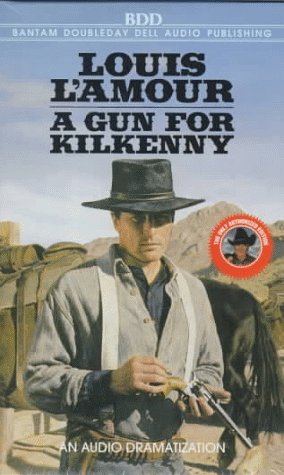

About Kilkenny
Louis L’Amour’s Kilkenny stories center on Lance Kilkenny, a gunfighter whose reputation has become almost as dangerous as the men who challenge him. Unlike Western heroes who actively seek fame, Kilkenny would prefer to disappear into open country, build a ranch, and live without strangers testing themselves against his name. Trouble repeatedly prevents that. Wherever he settles or rides, conflicts involving cattle, land, hired guns, and threatened friends draw him back into the violent life he has tried to leave behind.
That reluctance is fundamental to Kilkenny’s character. He is exceptionally dangerous with a gun, but L’Amour does not portray killing as a sport or reputation as something worth cultivating. Kilkenny understands that every victory attracts another man who wants to prove himself. His instinct is therefore to avoid unnecessary confrontation until someone leaves him no reasonable alternative. That restraint distinguishes him from many of the boastful gunmen surrounding him and allows L’Amour to explore one of his recurring Western ideas: the most capable man is often the one least interested in advertising what he can do.
The Rider of Lost Creek gives this conflict a particularly strong personal motive. Kilkenny rides to the aid of Mort Davis, a friend who once saved his life and has become trapped in an escalating range war. Behind the dispute lies something more organized than ordinary friction between ranchers, with hired gunmen helping to turn competition over land into deliberate violence. The story also introduces Nita Riordan, owner of the Apple Canyon Saloon, whose relationship with Kilkenny becomes one of the principal threads connecting his longer adventures.
Rusty Gates becomes another important companion, giving the otherwise solitary Kilkenny someone who can ride beside him without diminishing his independence. Across the stories, L’Amour surrounds Kilkenny with the familiar machinery of the cattle-country Western—range wars, ambitious ranchers, saloons, isolated settlements, drifting gunfighters, and communities where formal law may arrive too late. What matters is less the novelty of those ingredients than the way Kilkenny responds to them. He enters disputes reluctantly, studies the people involved, and generally acts only after deciding where the real threat lies.
The novel Kilkenny pushes his desire for anonymity especially hard. Hoping to escape his unwanted reputation, he settles in a remote Utah valley and attempts to become a rancher. Jared Tetlow’s determination to dominate the surrounding grasslands makes peaceful settlement impossible, particularly because Kilkenny has already killed Tetlow’s son after being challenged by him. The resulting conflict turns Kilkenny’s past into something he cannot simply outride.
The bibliography is slightly broader than the novels alone suggest. L’Amour’s official catalog groups three principal Kilkenny novels with several shorter pieces, including “A Gun for Kilkenny,” “Monument Rock,” “A Man Called Trent,” and “West of Dodge.” These stories appear in different collections, which can make the series look larger or differently arranged depending on the edition being consulted.
What holds the Kilkenny material together is not an elaborate family chronology like the Sackett saga but the continuing burden of one man’s reputation. Lance Kilkenny wants land, privacy, trusted companions, and eventually a future beyond gunfighting. L’Amour repeatedly places those modest ambitions against a frontier culture where a famous gunman is rarely allowed to remain anonymous, making Kilkenny’s struggle to leave violence behind as important as his ability to survive it.