
Below is the complete list of Iris Johansen’s Eve, Quinn and Bonnie books in order. For this series, the chronological reading order is the same as the order of publication.
Publication Order of Eve, Quinn and Bonnie Books


About Eve, Quinn and Bonnie
Iris Johansen’s Eve, Quinn and Bonnie trilogy is a focused three-book arc within the larger Eve Duncan series, made up of Eve, Quinn, and Bonnie. The books are not a separate universe; they belong directly to the continuing story of forensic sculptor Eve Duncan, former Navy SEAL and detective Joe Quinn, and Eve’s murdered daughter Bonnie. What makes this trilogy important is its purpose. After many earlier Eve Duncan novels built suspense around Bonnie’s disappearance and the emotional wound that shaped Eve’s life, these three books turn directly toward that central mystery.
The trilogy begins with Eve, which revisits the defining trauma behind the character. Eve Duncan’s work as a forensic sculptor has always been tied to loss: she gives faces back to the dead because her own child was taken from her, leaving grief, uncertainty, and an unbearable need for answers. In this book, Johansen brings Eve’s past forward, showing more clearly how Bonnie’s abduction transformed a young mother’s life into a lifelong search for truth. The story also forces Eve to confront painful figures and memories connected to the time before Bonnie vanished, making the investigation as personal as it is dangerous.
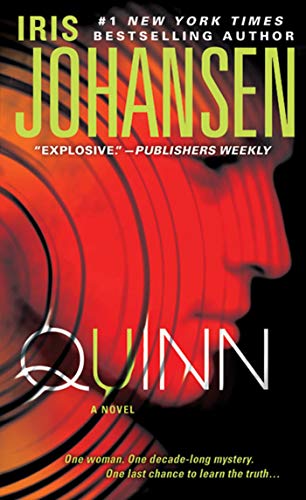
Quinn shifts the emotional center toward Joe Quinn, the man who has stood beside Eve through years of fear, obsession, and hope. Joe is central to the wider series because he loves Eve, protects her, challenges her, and often suffers from the knowledge that Bonnie will always occupy a place in Eve’s heart that no one else can touch. His book matters because it gives the search a different kind of intensity. Eve’s grief is maternal and consuming; Joe’s is built from love, helplessness, loyalty, and his own need to know whether the past can finally release them.
Bonnie completes the arc by turning toward the child whose absence has shaped so many books. The title itself signals the change. Bonnie is no longer only the lost girl at the center of Eve’s pain, or the name that gives every unidentified child’s skull added emotional force. She becomes the focus of reckoning. The final book brings together the long-running questions surrounding what happened to her, what truths have been hidden, and what kind of closure is possible after a loss that has defined an entire life.
The Eve, Quinn and Bonnie books should be read in order, and they are best approached after at least some familiarity with the earlier Eve Duncan novels. A reader can follow the broad emotional stakes from the trilogy alone, but the full weight comes from knowing how long Bonnie’s story has haunted Eve, and how much of Eve’s identity has been built around the refusal to stop searching. In the larger series, this arc functions almost like an emotional spine finally brought into full view.
The trilogy also shows one of Johansen’s recurring strengths: she does not treat suspense as separate from feeling. The danger matters because the people involved have already paid too much. The investigation matters because answers are not abstract; they are the difference between endless torment and some fragile form of peace. Across Eve, Quinn, and Bonnie, Johansen takes the wound that defined her most famous heroine and gives it the sustained attention it deserves, turning a long-running mystery into a story about love, grief, endurance, and the cost of finally knowing.