
Below is the complete list of Philippa Gregory’s Order Of Darkness books in order. For this series, the chronological reading order is the same as the order of publication.
Publication Order of Order Of Darkness Books



About Order Of Darkness
Philippa Gregory’s Order of Darkness series is a historical adventure sequence for young adult readers, set in fourteenth-century Europe during a period shaped by religious fear, political instability, plague, superstition, and widespread expectations that the world might be approaching its end. Beginning with Changeling, the series follows Luca Vero, a young man recruited by a secret papal organization known as the Order of Darkness to investigate strange occurrences that appear to defy rational explanation. His travels bring him together with Isolde, Ishraq, and Freize, creating a recurring group whose different backgrounds and beliefs become central to the story.
Changeling introduces Luca after he is expelled from his monastery for asking questions that his superiors consider dangerously close to heresy. His intelligence instead attracts the attention of the Order of Darkness, which serves the pope by investigating unusual events and determining whether they signal genuine supernatural forces, fraud, political manipulation, or evidence of the approaching end times.
Luca’s first major investigation takes him to an abbey ruled by the young Lady Isolde. Following her father’s death, Isolde has been denied the inheritance she expected and forced into religious life. Disturbing behavior among the nuns soon produces accusations involving witchcraft and demonic influence. Luca arrives to investigate, placing him in conflict with Isolde while gradually revealing that apparently supernatural events may have very human causes.
Isolde is accompanied by Ishraq, her childhood friend and companion. Ishraq’s Muslim heritage, education, medical knowledge, and physical abilities make her particularly unusual in the European Christian world through which the group travels. Luca’s servant Freize supplies practical intelligence and humor, often seeing obvious human motives that more educated characters initially overlook.
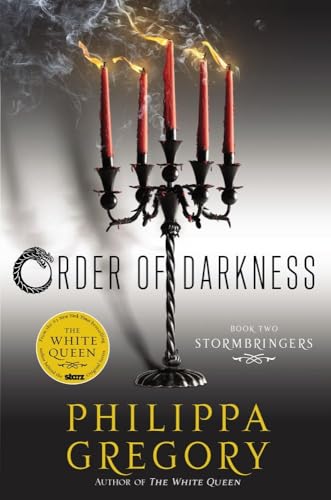
Stormbringers takes the group into another community gripped by extraordinary events and apocalyptic expectations. Religious enthusiasm, natural phenomena, and the vulnerability of frightened populations become part of a mystery in which belief itself can be manipulated. Gregory repeatedly places her characters between two extremes: dismissing everything unusual as superstition can be as dangerous as accepting every claim of divine or supernatural intervention without evidence.
Fools’ Gold moves the story to Venice and its commercial world. Counterfeit currency and financial manipulation become central to the investigation, allowing Gregory to explore money, trade, alchemy, and the sophisticated networks connecting medieval European cities. Venice also exposes the travelers to a society very different from the rural and religious communities encountered earlier.
Dark Tracks takes the group into territories where religious and cultural boundaries become increasingly significant. Their investigation unfolds amid danger, captivity, and competing beliefs, while the relationships among Luca, Isolde, Ishraq, and Freize continue developing. By this stage, the series has become as much about their loyalty to one another as the formal missions assigned by the Order.
Unlike Gregory’s Plantagenet and Tudor novels, the Order of Darkness books are not fictional biographies of major historical women. The principal characters are fictional, allowing them to travel through different regions and social environments while encountering the larger forces shaping medieval Europe. Real historical conditions provide the framework, but adventure and mystery drive the narrative.
The series also makes repeated use of the tension between medieval belief and investigation. Luca is working for a religious organization and does not approach the world from a modern secular perspective, yet his assignment requires him to question evidence and distinguish genuine mysteries from deception. Ishraq’s learning and alternative cultural perspective further challenge assumptions that other characters take for granted.
Publication order is the clearest reading order because the individual investigations occur within a continuing journey. Relationships, loyalties, romantic tensions, and the larger purpose of the Order develop across the books even when each installment introduces a new mystery.
Order of Darkness ultimately uses the investigative adventure to explore an age in which the boundaries between science, faith, magic, and superstition were understood very differently from today. Luca and his companions travel through a world prepared to see signs of apocalypse everywhere, while their real challenge is discovering which dangers come from forces beyond understanding—and which have been created by people.