
Below is the complete list of Philippa Gregory’s Tudor Court books in order. For this series, the chronological reading order is the same as the order of publication.
Publication Order of Tudor Court Books




About Tudor Court
Philippa Gregory’s Tudor Court series is a group of historical novels centered on the women who lived around the Tudor monarchy, particularly during the reigns of Henry VIII, Edward VI, Mary I, and Elizabeth I. The books were originally published as individual or loosely connected Tudor novels before Gregory later folded them into her broader Plantagenet and Tudor chronology. Rather than following one protagonist through the entire dynasty, the series shifts perspective among queens, princesses, courtiers, and women whose marriages and family connections placed them close to the throne.
The Other Boleyn Girl became the best-known novel in the group and focuses on Mary Boleyn, sister of Anne Boleyn. Gregory uses Mary’s perspective to explore the Boleyn family’s rise at Henry VIII’s court and the increasingly dangerous competition surrounding royal favor. Anne’s ambition, Mary’s more conflicted position, and the family’s determination to improve its status turn courtship into a matter of politics as much as romance.
The Constant Princess moves backward to Catherine of Aragon and gives sustained attention to her earlier life, including her marriage to Arthur, Prince of Wales, and subsequent marriage to Henry VIII. Catherine’s confidence in her own destiny and her determination to defend both her marriage and her daughter Mary become central to Gregory’s portrayal of the first queen displaced by Henry’s dynastic ambitions.
The Boleyn Inheritance uses three perspectives—Anne of Cleves, Katherine Howard, and Jane Boleyn—to examine the later years of Henry VIII’s reign. The structure makes the court feel increasingly dangerous, especially for women whose value is measured by beauty, fertility, obedience, and the king’s favor. Gregory contrasts the very different ways the three women attempt to survive a system in which a royal marriage can be both an extraordinary elevation and a mortal threat.
Taming of the Queen centers on Katherine Parr, Henry VIII’s sixth wife. Parr is portrayed as an educated and intellectually ambitious woman forced to navigate the demands of a volatile husband while pursuing her interests in religion and scholarship. Her marriage becomes a study in survival under a king whose earlier wives provide constant reminders of what resistance can cost.
The Tudor story continues beyond Henry VIII in The Queen’s Fool. Its fictional protagonist, Hannah Green, moves through the courts of Edward VI and Mary I, giving Gregory a way to explore religious conflict and the instability surrounding succession. Because Hannah is not herself royal, the novel provides a perspective somewhat removed from the dynastic women who dominate much of the series.
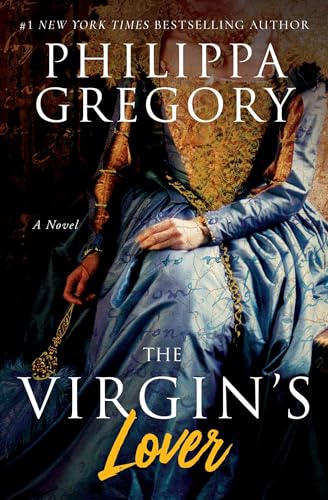
The Virgin’s Lover shifts to Elizabeth I and Robert Dudley. Gregory examines the intimacy between them alongside the political impossibility of treating their relationship as purely personal. Dudley’s marriage to Amy Robsart and the circumstances of her death add another layer of danger and speculation to a court where the queen’s private choices can have national consequences.
The Other Queen follows Mary, Queen of Scots, during her captivity in England. Gregory alternates among Mary, George Talbot, Earl of Shrewsbury, and his wife Bess of Hardwick, creating a portrait of imprisonment, political maneuvering, divided loyalties, and the fear Mary inspires as an alternative claimant to Elizabeth’s throne.
The Last Tudor turns to the Grey sisters—Jane, Katherine, and Mary—whose descent from Henry VII makes them politically significant regardless of what they personally want. Lady Jane Grey’s brief reign is only the beginning of a wider story about how dangerous Tudor blood could become when monarchs viewed marriage and childbirth as threats to succession.
The Tudor Court books therefore work less as a conventional continuous series than as overlapping portraits of the same dynasty from different vantage points. Gregory repeatedly returns to the way royal women were valued, restricted, and endangered by their ability to marry, produce heirs, and transmit claims to the throne.
What gives the series its strongest cohesion is perspective. Henry VIII, Mary I, Elizabeth I, and other monarchs remain central historical figures, but Gregory keeps shifting the narrative toward the women whose lives were altered by decisions made at court. The result is a Tudor history told not only through kings and succession, but through the personal costs of belonging too close to power.