
Below is the complete list of Philippa Gregory’s Cousins’ War books in order. For this series, the chronological reading order is the same as the order of publication.
Publication Order of Cousins’ War Books


About Cousins’ War
Philippa Gregory’s Cousins’ War series is a six-novel historical-fiction sequence centered on the women whose families stood at the heart of the dynastic conflict now known as the Wars of the Roses. Beginning in publication order with The White Queen, the series moves among the houses of York and Lancaster through Elizabeth Woodville, Margaret Beaufort, Jacquetta of Luxembourg, Anne Neville, Elizabeth of York, and Margaret Pole. Gregory later incorporated these novels into her larger Plantagenet and Tudor series, but the original Cousins’ War grouping remains a useful way to follow her treatment of the fifteenth-century struggle for the English throne.
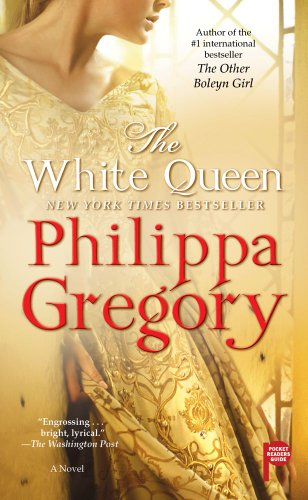
The White Queen centers on Elizabeth Woodville, the widowed commoner who marries Edward IV and becomes queen of England. Her marriage transforms the fortunes of the Woodville family but places Elizabeth and her children directly inside the conflict between rival claimants to the crown. Her sons Edward and Richard—the boys remembered as the Princes in the Tower—become crucial to the later struggle for succession.
The Red Queen retells part of the same period from the opposing Lancastrian perspective. Margaret Beaufort believes passionately in the destiny of her only son, Henry Tudor, and devotes much of her life to securing his claim to the throne. Gregory’s decision to move between Elizabeth and Margaret demonstrates a defining feature of the series: historical enemies become protagonists in their own books, and events that appear treacherous from one perspective can look necessary from another.
The Lady of the Rivers moves backward chronologically to Jacquetta of Luxembourg, Elizabeth Woodville’s mother. Connected first to the Lancastrian royal family and later to the Woodvilles, Jacquetta witnesses the political deterioration that leads toward civil war. Her story provides important background to Elizabeth’s rise and to a family whose influence would become one of the most controversial features of Edward IV’s reign.
The Kingmaker’s Daughter follows Anne Neville and her sister Isabel, daughters of Richard Neville, Earl of Warwick. Their father’s shifting allegiance between Lancastrian and Yorkist interests turns the sisters into valuable pieces in his political strategy. Anne eventually marries Richard, Duke of Gloucester, and becomes queen when he takes the throne as Richard III.
The White Princess continues after Richard III’s defeat at Bosworth. Elizabeth of York, daughter of Edward IV and Elizabeth Woodville, marries Henry VII, son of Margaret Beaufort. Their union is traditionally associated with bringing York and Lancaster together under the Tudor dynasty, but Gregory emphasizes the tensions beneath that symbolic reconciliation. Elizabeth belongs to the defeated Yorkist family even as she becomes wife to the victorious Tudor king.
The King’s Curse carries the story into the early Tudor period through Margaret Pole, daughter of George, Duke of Clarence, and one of the last prominent members of the Plantagenet dynasty. Her royal ancestry gives her status but also makes her potentially dangerous to the Tudors. Through Margaret, the series bridges the Wars of the Roses and the reign of Henry VIII, showing how the political consequences of the dynastic conflict survive long after Bosworth.
Reading order requires some choice because publication order and historical chronology differ. The Lady of the Rivers, for example, was published after The White Queen and The Red Queen but begins earlier historically. Publication order preserves the way Gregory originally revealed the competing perspectives, while chronological order produces a more continuous historical narrative.
The series also deliberately revisits the same people from conflicting viewpoints. Margaret Beaufort can appear very different when Elizabeth Woodville is telling the story, just as Yorkist ambitions take on another meaning from a Lancastrian perspective. Gregory does not attempt to create a single neutral narrator standing above the conflict.
That shifting perspective gives the Cousins’ War novels their distinctive structure. The familiar history of kings, battles, and succession remains important, but Gregory relocates the emotional center to women whose marriages, pregnancies, children, inheritances, and family loyalties were inseparable from politics. The crown may pass between men, but throughout the series the struggle for its future is equally a struggle among the women trying to keep their families alive.