
Below is the complete list of Dorothy L. Sayers books in order. For each series, the chronological reading order is the same as the order of publication.
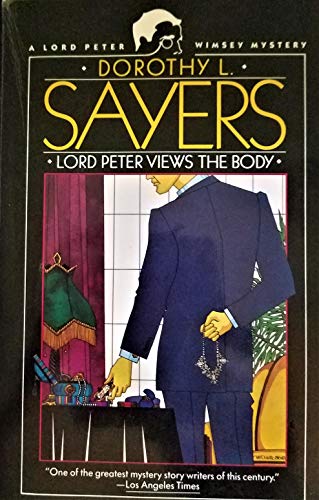
Publication Order of Lord Peter Wimsey Books







Publication Order of Lord Peter Wimsey and Harriet Vane Books
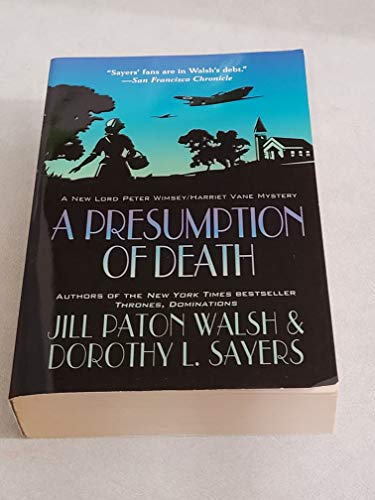
with Jill Paton Walsh



Publication Order of Standalone Books

Publication Order of Short Stories/Novellas Books
- The Wimsey Papers (1939)
The Wimsey Papers was published in 1939 and is listed as book #1 in the Short Stories/Novellas series. 
Publication Order of Short Story Collections Books


Publication Order of Chapbooks Books

Publication Order of Standalone Plays Books

Publication Order of Non-Fiction Books






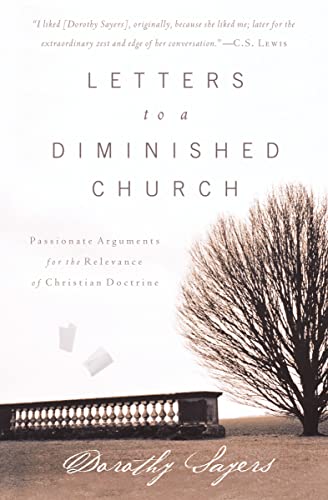

Publication Order of The Philosophy of Popular Culture Books

About Dorothy L. Sayers
Dorothy L. Sayers was an English crime writer, playwright, essayist, translator, poet, and Christian thinker best known for creating Lord Peter Wimsey, one of the defining detectives of the Golden Age of crime fiction. Born in Oxford in 1893 and raised largely in Cambridgeshire, Sayers combined a formidable literary education with interests in languages, theology, advertising, drama, and medieval literature. Although her detective novels secured her popular reputation, she later regarded her translation of Dante’s Divine Comedy as among her most important work.
Sayers studied modern languages at Somerville College, Oxford, graduating with first-class honours in 1915. At the time, women could complete Oxford degree requirements but were not formally awarded degrees until the university changed its rules in 1920. Her training in languages and literature later shaped both the intellectual character of her mysteries and the scholarly work that occupied much of her later life.
Before becoming a full-time writer, Sayers worked in publishing, taught in France, and spent several years as a copywriter at the London advertising agency S.H. Benson. Her advertising career gave her firsthand knowledge of commercial persuasion and office culture, material she later used memorably in Murder Must Advertise. She also worked on campaigns that became famous in British advertising, including promotions for Guinness.
Her first Lord Peter Wimsey novel, Whose Body?, appeared in 1923. Wimsey is an aristocratic amateur detective whose wealth, intelligence, war experience, and eccentric manner allow Sayers to move between drawing rooms, professional workplaces, country houses, and criminal investigations. The early books begin largely as ingenious detective puzzles, but the series gradually becomes more psychologically and emotionally ambitious.
That development is particularly evident after the introduction of Harriet Vane in Strong Poison. Harriet, a crime novelist accused of murdering her former lover, becomes central to several later books and challenges Wimsey in ways previous characters do not. Their relationship develops through Have His Carcase and reaches its emotional culmination in Gaudy Night, set largely at a fictional Oxford women’s college. The latter is often regarded as one of Sayers’s most accomplished novels because the mystery is inseparable from questions about intellectual independence, vocation, love, and the compromises expected of women.
Busman’s Honeymoon, first developed as a stage play with Muriel St. Clare Byrne, extends Wimsey and Harriet’s story into marriage while retaining a murder investigation. After this period, Sayers largely withdrew from detective fiction and redirected her energies toward drama, theology, criticism, and translation.
Her religious writing became especially important during the 1930s and 1940s. Works such as The Mind of the Maker explore creativity and Christian doctrine, while the BBC radio cycle The Man Born to Be King dramatized the life of Christ in contemporary English and caused considerable controversy before becoming one of her best-known dramatic works.
In her later years, Sayers devoted enormous attention to Dante. She translated Inferno and Purgatorio into English while providing extensive notes designed for general readers. She died suddenly in 1957 before completing Paradiso, which was finished by her friend and fellow scholar Barbara Reynolds.
Sayers’s bibliography is therefore much broader than Lord Peter Wimsey alone suggests. Crime fiction made her famous, but detective novels, advertising, theology, drama, medieval scholarship, and translation all grew from the same underlying interests: language, moral choice, intellectual responsibility, and the relationship between work and human identity.