
Below is the complete list of Dorothy L. Sayers’ Lord Peter Wimsey books in order. For this series, the chronological reading order is the same as the order of publication.
Publication Order of Lord Peter Wimsey Books


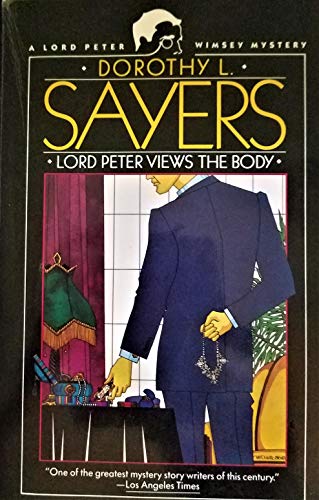





About Lord Peter Wimsey
Dorothy L. Sayers’s Lord Peter Wimsey series is one of the central achievements of Golden Age detective fiction, following an aristocratic amateur investigator whose apparently frivolous manner conceals intelligence, persistence, and lasting psychological damage from the First World War. Beginning with Whose Body? in 1923, the original sequence develops from ingenious murder puzzles into increasingly ambitious novels concerned with justice, responsibility, work, marriage, social class, and the moral consequences of discovering the truth.
Lord Peter Death Bredon Wimsey is the younger son of the Duke of Denver and therefore possesses both wealth and freedom from most conventional employment. His interest in criminal investigation begins partly as an intellectual pursuit, but Sayers gradually complicates that enthusiasm by showing what solving murders actually requires of him. Peter is a decorated former army officer whose experiences on the Western Front left him with episodes of psychological trauma, making his comic manner and elaborate speech only part of a more vulnerable character.
Whose Body? introduces him through the discovery of an unidentified corpse in a bathtub. The case also establishes two of his most important associates. Mervyn Bunter, Peter’s valet and former wartime sergeant, combines personal loyalty with considerable investigative ability, particularly in photography and evidence gathering. Detective Inspector Charles Parker of Scotland Yard becomes Peter’s professional counterpart and close friend, providing access to official police work while sometimes questioning the methods of an amateur detective.
Clouds of Witness makes the investigation personal when Peter’s brother, Gerald, Duke of Denver, is accused of murder. Unnatural Death, The Unpleasantness at the Bellona Club, and The Five Red Herrings continue developing Sayers’s combination of formal detection with carefully constructed social settings. Rather than giving Wimsey a single unchanging environment, she places him among aristocrats, artists, doctors, businessmen, veterans, advertising workers, and academics.
A major transformation occurs with Strong Poison, which introduces mystery novelist Harriet Vane. Harriet is on trial for poisoning her former lover, and Peter becomes convinced of her innocence. He succeeds in investigating the case but immediately complicates their relationship by falling in love with her. Harriet refuses to accept marriage simply out of gratitude, beginning an extended emotional storyline unusual in Golden Age detective fiction.
Their relationship continues through Have His Carcase, in which Harriet discovers a body while on a walking holiday and again finds herself investigating alongside Peter. The novel allows them to operate more nearly as equals, but the fundamental question of whether Harriet can preserve her independence while loving Peter remains unresolved.
Murder Must Advertise draws directly on Sayers’s experience working in advertising. Peter goes undercover at Pym’s Publicity as “Death Bredon” to investigate the suspicious death of an employee, giving the novel an unusually detailed workplace setting alongside its crime plot.
The Nine Tailors moves into the world of an East Anglian village, its church, floods, and bell-ringing traditions. The intricate mystery is inseparable from the community and landscape, making it one of the clearest examples of Sayers using specialized knowledge as part of the structure of a detective novel.
The emotional culmination of the series comes with Gaudy Night. Set largely at Harriet’s former Oxford college, it places her rather than Peter at the center of the investigation. The disturbances she investigates force her to consider intellectual honesty, vocation, independence, and whether marriage must require surrendering part of herself. Her eventual relationship with Peter grows from that broader examination of equality rather than simply resolving a prolonged romance.
Busman’s Honeymoon follows Peter and Harriet after their marriage, when their honeymoon is interrupted by murder. The story also confronts Peter with the moral cost of successful detection: identifying a murderer may be intellectually satisfying, but knowing that his work can lead to another person’s execution is something he cannot treat casually.
Sayers also wrote numerous Lord Peter short stories, and these form an important part of the original canon. After her death, Jill Paton Walsh continued Peter and Harriet’s story, first completing material Sayers had left for Thrones, Dominations and then writing further authorized novels.
The original Lord Peter Wimsey books are best read in publication order, particularly once Harriet Vane appears. What begins as the adventures of an eccentric aristocratic sleuth gradually becomes something richer: the story of a man learning that intelligence can solve a crime, but cannot by itself answer the moral and emotional questions that follow.