
Below is the complete list of Lauren Oliver books in order. For each series, the chronological reading order is the same as the order of publication.
Publication Order of Curiosity House Books
with H.C. Chester

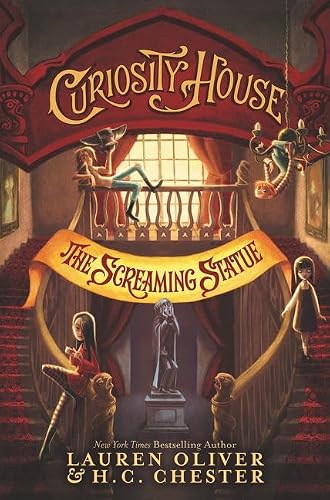

Publication Order of Delirium Collections Books
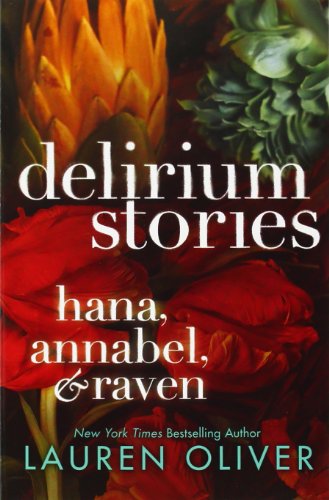
Publication Order of Delirium Books
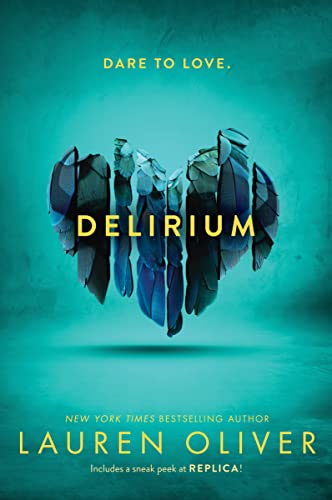


Publication Order of Dept of Unexplained Phenomenon Books


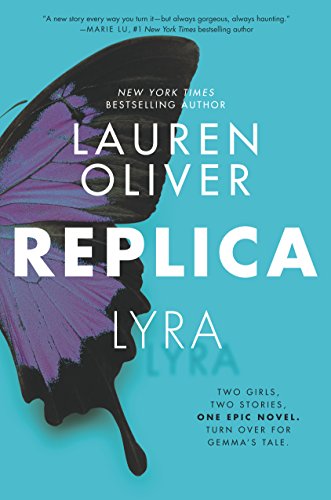
Publication Order of Replica Books

Publication Order of Standalone Books




Publication Order of Children’s Books

Publication Order of Deadly Ambition Books




About Lauren Oliver
Lauren Oliver is an American novelist, screenwriter, and media entrepreneur whose fiction spans young-adult dystopia, psychological suspense, speculative fiction, middle-grade fantasy, adult ghost stories, and contemporary mystery. She is best known for Before I Fall, the Delirium trilogy, Panic, and the Replica duology, but her bibliography is broader than those prominent works suggest. Across different genres and age categories, she repeatedly examines unstable identity, memory, grief, friendship, social conformity, and the difficult consequences of choosing personal freedom.
Born Laura Suzanne Schechter in Queens, New York, in 1982, Oliver was raised in Westchester County by parents who taught literature. Her father, Harold Schechter, became known for writing about true crime and American cultural history. Surrounded by books and encouraged to invent stories, she spent much of her childhood reading, drawing, acting out imaginary worlds, and creating continuations of novels she loved.
Oliver studied literature and philosophy at the University of Chicago before earning an MFA in creative writing from New York University. She then worked in publishing at Razorbill, a young-adult imprint of Penguin. During this period, she wrote much of her first novel while travelling to and from work, composing sections on her phone and revising them later. She eventually left publishing to concentrate on writing full time.
Before I Fall, published in 2010, introduced Samantha Kingston, a popular teenager forced to relive the day of her death. The novel combines a time-loop premise with a close examination of cruelty, social status, responsibility, and the unnoticed effects of ordinary choices. It became a major bestseller and was adapted into a 2017 film starring Zoey Deutch.
Oliver followed it with the Delirium trilogy, set in a society that classifies love as a disease and subjects citizens to a compulsory medical procedure intended to eliminate it. Through Lena Haloway’s transformation from obedient believer to resistance figure, the series explores political control, emotional freedom, fear, and the danger of allowing governments to define which human experiences are acceptable. Companion novellas provide additional viewpoints but remain supplementary to the three principal novels.
Her later young-adult fiction continued experimenting with form and genre. Panic turns an illegal competition among graduating teenagers into a study of poverty, risk, and desperation. Oliver later adapted the novel for television, writing the episodes and serving as an executive producer on the Amazon Prime series. Replica and Ringer present interlocking narratives from the perspectives of Gemma and Lyra, using an unusual reversible format to explore cloning, scientific exploitation, and the construction of identity. Vanishing Girls and Broken Things move more directly into psychological mystery.
Oliver has also written fantasy for younger readers. Liesl & Po combines grief, ghosts, friendship, and alchemy, while The Spindlers follows a girl entering an underground world to recover her brother’s stolen soul. The Curiosity House trilogy, co-written with H.C. Chester, centers on children with extraordinary abilities living in a museum of human curiosities.
Her adult debut, Rooms, tells a family story through both living and ghostly perspectives. Recent novels such as What Happened to Lucy Vale and The Girl in the Lake mark a stronger movement into adult psychological and paranormal suspense. Beyond her own books, Oliver has founded and led companies involved in developing stories for publishing, film, television, and digital media.
Her bibliography is best understood by separating the Delirium, Replica, and Curiosity House series from her standalone young-adult novels, children’s fantasy, and adult fiction. What unifies these categories is her interest in people confronting versions of themselves shaped by memory, institutions, family expectations, and stories that may no longer be true.