
Below is the complete list of Beverly Lewis’ The Courtship of Nellie Fisher books in order. For this series, the chronological reading order is the same as the order of publication.
Publication Order of The Courtship of Nellie Fisher Books


About The Courtship of Nellie Fisher
Beverly Lewis’s The Courtship of Nellie Fisher trilogy is a historical Amish family drama set in Lancaster County, Pennsylvania, during the emergence of the New Order Amish movement in the 1960s. The series follows Nellie Mae Fisher and Caleb Yoder, two young people whose developing courtship becomes entangled in a widening religious division within their community. What begins as a personal love story gradually expands into an examination of conscience, church authority, inherited tradition, and the cost of choosing convictions that separate families and neighbors.
At the opening of The Parting, Nellie is still grieving the drowning death of her younger sister, Suzy. Rumors about Suzy’s behavior before her death have unsettled the Fisher family and threaten Nellie’s hopes of building a future with Caleb. Nellie finds stability in her work at the family bakery and in Caleb’s affection, but their relationship is vulnerable from the beginning. Caleb’s father disapproves of the Fisher family, and the changing religious outlook within the community soon gives him a stronger reason to oppose the match.
The central conflict develops when Nellie’s father, Reuben Fisher, begins reading Scripture for himself and becomes drawn to teachings emphasizing personal conversion and salvation by grace. Other Amish farmers are also questioning established practices, including restrictions on tractors and modern equipment. Their dissatisfaction grows into a formal separation between Old Order and New Order believers. Lewis presents the split not as an abstract theological debate but as a disruption of daily life: worship changes, friendships become strained, relatives take opposing sides, and marriages or courtships suddenly carry religious consequences.
Nellie initially resists her family’s movement toward the New Order because she understands what it may cost her. Caleb remains connected to the Old Order church and is expected to inherit his father’s farm, but that inheritance depends upon his obedience. His father makes it clear that choosing Nellie could mean surrendering both land and family approval. Nellie is therefore forced to weigh her love for Caleb against the spiritual awakening taking place in her own household, while Caleb must decide whether security is worth accepting a future chosen for him.
The trilogy also develops several substantial secondary stories. Nellie’s sister Rhoda is increasingly attracted to the freedoms and conveniences of the outside world, offering a different response to the limitations of Amish life. Rosanna King’s longing for children leads to a complicated arrangement involving Kate, a mother who entrusts her with infant twins. As the church division deepens, questions of motherhood, promises, and religious fitness place that arrangement under pressure. These parallel conflicts reinforce the series’ larger concern with possession and belonging: who may claim a child, a farm, a religious identity, or another person’s loyalty.
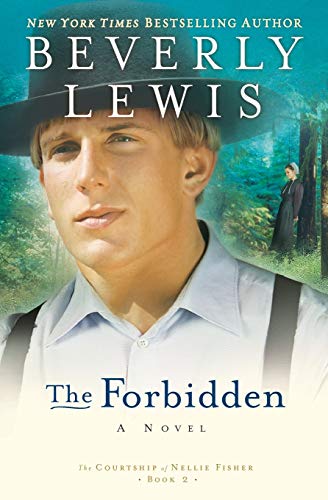
By The Forbidden and The Longing, the separation between the two Amish groups has become inseparable from Nellie and Caleb’s future. Nellie chooses the New Order path despite her continued love for him, while Caleb remains bound to his father and the farm. New romantic possibilities appear, but neither can easily dismiss the history they share. A family tragedy later changes Caleb’s responsibilities again, compelling him to reconsider what duty requires and whether obedience without conviction can produce a faithful life.
The three novels form a single continuous narrative rather than separate romances connected only by setting. Grief, church conflict, adoption, courtship, and family authority develop across the complete trilogy, with each volume depending heavily on choices made in the previous one. Lewis gives the series its distinct identity by placing an intimate relationship inside a genuine period of change among the Amish, showing how a doctrinal division can reach into kitchens, farms, friendships, and future marriages. Nellie’s courtship remains its emotional center, but the deeper story concerns people deciding whether faith should be inherited unquestioningly or embraced through personal conviction.