
Below is the complete list of Anthony Horowitz’s Diamond Brothers books in order. For this series, the chronological reading order is the same as the order of publication.
Publication Order of Diamond Brothers Books

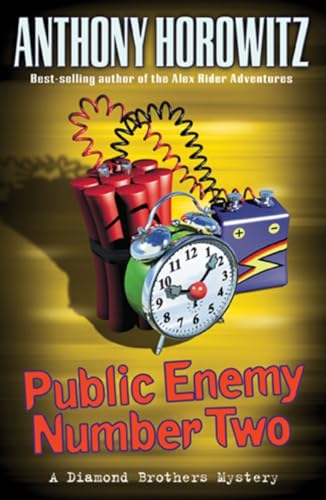
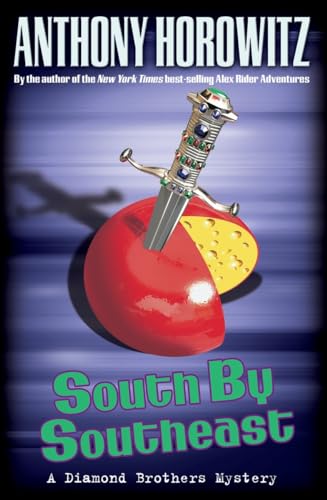


- The Double Eagle Has Landed (2011)
In the Diamond Brothers series, The Double Eagle Has Landed is book #9 and was published in 2011. 
Publication Order of Diamond Brother Mysteries Books


About Diamond Brothers
Anthony Horowitz’s Diamond Brothers series is a comic detective sequence built around one of children’s fiction’s funniest mismatched partnerships: Tim Diamond, a spectacularly incompetent private detective, and his younger brother Nick, who quietly does nearly all the real thinking. Long before Alex Rider made Horowitz internationally associated with teen espionage, the Diamond Brothers books showed his talent for genre parody, quick plotting, sharp jokes, and young protagonists caught in situations far more dangerous than the adults around them seem able to manage.
The series begins with The Falcon’s Malteser, a title that immediately signals Horowitz’s affection for classic crime and film references. The book introduces the basic pattern: Tim appears to be the detective by profession, but Nick is the one with the intelligence, observational skill, and narrative control. Tim’s foolishness is not a small character flaw; it is the comic engine of the series. He misunderstands clues, misreads people, and blunders through investigations while Nick tries to keep them both alive long enough to solve the case.
Nick’s narration gives the books their lasting charm. He is young enough to be dragged into absurd trouble, but perceptive enough to see how ridiculous the adult world often is. His voice sits between schoolboy exasperation and genuine detective instinct. He knows Tim is hopeless, but he also cares about him, which keeps the partnership from becoming purely cruel comedy. The brothers’ relationship allows Horowitz to create mystery plots that are funny without losing momentum.
The early novels, including Public Enemy Number Two and South by South East, push the brothers into increasingly outlandish criminal situations while maintaining the shape of proper detective fiction. There are clues, suspects, disguises, threats, chases, mistaken assumptions, and final revelations, but the tone is playful rather than solemn. Horowitz repeatedly borrows the furniture of hard-boiled crime, spy thrillers, and old films, then filters it through the chaos of a boy detective stuck with an older brother who should never have been allowed near a case.
That parodic quality is important to the series’ identity. The Diamond Brothers books are not simply mysteries for younger readers; they are jokes about mystery traditions that still work as mysteries. Titles such as The Blurred Man, The French Confection, I Know What You Did Last Wednesday, The Greek Who Stole Christmas, and Where Seagulls Dare all point to Horowitz’s pleasure in puns, pastiche, and pop-culture echoes. The humor begins with the titles but continues through the plotting, dialogue, and constant reversal of expected detective roles.
The series also has a slightly unusual publication and collection history. Some Diamond Brothers stories are full-length novels, while others are shorter cases that have appeared in collected editions. That can make the bibliography look less straightforward than a simple numbered run. The most useful way to understand it is as a body of connected Diamond Brothers cases rather than as one tightly serialized storyline. Nick and Tim remain the through-line, while each book or story generally supplies its own mystery.
Compared with Horowitz’s later Alex Rider books, the Diamond Brothers series is lighter, more openly comic, and more rooted in parody. Yet it already shows the author’s command of pace and structure. He knows how to begin with a strange object, a suspicious client, or an impossible situation, then keep complications arriving until the explanation clicks into place.
The appeal of the Diamond Brothers lies in that balance between silliness and craft. Tim Diamond may be the world’s worst private detective, but the books around him are carefully built comic mysteries. Nick’s intelligence, Tim’s incompetence, and Horowitz’s affection for the detective genre turn the series into a lively introduction to crime fiction’s rules—and to the fun of watching those rules go hilariously wrong.