
Below is the complete list of Martin Walker’s Bruno Chief Of Police books in order. For this series, the chronological reading order is the same as the order of publication.
Publication Order of Bruno Chief Of Police Books


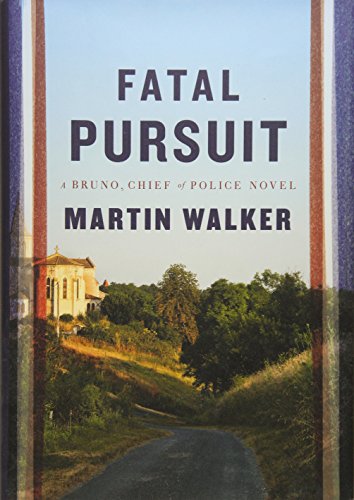











About Bruno Chief Of Police
Martin Walker’s Bruno, Chief of Police series combines village mystery, political intrigue, French history, and the rhythms of rural life in the Dordogne. Introduced in 2008, the novels follow Benoît “Bruno” Courrèges, a former soldier who serves as the municipal policeman of St. Denis, a fictional market town in southwestern France. The books are also published under the broader series label the Dordogne Mysteries, particularly in British editions.
Bruno is less interested in arrests and regulations than in preserving the community entrusted to him. He knows its farmers, shopkeepers, officials, schoolchildren, veterans, and troublesome personalities, and he often resolves minor disputes through patience rather than formal enforcement. His daily life includes coaching local sports, tending his garden, caring for his animals, attending village ceremonies, and preparing generous meals for friends. These details are not incidental comforts around the mysteries; they establish what Bruno is protecting whenever violence or outside pressure reaches St. Denis.
The opening novel, published as Bruno, Chief of Police in the United States and also known as Death in the Dordogne, establishes the series’ central pattern. A crime that appears local gradually exposes deeper historical divisions, forcing Bruno to examine the uneasy relationship between the peaceful present and France’s wartime past. Later investigations continue to draw on buried grievances, political extremism, intelligence work, organized crime, environmental conflict, disputed development, and the economic pressures facing traditional communities.
Walker gives the series a wider scope than its picturesque setting might imply. Bruno may begin with a body, a suspicious accident, or an apparently ordinary village problem, only to become involved with national police agencies, government officials, soldiers, diplomats, or intelligence figures. His experience in the military allows him to function credibly in dangerous situations, but his strongest investigative tool remains his knowledge of people. He understands that loyalty, shame, family history, money, and local reputation can matter more than physical evidence alone.
The novels usually contain complete central mysteries, so individual entries can be understood without reading every preceding book. The continuing character development, however, makes publication order the more satisfying approach. Bruno’s friendships, professional connections, romantic relationships, responsibilities, and understanding of his own future evolve gradually. St. Denis also changes around him as tourism, technology, international politics, and commercial interests reach further into the Dordogne.
Readers may encounter inconsistent numbering because several books have different titles in different markets. Children of War, for example, has also appeared as The Children Return and Death Undercover, while The Dying Season was published in the United States as The Patriarch. Some listings also insert shorter works between the novels, producing numbering that differs from lists counting only the full-length mysteries. These variations reflect editions and formats rather than separate Bruno adventures.
Walker has written individual Bruno stories as well as Bruno’s Challenge and Other Stories of the French Countryside, a collection featuring familiar characters and aspects of life in the Périgord. The shorter fiction adds texture to the series but is not essential for following the main sequence of investigations.
Food and wine remain among the series’ most recognizable pleasures, yet Walker uses them to express something larger about land, tradition, friendship, and cultural continuity. Bruno’s meals bring recurring characters together and provide a counterweight to the violence he investigates. That balance between crime and hospitality gives the novels their distinctive character: the mysteries matter, but so does the community that continues after each case has been solved.