
Below is the complete list of Martin Walker books in order. For each series, the chronological reading order is the same as the order of publication.
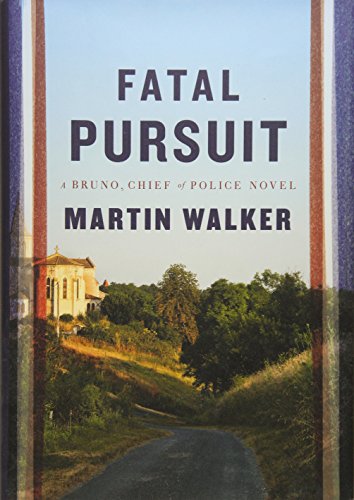
Publication Order of Bruno Chief Of Police Books













Publication Order of Standalone Books




Publication Order of Non-Fiction Books




About Martin Walker
Martin Walker is a British journalist, historian, and novelist best known for creating Benoît “Bruno” Courrèges, the village policeman at the center of the long-running Bruno, Chief of Police mysteries. His fiction draws unusually deeply on the skills and interests of his earlier career: international reporting, political analysis, modern European history, and close observation of how national events reshape local communities. Those elements give his crime novels a broader reach than their pastoral French setting initially suggests.
Before turning primarily to fiction, Walker spent decades in journalism. He joined The Guardian in the early 1970s and held a succession of senior foreign and editorial posts, including assignments connected with Moscow, the United States, and Europe. He later worked with United Press International and international policy organizations. His reporting career placed him near many of the defining political developments of the late twentieth century, particularly the Cold War, the transformation of the Soviet Union, European integration, and American politics.
Walker also established himself as a nonfiction author. His historical and political books include Waking Giant: Gorbachev and Perestroika, The Cold War: A History, Clinton: The President They Deserve, and America Reborn. These works reveal the intellectual foundation that would later support his mysteries: an interest in institutions, ideology, diplomacy, intelligence, historical memory, and the unintended consequences of political decisions. Even when his novels concern a death in a quiet village, the investigation may open onto wartime collaboration, terrorism, organized crime, economic change, environmental disputes, or international rivalry.
His move into fiction preceded the Bruno series. The Caves of Périgord, published in 2002, combines contemporary intrigue with the history and prehistoric art of southwestern France. That region became even more central when Walker introduced Bruno in Bruno, Chief of Police in 2008. The character, whose full name is Benoît Courrèges, is a former soldier serving as the sole municipal policeman of the fictional town of St. Denis in the Dordogne. Bruno relies less on force than on judgment, personal relationships, and an intimate understanding of the people around him.
The Bruno novels are distinguished by the way Walker treats community life as more than decorative background. Markets, vineyards, local government, rugby, hunting, farming, regional traditions, and elaborate shared meals all matter to the stories. Food and wine provide warmth and rhythm, but they also reveal class, history, commerce, and belonging. Against that hospitable atmosphere, Walker places crimes whose roots often reach into France’s contested past or the pressures affecting rural Europe in the present.
His style balances procedural mystery, political thriller, historical reflection, and the pleasures of regional life. The books can be read for their investigations, yet much of their lasting appeal comes from the continuing world around Bruno: friendships develop, professional responsibilities expand, romantic complications recur, and St. Denis changes while retaining its communal identity. Walker’s journalistic precision keeps the larger issues grounded, while his affection for the Dordogne gives the series its distinctive generosity and texture.
Walker’s bibliography is therefore best understood in two connected parts. His nonfiction explains his authority on politics and history; his novels transform that knowledge into character-driven stories rooted in place. Although the Bruno mysteries dominate his reputation as a novelist, they remain closely linked to the international perspective, historical curiosity, and observational discipline developed throughout his earlier career.