
Below is the complete list of Jeff Kinney’s Diary of a Wimpy Kid books in order. For this series, the chronological reading order is the same as the order of publication.
Publication Order of Diary of a Wimpy Kid Books


- The Third Wheel (2012)
Published in 2012, The Third Wheel is listed as book #7 in the Diary of a Wimpy Kid series. 

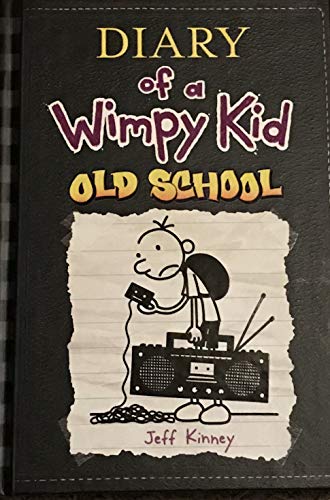


Publication Order of Wimpy Kid Non-Fiction Books


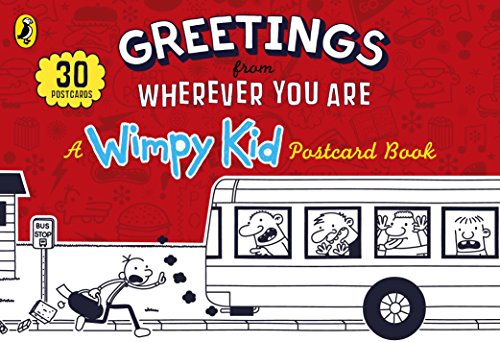
Publication Order of Diary of an Awesome Friendly Kid Books


About Diary of a Wimpy Kid
Jeff Kinney’s Diary of a Wimpy Kid series is built around Greg Heffley, a middle-school student who records his family problems, social disasters, failed schemes, and attempts to improve his position among his peers. Beginning with Diary of a Wimpy Kid in 2007, the main sequence has grown to twenty books, reaching that milestone with Partypooper in October 2025. The stories combine prose with Kinney’s deliberately simple cartoons, creating a form in which the pictures frequently reveal more than Greg’s narration admits.
Greg is the defining reason the series feels different from more conventional school stories. He is not presented as an exemplary child learning tidy lessons from each mistake. He can be selfish, status-conscious, jealous, evasive, and remarkably confident in plans that readers can already see going wrong. Because the books are filtered through his perspective, much of the comedy comes from the distance between Greg’s interpretation and the visible reality. He may describe himself as the victim of unreasonable people while his own account quietly demonstrates how much of the trouble he caused.
That unreliable self-portrait gives the supporting cast unusual importance. Rowley Jefferson is Greg’s best friend, but their relationship includes affection, resentment, dependency, and frequent competition. Greg often takes Rowley for granted, only to discover that Rowley can succeed socially without following his advice. At home, older brother Rodrick is both tormentor and occasional ally, younger brother Manny benefits from being the youngest child, and parents Susan and Frank impose expectations that Greg continually tries to avoid. The series draws much of its durability from rearranging these familiar tensions rather than replacing the cast with each installment.
Kinney also expands the setting well beyond school. Dog Days turns summer vacation into a source of frustration, Cabin Fever traps the family amid worsening winter conditions, The Long Haul builds around a disastrous road trip, and The Getaway places the Heffleys inside a troubled holiday escape. Later books use home renovation, sports, changing schools, family gatherings, and other pressures to alter the comic environment while preserving Greg’s characteristic belief that events would go better if everyone else behaved more sensibly.
The books do not follow a realistic aging chronology. Greg remains within the broad world of middle school even as years of publication pass, allowing recurring characters and situations to continue without forcing the series toward graduation and adulthood. Continuity still matters, however. Family relationships, friendships, earlier embarrassments, and familiar personalities accumulate across the books, and long-term readers recognize patterns in the way Greg repeatedly misjudges Rowley, Rodrick, his parents, and himself.
The wider bibliography has several branches that should be distinguished from the numbered series. The Wimpy Kid Do-It-Yourself Book and other activity or specialty publications are companion works rather than new stages in Greg’s main narrative. Rowley Jefferson also leads a separate group of Awesome Friendly books, beginning with Diary of an Awesome Friendly Kid: Rowley Jefferson’s Journal and continuing through his own adventure and spooky-story collections. These books shift the voice away from Greg and deliberately show the Wimpy Kid world through Rowley’s more innocent perspective.
Reissues and collector editions create another bibliographical complication. Special Disney+ covers, box sets, deluxe editions, journals, and other repackaged material may appear alongside the novels, but they do not add new numbered installments simply because they carry different artwork or formats. The core sequence remains the continuing Greg Heffley books, with Partypooper officially identified as book twenty.
Across that long run, the series has preserved a remarkably stable comic engine. Greg wants popularity without embarrassment, independence without responsibility, friendship without inconvenience, and family support without family interference. Kinney keeps finding new situations in which those desires collide, while the combination of first-person narration and visual contradiction ensures that Greg’s greatest obstacle is often the version of himself he refuses to see.