
Below is the complete list of Ngaio Marsh’s Roderick Alleyn books in order. For this series, the chronological reading order is the same as the order of publication.
Publication Order of Roderick Alleyn Books

















About Roderick Alleyn
Ngaio Marsh’s Roderick Alleyn series comprises thirty-two detective novels published from 1934 to 1982, beginning with A Man Lay Dead and ending with Light Thickens. Written across nearly five decades, the books follow Alleyn from his early investigations through a long Scotland Yard career, while Marsh moves between classic country-house mysteries, London society, the theatre, wartime intrigue, and cases set in her native New Zealand. Together they form one of the major detective series to emerge from the Golden Age of crime fiction.
Roderick Alleyn is an unusual policeman for his period. Born into an aristocratic family and educated at Oxford, he could have followed a more conventional path for someone of his background but instead joins the police. His older brother, Sir George Alleyn, holds the family title, while Roderick gradually advances professionally and eventually becomes Chief Superintendent at Scotland Yard.
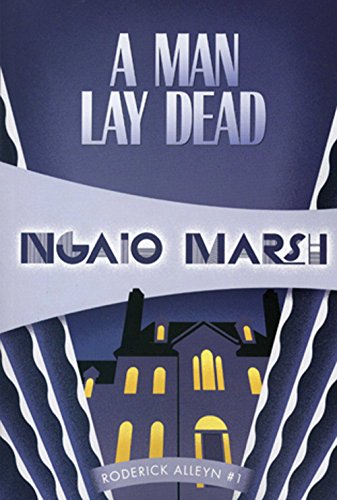
A Man Lay Dead introduces Alleyn through a country-house gathering where a murder game becomes an actual murder. The setup contains many ingredients associated with Golden Age mysteries—a restricted group of suspects, complicated relationships, concealed motives, and a detective who must reconstruct events from apparently insignificant details. Subsequent early novels quickly broaden Marsh’s range. Enter a Murderer moves into the theatre, The Nursing Home Murder combines medicine and politics, and Death in Ecstasy investigates death within a religious cult.
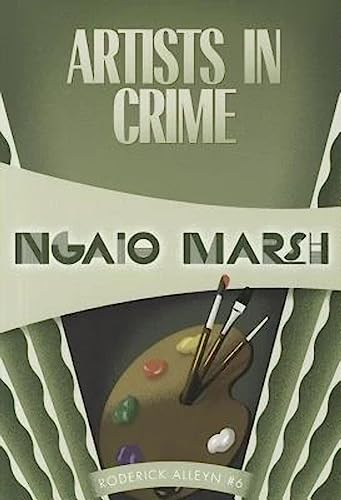
A major development comes with Artists in Crime, which introduces painter Agatha Troy. Alleyn encounters Troy while investigating a killing at an artists’ colony, and their initially complicated relationship eventually becomes a marriage. Troy remains an independent and accomplished artist rather than simply becoming the detective’s supporting spouse. Their relationship, and later their family life, supplies an understated continuity beneath the individual mysteries.
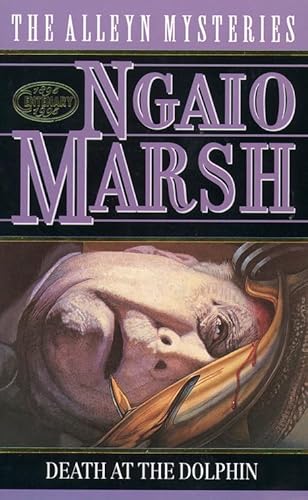
Marsh repeatedly drew upon her extensive experience as an actor and theatre director. Enter a Murderer, Opening Night, Final Curtain, Death at the Dolphin, and Light Thickens are among the novels in which actors, directors, productions, or theatrical spaces become particularly important. The theatre is ideally suited to Marsh’s mysteries because almost everyone involved is professionally skilled at creating appearances. Costumes, props, timing, entrances, rivalries, and performances can all become part of the mechanics of a crime.
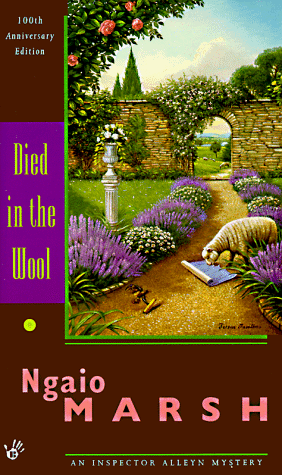
Not every investigation remains within England. Marsh brought Alleyn to New Zealand in Vintage Murder, while Colour Scheme and Died in the Wool return him there during the Second World War. These books stand out within British Golden Age detective fiction for their New Zealand environments and for Marsh’s treatment of a society she knew firsthand. Later, Photo Finish again places an Alleyn investigation in New Zealand.
The Second World War changes Alleyn’s role for a period. Espionage and national security become more prominent, particularly in the New Zealand wartime novels. Marsh therefore allows the series to respond to contemporary events rather than keeping her detective permanently inside the artificial timelessness sometimes associated with traditional country-house mysteries.
Recurring police colleagues also contribute to the series’ continuity. Inspector Edward Fox becomes Alleyn’s dependable professional partner and provides a contrast to Alleyn’s more aristocratic background. Their investigations increasingly resemble structured police inquiries even when Marsh employs the closed suspect groups, elaborate clues, and dramatic revelations associated with classical detection.
The books were written over such a long period that the chronology inevitably becomes somewhat elastic. Alleyn and the people around him do not age at the same rate as the real world between 1934 and 1982. It is more useful to regard the novels as a continuing fictional career than to attempt to reconcile every date with a realistic lifespan.
Publication order is the strongest reading approach. Most novels contain self-contained murders and can be read independently, but Alleyn’s relationship with Troy, his professional advancement, recurring colleagues, and occasional family developments make more sense when encountered as Marsh introduced them. Publication order also shows the evolution of Marsh’s crime writing from tightly constructed Golden Age puzzles toward later novels with greater emphasis on police procedure and character.
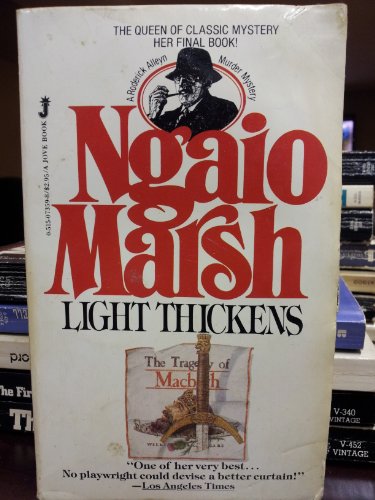
The final book, Light Thickens, returns appropriately to one of Marsh’s great passions: Shakespearean theatre. Published in the year of her death, it brings Alleyn into an investigation surrounding a production of Macbeth. The setting makes a fitting conclusion to a series in which detection and performance had always been closely connected—Alleyn repeatedly solves crimes by recognizing the difference between what people present to an audience and what they have worked hardest to conceal.