
Below is the complete list of Richelle Mead’s Age Of X books in order. For this series, the chronological reading order is the same as the order of publication.
Publication Order of Age Of X Books

About Age Of X
In a future where humanity has rejected religion following a period of devastating conflict, the ancient gods are preparing to reclaim their influence. This is the unsettling premise of the Age of X series by Richelle Mead, an adult science-fiction and urban fantasy saga that combines political intrigue, supernatural mythology, murder investigations, and complicated romantic relationships. Set in a technologically advanced society that regards religious belief with suspicion, the novels explore what happens when supposedly rational institutions encounter powers they cannot explain or control.
The story unfolds primarily within the Republic of United North America, commonly known as RUNA, a powerful nation established after a catastrophic period of disease, social upheaval, and religious extremism known as the Decline. Determined to prevent further devastation, the government maintains strict controls over religious organisations and supernatural claims.
Justin March once served as an investigator responsible for examining religious groups and identifying potentially dangerous activities. Brilliant, cynical, and frequently self-destructive, Justin possesses an unusual talent for recognising patterns that others overlook. However, a professional failure resulted in his exile from the Republic, leaving him isolated from the society he once served.
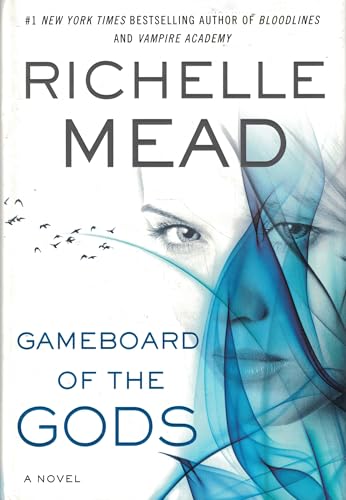
His circumstances change in Gameboard of the Gods (2013), when government officials offer him an opportunity to return. A series of ritualistic murders has baffled investigators, and the authorities need someone capable of understanding their apparent religious significance.
Justin’s assignment brings him together with Mae Koskinen, a praetorian serving in the Republic’s elite military. Genetically enhanced to possess extraordinary physical abilities, Mae is a formidable fighter whose disciplined exterior conceals a complicated personal history. Raised within an aristocratic caste, she has rejected many of her society’s expectations in favour of military service.
Their uneasy partnership provides much of the series’ emotional tension. Justin relies on intellectual analysis, unconventional methods, and considerable personal charm, while Mae approaches danger through discipline, training, and physical capability. Despite their mutual attraction, differences in temperament and unresolved personal conflicts frequently undermine their attempts to understand one another.
As their investigation progresses, evidence increasingly suggests that ancient deities are not merely symbolic figures from forgotten religions. The gods are actively influencing human affairs, selecting individuals to serve their interests and competing for power within a world that officially denies their existence.
This revelation introduces the series’ central philosophical conflict. The Republic has attempted to protect humanity by regulating belief, yet supernatural forces continue operating beyond institutional control. Justin, whose professional identity depends upon scepticism and rational investigation, must confront experiences that challenge his understanding of reality.
In The Immortal Crown (2014), the conflict expands beyond RUNA when Justin and Mae join a diplomatic delegation travelling to Arcadia, a neighbouring nation where religion remains deeply embedded in political authority. Unlike the Republic’s secular government, Arcadia operates within a rigid social structure that places severe restrictions on women.
The mission forces Justin and Mae to navigate unfamiliar political customs while investigating the increasing influence of supernatural powers. Mae also pursues a deeply personal objective involving a young relative whose circumstances connect her to Arcadia.
Meanwhile, rivalries among individuals chosen by the gods create new dangers, suggesting that the emerging supernatural conflict extends far beyond isolated murders or competing religious movements.
Another important perspective comes from Tessa Cruz, a young woman brought from outside the Republic into Justin’s household. Her experiences reveal the cultural divisions separating RUNA from neighbouring societies, particularly differences involving education, religion, gender expectations, and personal freedom.
Mead uses these contrasting viewpoints to examine the relationship between belief and political authority. Neither religious devotion nor institutional secularism is presented as an uncomplicated solution to humanity’s problems. Instead, the novels reveal how powerful organisations can manipulate ideology to maintain control.
Age of X is distinct from Mead’s Vampire Academy, Bloodlines, and Georgina Kincaid novels, taking place in an independent fictional universe with a stronger emphasis on speculative politics and futuristic technology.
Only two novels have been published. A third instalment, The Eye of Andromeda, was planned but remains unpublished, leaving significant elements of the overarching storyline unresolved.
The series stands out within Mead’s bibliography for its ambitious combination of technological advancement and ancient mythology. Through Justin’s intellectual scepticism, Mae’s struggle with personal identity, and the gods’ competing ambitions, Age of X examines whether humanity can truly escape the influence of belief, power, and forces beyond its understanding.