
Below is the complete list of Brad Meltzer’s Ordinary People Change the World books in order. For this series, the chronological reading order is the same as the order of publication.
Publication Order of Ordinary People Change the World Books


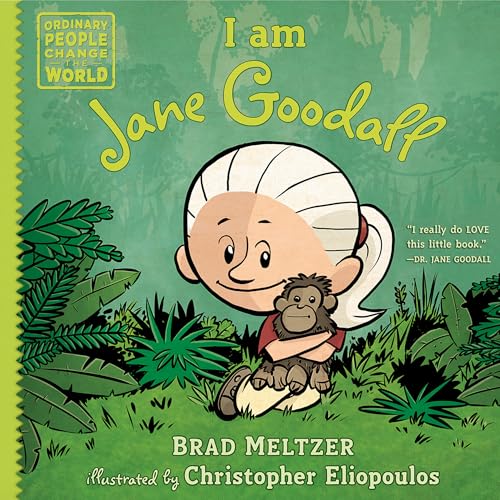


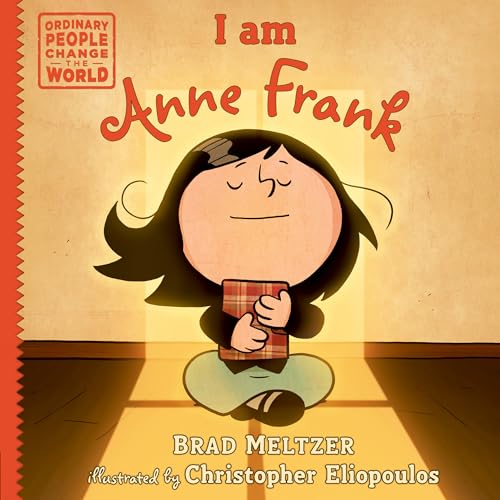


About Ordinary People Change the World
Brad Meltzer’s Ordinary People Change the World series is a long-running collection of illustrated biographies for young readers, created with artist Christopher Eliopoulos. Rather than presenting famous historical figures through conventional chronological summaries, the books portray them as children and emphasize the character traits, choices, setbacks, and convictions that eventually helped them make a difference. Scientists, activists, presidents, athletes, artists, writers, explorers, entertainers, and other influential people appear across a series designed around the idea that extraordinary achievements often begin with qualities ordinary children can recognize in themselves.
The project grew naturally from Meltzer’s broader interest in history and heroism. Before creating the series, he had written Heroes for My Son and Heroes for My Daughter, collections inspired partly by his desire to give his children examples of people worth admiring. Ordinary People Change the World takes that impulse into picture-book form, replacing distant historical icons with approachable personalities who experience uncertainty, failure, exclusion, curiosity, fear, and persistence before becoming famous.
The series launched in 2014 with books about Abraham Lincoln and Amelia Earhart. Each volume uses the recurring “I Am” title format and allows its subject to narrate much of the story in the first person. Eliopoulos depicts the central figure in a distinctive cartoon style that keeps the character recognizable as a child even when the narrative moves into adulthood. Historical photographs, quotations, timelines, and additional factual material provide context beyond the illustrated narrative.
That format is important to the series’ identity. The books are not intended as exhaustive biographies. Instead, Meltzer typically chooses defining episodes that illustrate a particular quality: Lincoln’s commitment to equality, Helen Keller’s determination, Martin Luther King Jr.’s belief in peaceful change, Jane Goodall’s curiosity, Albert Einstein’s willingness to think differently, or Ruth Bader Ginsburg’s persistence in challenging unequal treatment. The focus remains on why the person matters rather than cataloging every event in a life.
The range of subjects has expanded substantially over time. Political and civil-rights figures stand alongside scientists such as Marie Curie and Temple Grandin, athletes including Jackie Robinson and Muhammad Ali, cultural figures such as Walt Disney and Dolly Parton, and historical leaders from different periods. Meltzer has also included figures whose influence came through advocacy, invention, exploration, literature, and public service, allowing the collection to function as a broad introduction to history rather than a sequence devoted to one profession or era.
A recurring message connects otherwise very different lives. The people featured are not presented as inherently destined for greatness. Their accomplishments emerge through choices—speaking up, continuing after failure, helping others, questioning accepted ideas, or pursuing work that initially seemed impossible. That emphasis gives the biographies a character-education element without separating it from historical storytelling.
Ordinary People Change the World also expanded beyond the books through the PBS KIDS animated series Xavier Riddle and the Secret Museum. Inspired by Meltzer and Eliopoulos’s work, the television series follows children who encounter historical figures while trying to solve problems in their own lives.
Because each volume profiles a different person, the books do not form a continuing narrative and can be read independently. Their continuity comes instead from the consistent visual approach and underlying philosophy: history may remember presidents, scientists, activists, and cultural icons for extraordinary achievements, but each began as an ordinary person learning which values and abilities were worth acting upon.