
Below is the complete list of Rita Mae Brown’s “Sister” Jane books in order. For this series, the chronological reading order is the same as the order of publication.
Publication Order of “Sister” Jane Books





About “Sister” Jane
Rita Mae Brown’s “Sister” Jane series is a long-running mystery sequence centered on Jane Arnold, known as “Sister,” the master of a foxhunting club in Virginia. Beginning with Outfoxed, the books combine traditional murder mysteries with the culture of foxhunting, horses, hounds, land management, rural politics, and the intricate social relationships of a close-knit sporting community. Brown’s own deep involvement with foxhunting gives the series an unusually detailed sense of place and practice, while Sister’s age, experience, and authority distinguish her from the more conventional amateur sleuth.
Jane Arnold is not simply someone who happens to solve crimes. As master of the Jefferson Hunt Club, she occupies a demanding leadership role that requires knowledge of horses, hounds, terrain, weather, landowners, and the personalities of people who hunt together. That position gives her broad access to the community while also making her responsible for preserving traditions and relationships that can easily become strained by money, status, jealousy, and changing ideas about rural life.
Outfoxed establishes both Sister and the world around her. A murder connected to the hunt draws her into an investigation where social tensions and old resentments matter as much as physical evidence. Brown uses the mystery to introduce the structure of the hunting community, including riders, staff, landowners, and the animals whose behavior often reveals more than human conversation does.
The animals are an important part of the series, though the tone differs from Brown’s Mrs. Murphy mysteries. Hounds, horses, foxes, and other animals have their own perspectives and sometimes communicate among themselves, creating a parallel layer of observation. Their presence is not merely whimsical. Because hunting depends so heavily on animal behavior and environmental awareness, they function naturally within the investigative world Brown has built.
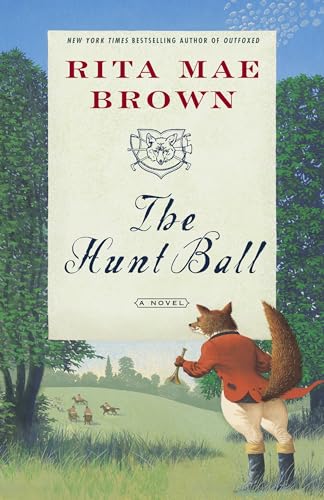
Later novels such as Hotspur, Full Cry, The Hunt Ball, and The Hounds and the Fury deepen the community around Sister. The cases may involve murder, inheritance, rivalry, land disputes, or buried histories, but the continuing appeal comes from watching familiar characters interact over time. Friendships evolve, loyalties are tested, and the hunt itself changes as outside pressures affect both tradition and countryside.
Virginia history becomes increasingly important across the series. Brown frequently links present-day crimes with older conflicts involving property, family lineage, local politics, and the long memory of the land. As in her Mrs. Murphy books, the past is rarely finished simply because the people who created a problem are gone. Old decisions can still shape ownership, reputation, and motive generations later.
Sister herself is one of Brown’s more distinctive protagonists. She is older than many mystery heroines, physically capable, socially observant, and accustomed to making decisions under pressure. Her authority comes not from a badge or formal investigative role but from decades of experience dealing with people and animals. She understands that arrogance, fear, and dishonesty often reveal themselves long before someone is willing to admit the truth.
The series is best read in publication order. Individual mysteries are generally self-contained, but Sister’s relationships, the composition of the hunt, and recurring community tensions develop from book to book. Sequential reading also makes the changing rural landscape more apparent.
The “Sister” Jane books are particularly rewarding for readers interested in mysteries rooted in a specialized world. Brown does not treat foxhunting as decorative background. The rituals, terminology, land use, horsemanship, and pack dynamics are fundamental to how the stories work.
At its core, the series is about stewardship as much as detection. Sister is responsible for a hunt, a community, and a tradition that depend on trust and cooperation. Murder represents an extreme rupture in that order, but the deeper conflicts often begin with more ordinary human weaknesses. Brown uses those tensions to create a series in which solving a crime means understanding not only who committed it, but also the complicated social world that allowed it to happen.