
Below is the complete list of Dana Stabenow’s Kate Shugak books in order. For this series, the chronological reading order is the same as the order of publication.
Publication Order of Kate Shugak Books


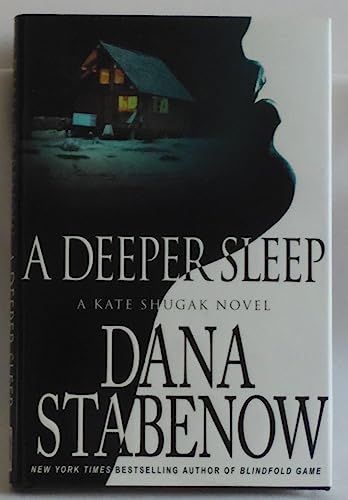



About Kate Shugak
Kate Shugak lives on a remote homestead in Alaska, surrounded by mountains, wilderness, and communities whose relationships stretch back generations. A former investigator for the Anchorage district attorney’s office, she has withdrawn from professional law enforcement following a traumatic confrontation. Yet her knowledge of the region and its people repeatedly draws her into murder investigations. Dana Stabenow’s Kate Shugak series combines crime fiction with an intimate portrayal of Alaska Native life, environmental conflicts, political tensions, and the challenges of surviving in an unforgiving landscape.
Kate is an Aleut woman whose family history connects her to the Indigenous communities of southwestern Alaska. She lives on a 160-acre homestead within a vast fictional national park, accompanied by Mutt, her fiercely loyal half-wolf, half-husky dog. Their close partnership is central to the series, with Mutt often proving as perceptive and formidable as her owner.
In A Cold Day for Murder (1992), Kate’s former employer and lover, Jack Morgan, asks her to investigate the disappearance of a park ranger and an investigator sent to locate him. Reluctantly leaving her isolation, Kate encounters familiar residents whose longstanding grievances and personal loyalties complicate the search.
The novel introduces the fictional Park, an enormous wilderness containing small settlements, homesteads, fishing communities, and Indigenous villages. Although its residents often distrust outsiders, they possess complicated relationships that Kate understands through family connections and personal experience.
The opening novel won the 1993 Edgar Award for Best Paperback Original, establishing Stabenow’s reputation in crime fiction.
Subsequent investigations explore different aspects of Alaskan life. Dead in the Water (1993) takes Kate into the commercial fishing industry, while A Cold-Blooded Business (1994) examines the circumstances surrounding an oilfield death.
In Breakup (1997), the arrival of spring transforms the wilderness into a landscape of melting ice, unpredictable animals, and accumulating disasters. Stabenow uses the season’s distinctive hazards to combine murder mystery with dark humour and a detailed understanding of regional conditions.
Throughout the novels, Kate’s family and community relationships become increasingly important. Her grandmother, Ekaterina Shugak, is a respected elder whose authority within the Native community frequently creates tension with Kate’s fierce independence.
Jack Morgan remains a significant figure in Kate’s personal life, while Alaska State Trooper Jim Chopin develops into another important recurring character. Their relationships introduce emotional complications that extend beyond individual investigations.
The series undergoes substantial changes in Hunter’s Moon (1999) and Midnight Come Again (2000), which explore the devastating consequences of violence and the difficulty of recovering from profound personal loss.
Later novels continue developing Kate’s responsibilities toward the people around her. Johnny Morgan becomes an important part of her household, challenging her preference for solitude and strengthening her ties to the wider community.
In A Grave Denied (2003), the discovery of a body preserved in ice draws Kate into another investigation involving concealed histories and unresolved conflicts. A Taint in the Blood (2004) explores a decades-old murder accusation and the possibility that an apparently settled case concealed serious injustice.
Bad Blood (2013) examines tensions between neighbouring communities, while Less Than a Treason (2017) continues Kate’s struggle to balance personal independence with the obligations created by her family and friendships.
More recent instalments, including No Fixed Line (2020) and Not the Ones Dead (2023), address contemporary crimes and pressures affecting Alaska’s remote communities. No Bones of Men There (2026), the twenty-fourth novel, involves the discovery of unidentified human remains and Kate’s determination to establish the identity of the dead.
The series also includes shorter fiction featuring Kate and other recurring characters. These stories expand the fictional world without replacing the main novels, whose continuing relationships and major events follow a connected chronology.
Stabenow’s portrayal of Alaska is particularly distinctive. Weather, distance, seasonal changes, and limited transportation are not merely atmospheric details but practical forces affecting investigations. Characters must contend with wilderness conditions alongside the dangers posed by other people.
The novels also explore conflicts surrounding land ownership, subsistence traditions, commercial fishing, resource extraction, and political influence. Kate’s understanding of Native communities gives her a perspective frequently absent from conventional police investigations.
Across twenty-four novels, Kate develops from an emotionally wounded loner into a woman increasingly involved in protecting her family and community. Her independence remains central to her character, but her experiences reveal that loyalty and responsibility need not undermine personal freedom.
The Kate Shugak series stands out for its combination of compelling mysteries and a richly developed sense of place. Through Kate’s investigations, Stabenow portrays Alaska as a region of extraordinary beauty and complicated human relationships, where solving a crime often requires understanding the history, traditions, and conflicts of the people who call the wilderness home.