
Below is the complete list of John Lescroart’s Abe Glitsky books in order. For this series, the chronological reading order is the same as the order of publication.
Publication Order of Abe Glitsky Books



About Abe Glitsky
Abe Glitsky is a San Francisco homicide detective whose determination to uncover the truth frequently brings him into conflict with powerful criminals, political interests, and the institutions he serves. Created by John Lescroart, Glitsky is one of the central figures in the author’s interconnected world of legal thrillers and police mysteries. His investigations examine racial tensions, corruption, personal ambition, and the complicated relationship between enforcing the law and achieving justice.
Glitsky is a veteran investigator known for his intelligence, patience, and uncompromising approach to police work. A Black and Jewish detective, he has experienced the prejudices and institutional pressures that complicate his position within the San Francisco Police Department. His imposing physical presence and distinctive facial scar contribute to an intimidating appearance, although his reserved manner conceals considerable sensitivity and emotional depth.
His closest friend is Dismas Hardy, a former police officer and prosecutor who becomes a prominent criminal defence attorney. Their friendship provides one of the most important continuing relationships in Lescroart’s fiction. Although they sometimes approach criminal cases from opposing professional positions, they share a belief that justice requires more than obtaining convictions.
Glitsky appears throughout the Dismas Hardy novels, beginning with Dead Irish (1989), but several books place his investigations and professional struggles at the centre of the narrative.
In A Certain Justice (1995), San Francisco becomes the setting for a racially charged criminal investigation after a violent incident involving a white mob and a Black man. When Kevin Shea becomes a fugitive accused of murder, public anger and political pressure threaten to overwhelm the search for reliable evidence.
Glitsky must investigate within an atmosphere where racial prejudice, media attention, and competing political interests influence perceptions of guilt. The novel explores how quickly public opinion can become a substitute for established facts, particularly when a high-profile case provokes widespread social unrest.
Guilt (1997) shifts attention to Mark Dooher, a successful San Francisco attorney whose respectable public image conceals disturbing behaviour. As serious crimes become connected to his personal and professional relationships, Glitsky faces the difficult task of investigating a man protected by wealth, influence, and powerful connections.
The novel also features attorney Wes Farrell, whose experiences with Dooher have lasting consequences for his understanding of the justice system. Its narrative moves across different periods, revealing how earlier events shape the criminal investigation and the motivations of those involved.
An unusual feature of these two novels is their overlapping chronology. Portions of Guilt take place before and after the events of A Certain Justice, allowing Lescroart to revisit the same fictional world while revealing additional dimensions of its characters and conflicts.
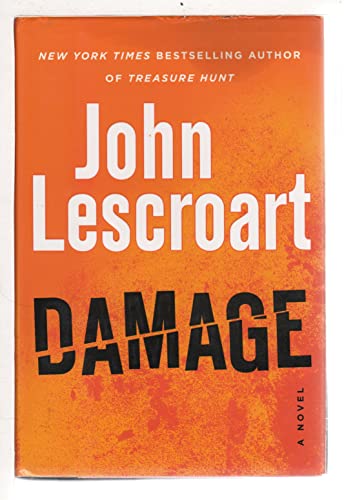
In Damage (2011), Glitsky confronts another investigation complicated by extraordinary wealth and political influence. Ro Curtlee, the son of an extremely powerful San Francisco family, has been convicted of raping and murdering a young woman employed in the family home.
When Ro receives a new trial and is released from prison, people connected to his original prosecution begin facing deadly consequences. Glitsky, whose involvement in the case previously damaged his police career, must determine whether the apparent acts of revenge are connected to the Curtlee family.
The investigation exposes the vulnerability of legal institutions when wealthy individuals can exert pressure upon prosecutors, witnesses, and police officers. It also places Glitsky’s professional integrity under scrutiny as he confronts opponents capable of influencing the system intended to hold them accountable.
The Keeper (2014) is sometimes included among the Abe Glitsky novels, although it is also classified within the Dismas Hardy series. The story involves the disappearance of a San Francisco sheriff’s deputy’s wife and the suspicion surrounding her husband. Glitsky becomes deeply involved in the investigation, while Hardy confronts the legal complications arising from the case.
The distinction between Glitsky’s dedicated novels and his appearances in the broader Hardy series is significant. The core Abe Glitsky sequence is commonly identified as A Certain Justice, Guilt, and Damage, with some bibliographies extending the grouping to include The Keeper and other closely connected works.
Throughout these stories, Lescroart presents Glitsky as a detective whose personal principles are continually tested by an imperfect justice system. His family relationships, professional setbacks, and enduring friendships give the character a life beyond individual investigations.
The series stands apart from conventional police procedurals through its emphasis on political influence and moral ambiguity. Glitsky rarely encounters crimes that can be understood entirely through physical evidence or straightforward motives. His cases require an understanding of institutional loyalties, historical grievances, and the compromises made by people determined to protect their reputations.
Through Abe Glitsky, Lescroart examines the difficulties of remaining principled when power and privilege interfere with criminal justice, creating a detective whose greatest strength is his refusal to abandon the truth merely because discovering it becomes inconvenient.