
Below is the complete list of Elmore Leonard’s Ordell Robbie & Louis Gara books in order. For this series, the chronological reading order is the same as the order of publication.
Publication Order of Ordell Robbie & Louis Gara Books

About Ordell Robbie & Louis Gara
Ordell Robbie and Louis Gara are two career criminals whose partnership is built on shared prison experiences, ambitious schemes, and a remarkable ability to underestimate the people around them. Created by Elmore Leonard, the pair appear in two interconnected crime novels that explore kidnapping, arms trafficking, deception, and the unpredictable consequences of criminal greed. Combining dark humour with sharp dialogue and morally complicated characters, the Ordell Robbie and Louis Gara series demonstrates Leonard’s talent for transforming apparently straightforward crimes into elaborate contests of intelligence and manipulation.
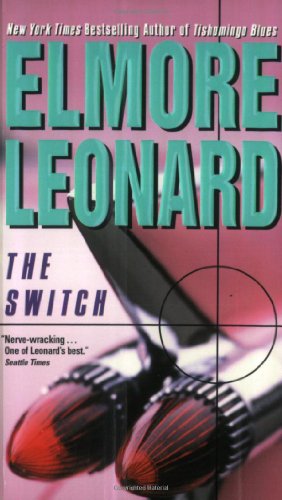
The series begins with The Switch (1978), set in Detroit, Michigan. Ordell and Louis first became acquainted while serving prison sentences for grand theft auto. Having developed a friendship based on their shared criminal backgrounds, they decide to cooperate on a scheme that promises considerably more money than their previous activities.
Their target is Mickey Dawson, the wife of wealthy real estate developer Frank Dawson. Believing that Frank will pay a substantial ransom to secure his wife’s release, the criminals arrange her kidnapping and demand one million dollars.
The plan initially appears manageable, but Ordell and Louis have overlooked a crucial detail. Frank is involved with another woman and has little interest in preserving his marriage. Rather than being devastated by Mickey’s disappearance, he recognises an unexpected opportunity to escape an unwanted relationship.
His refusal to cooperate transforms the kidnapping into a complicated problem for the criminals. Their hostage is considerably more resourceful than anticipated, and their carefully imagined financial reward suddenly becomes uncertain.
Mickey’s intelligence and willingness to challenge her captors gradually change the balance of power. Instead of remaining a passive victim, she recognises weaknesses in their arrangement and begins considering how the situation might serve her own interests.
Leonard develops much of the novel’s humour through the criminals’ inability to anticipate ordinary human behaviour. Their scheme depends upon assumptions about marriage, wealth, and loyalty that prove spectacularly unreliable.
The second novel, Rum Punch (1992), revisits Ordell and Louis fourteen years later, placing them in the criminal underworld of South Florida.
Ordell has established himself as an illegal firearms dealer, conducting transactions involving weapons and substantial amounts of money. His growing ambitions have made him increasingly ruthless, particularly when associates threaten his financial interests.
Louis, meanwhile, has spent additional time in prison and remains a comparatively unambitious criminal. His willingness to participate in Ordell’s schemes reflects their longstanding association, although the differences between their personalities have become more pronounced.
The story centres on Jackie Burke, a middle-aged flight attendant who supplements her modest income by transporting money for Ordell. When federal agents discover her activities, Jackie faces a dangerous choice between cooperating with the authorities and risking retaliation from her criminal employer.
Her circumstances become more complicated when she meets Max Cherry, an experienced bail bondsman who develops an immediate interest in her.
Jackie gradually recognises that both the authorities and Ordell underestimate her intelligence. Rather than accepting the limited choices presented to her, she begins constructing a plan that could allow her to escape the situation with financial security.
Ordell’s determination to protect his money brings Louis and other associates into an increasingly unstable arrangement involving deception, suspicion, and competing ambitions.
Melanie Ralston, who also appeared in The Switch, becomes involved in the unfolding scheme. Her presence reinforces the connection between the novels while introducing another character whose personal interests complicate Ordell’s plans.
The contrast between the two books reveals how Leonard develops his criminal characters over time. In The Switch, Ordell and Louis are relatively inexperienced kidnappers whose confidence exceeds their practical abilities. By Rum Punch, Ordell has become more calculating and dangerous, while Louis remains vulnerable to poor judgment.
Both novels are distinguished by Leonard’s conversational storytelling. Characters reveal their intentions through dialogue, frequently exposing their weaknesses without realising it. The humour emerges naturally from disagreements, misunderstandings, and the consequences of plans that fail to account for other people’s intelligence.
The novels also share an interest in resourceful women who challenge the expectations of male criminals. Mickey Dawson and Jackie Burke respond to threatening circumstances through observation, patience, and an ability to recognise opportunities their opponents overlook.
Both books received film adaptations. The Switch became Life of Crime (2013), starring Jennifer Aniston, while Rum Punch inspired Quentin Tarantino’s Jackie Brown (1997), starring Pam Grier, Samuel L. Jackson, and Robert De Niro.
The Ordell Robbie and Louis Gara series consists of two novels published fourteen years apart. Although each features a distinct criminal scheme, the returning characters create continuity and illustrate Leonard’s interest in revisiting familiar personalities under changing circumstances.
Through Ordell and Louis, Leonard portrays the criminal world as a place where arrogance, greed, and misplaced confidence can be more dangerous than elaborate police investigations. Their stories demonstrate how even experienced criminals can discover that the people they regard as easy victims are often considerably more capable than themselves.