
Below is the complete list of Molly Harper’s Jane Jameson books in order. For this series, the chronological reading order is the same as the order of publication.
Publication Order of Jane Jameson Books


- Nice Girls Don’t Sign a Lease Without a Wedding Ring (2010)
In the Jane Jameson series, Nice Girls Don’t Sign a Lease Without a Wedding Ring is book #4 and was published in 2010. 
About Jane Jameson
Molly Harper’s Jane Jameson books are the foundation of what later grows into the wider Half-Moon Hollow world, but the series has its own distinct shape and charm. At the center is Jane Jameson, a children’s librarian whose already-frustrating life takes a sharp turn into the undead. That setup sounds like pure paranormal comedy, and the books are certainly funny, but what makes them memorable is the way Harper balances wit with reinvention. Jane is not just dealing with vampires in the abstract; she is rebuilding a life, a body, a social identity, and eventually an entire future she never expected to have.
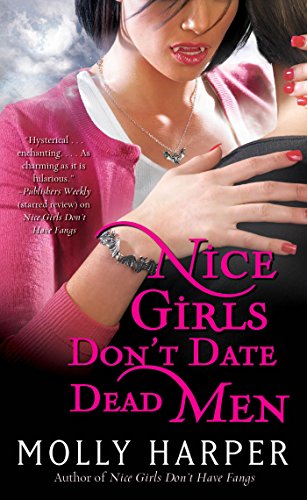
The core series runs through four novels: Nice Girls Don’t Have Fangs, Nice Girls Don’t Date Dead Men, Nice Girls Don’t Live Forever, and Nice Girls Don’t Bite Their Neighbors. There is also a short piece, Nice Girls Don’t Sign a Lease Without a Wedding Ring, that fits between the third and fourth books, but the main arc is those four novels. Publication order matters because this is not a reset-heavy paranormal romance line. Jane’s relationships, responsibilities, and place in Half-Moon Hollow all grow from book to book.
What gives the series its energy is Jane herself. She is funny, self-aware, stubborn, and often far more sensible than the supernatural chaos around her. Harper has a real gift for protagonists who can be exasperated, wounded, and hilarious at the same time, and Jane is one of her best. Before the vampire turn, she is already living with disappointment and small-town frustration. Becoming undead does not erase that; it just transforms it into a new set of problems, social absurdities, and possibilities. That grounding is why the books work. Jane is not a fantasy avatar drifting through a sexy vampire setup. She still feels like a woman trying to make practical sense of a ridiculous life.
The first novel, Nice Girls Don’t Have Fangs, does a lot more than launch a premise. It introduces the voice, the town, and the social rules that make the series so readable. Half-Moon Hollow is not just paranormal wallpaper. It is a Southern small town full of gossip, grudges, unofficial alliances, and comic friction, which means Jane’s transformation affects everything from her job prospects to her family dynamics to her dating life. That local texture is one of the series’ strongest assets.
As the books continue, the world broadens naturally. Nice Girls Don’t Date Dead Men and Nice Girls Don’t Live Forever deepen Jane’s romantic and social entanglements while showing that undeath does not make personal life any easier. Harper keeps the tone light on the surface, but there is real progression underneath the banter. Jane’s emotional life changes. Her confidence changes. Her relationship to the town changes. By the time the series reaches Nice Girls Don’t Bite Their Neighbors, the books are doing more than following one heroine through a supernatural makeover. They are building a community around her.
That is one of the best reasons to read the series in order. What begins as Jane’s story gradually becomes the basis for a larger ensemble world. Side characters gain more weight, recurring relationships start to matter more, and the Half-Moon Hollow setting stops feeling like a one-series backdrop and starts feeling like a place with enough life to support many stories. The Jane Jameson books are the doorway into that world, and they work best when read as the beginning of an expanding supernatural small-town saga.
The series also shows what Molly Harper does especially well. These books are paranormal romance, but they are powered by voice, timing, and social comedy as much as by supernatural lore. Jane’s frustrations, observations, and attempts to stay practical in an impractical world make the novels feel warm, quick, and highly readable. In publication order, the Jane Jameson series becomes more than a funny vampire romance line. It becomes the story of a woman learning how to survive, adapt, and eventually belong in a life she never would have chosen for herself.