
Below is the complete list of Holly Jackson books in order. For each series, the chronological reading order is the same as the order of publication.
Publication Order of A Good Girl’s Guide to Murder Books


Publication Order of Standalone Books


About Holly Jackson
Holly Jackson is a British author of young adult mystery and thriller fiction, best known for the A Good Girl’s Guide to Murder series. Her novels combine intricate investigations with contemporary concerns about social media, true-crime culture, public perception, obsession, and the difference between what a community believes and what the evidence actually shows. Her debut, A Good Girl’s Guide to Murder, became an international bestseller and established Pip Fitz-Amobi as one of the most recognizable young investigators in recent YA fiction.
Jackson grew up in Buckinghamshire, England, and began writing stories at a young age. She studied literary linguistics and creative writing at the University of Nottingham before completing a master’s degree in English. Her interest in mysteries, crime stories, and complex plotting eventually developed into the manuscript that launched her publishing career.
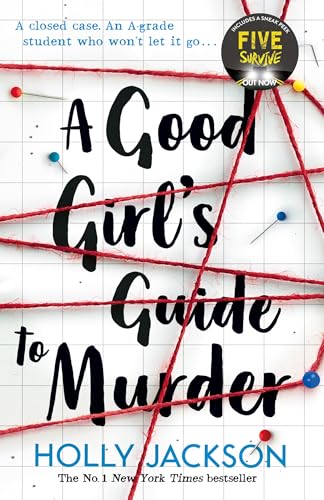
A Good Girl’s Guide to Murder was first published in the United Kingdom in 2019. The novel follows seventeen-year-old Pip, who chooses a supposedly solved local murder as the subject of a school project. Five years earlier, schoolgirl Andie Bell disappeared and Sal Singh was blamed for killing her before taking his own life. Pip doubts the accepted version of events and begins investigating with Sal’s younger brother, Ravi. What starts as an academic project becomes increasingly dangerous as they uncover secrets that people in their community would prefer to keep buried.
The story continued with Good Girl, Bad Blood, in which Pip’s experiences as an amateur investigator and the success of her true-crime podcast make it impossible for her to return completely to ordinary life. As Good as Dead takes the consequences further, examining the psychological damage produced by everything she has experienced. The novella Kill Joy serves as a prequel, showing Pip at a murder-mystery party before the investigation that changes her life.
Jackson moved beyond Pip’s story with Five Survive, a stand-alone thriller about six friends traveling in an RV who become trapped and targeted by a shooter. The confined setting allows her to build suspense around the realization that the attack is not random and that someone inside the vehicle is hiding the information the gunman wants.
The Reappearance of Rachel Price similarly uses a mystery within a family to examine competing versions of the truth. Bel Price has grown up in the shadow of her mother Rachel’s unexplained disappearance. When Rachel suddenly returns during the filming of a documentary about the case, Bel is confronted with a story that seems increasingly difficult to believe. The novel draws particularly strongly on Jackson’s recurring interest in how cameras, audiences, and carefully constructed narratives influence perceptions of guilt and innocence.
Her later work has continued moving into darker thriller territory while retaining young protagonists and puzzle-driven plots. Jackson frequently builds her novels around limited information: characters believe they understand a past crime or present danger, only for new evidence to force a complete reinterpretation of what came before. Twists therefore tend to arise from earlier details acquiring different meanings rather than from mystery existing solely for shock value.
The screen adaptation of A Good Girl’s Guide to Murder, starring Emma Myers as Pip and Zain Iqbal as Ravi, brought Jackson’s work to an even wider audience through television and streaming.
Across both her series and stand-alone novels, Jackson has developed a recognizable approach to modern mystery fiction. Her protagonists investigate not only crimes but stories that have already been constructed around those crimes. Podcasts, documentaries, social media, rumors, and community assumptions can all create convincing versions of events, while Jackson’s mysteries repeatedly ask what happens when one determined person decides that the accepted story does not fit the evidence.