
Below is the complete list of Brandon Mull’s The Candy Shop War books in order. For this series, the chronological reading order is the same as the order of publication.
Publication Order of The Candy Shop War Books

About The Candy Shop War
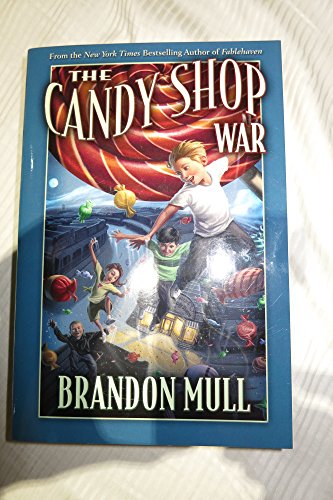
Brandon Mull’s The Candy Shop War series combines contemporary adventure with secret magic, following a group of children who discover that certain sweets can temporarily give them extraordinary abilities. What begins as the fantasy of every candy-loving child quickly becomes more dangerous when the friends realize that the adults supplying the magical treats have their own agendas. The series begins with The Candy Shop War and continues with Arcade Catastrophe and Carnival Quest.
The first book introduces Nate Sutter, who has recently moved to the town of Colson, California. He becomes friends with Trevor, Summer, and Pigeon, and the four children soon discover a new candy store operated by the mysterious Belinda White. Mrs. White appears friendly and takes a particular interest in the group, eventually introducing them to sweets unlike anything available in an ordinary candy shop.
These treats produce remarkable effects. Different candies can grant abilities such as enhanced jumping, unusual strength, or resistance to gravity. For Nate and his friends, experimenting with magical candy initially feels like an irresistible adventure. Mrs. White, however, does not give away such power without expecting something in return.
She begins sending the children on assignments. The tasks become progressively more questionable, forcing them to consider why she needs children with magical abilities to perform them. The discovery that Colson contains a hidden community of magical practitioners changes their understanding of both Mrs. White and the town around them.
One of the important figures they encounter is Sebastian Stott, another magical candy maker. Through him, the children learn that the power they have discovered is part of a much larger world and that the conflict surrounding Mrs. White involves an important magical object. The friends must decide whom they can trust while learning that magical assistance often comes with limitations and consequences.
Mull uses candy as a particularly effective system of magic because its appeal is immediate. The children do not need years of training before they can do extraordinary things; they can simply eat something. Yet the temporary nature of the effects means they must think carefully about when to use each treat. Having the right candy at the wrong moment can be as useless as having none at all.
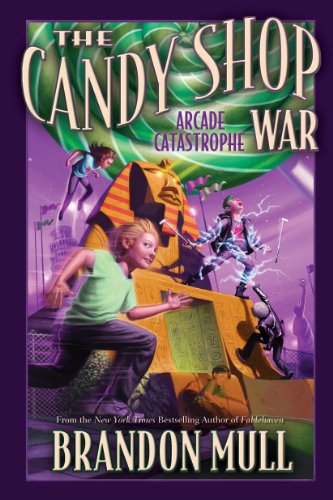
The second major adventure, Arcade Catastrophe, shifts the focus from a candy shop to an arcade. Nate and his friends investigate increasingly strange events involving an entertainment center and another set of magical powers. This time, enchanted arcade games and magical stamps become part of the conflict.
The new setting expands the series beyond the premise suggested by its title. Magical candy remains part of the world, but Mull establishes that magic can be delivered and controlled through other seemingly ordinary forms of childhood entertainment. The children also encounter new enemies and allies as they become more experienced with the hidden magical society operating around them.
Carnival Quest takes the same idea into another environment built to attract children: a carnival. Once again, something colorful and entertaining conceals a supernatural threat. By this point, Nate, Summer, Trevor, and Pigeon are no longer inexperienced children accidentally stumbling into magic. Their earlier adventures have made them valuable precisely because they understand that magical gifts rarely come without a purpose.
The changing locations give the books distinct identities. The candy shop, arcade, and carnival are all places associated with childhood fun, but Mull transforms each into a source of temptation and danger. The pattern reinforces one of the series’ central ideas: power is easiest to misuse when it is packaged as something harmless and desirable.
Friendship provides the stability beneath those changing magical threats. Nate may be the principal viewpoint character, but the group succeeds because its members have different strengths and because they learn to question situations together. Their loyalty is repeatedly tested when magical adults attempt to manipulate them, separate them, or offer them things they want.
The books are best read in publication order, beginning with The Candy Shop War, followed by Arcade Catastrophe and Carnival Quest. Each volume presents a substantial new adventure, but characters, relationships, magical knowledge, and consequences carry forward from the earlier books.
Compared with the expansive secondary worlds of Fablehaven, Beyonders, and Five Kingdoms, The Candy Shop War keeps magic unusually close to everyday life. Nate and his friends do not have to travel to a distant fantasy kingdom to encounter the impossible. It is waiting in shops, games, and attractions that look perfectly ordinary—until someone offers them a treat capable of changing what they can do.