
Below is the complete list of Lisa Unger’s Lydia Strong books in order. For this series, the chronological reading order is the same as the order of publication.
Publication Order of Lydia Strong Books
as Lisa Miscione



About Lydia Strong
Lisa Unger’s Lydia Strong series follows a bestselling true-crime writer whose investigations are driven by an intensely personal understanding of violent crime. Lydia’s mother was murdered when she was a teenager, and the trauma shaped both her career and her obsession with finding people responsible for similarly brutal acts. Across four novels—Angel Fire, The Darkness Gathers, Twice, and Smoke—Lydia develops from an independent investigator haunted by her past into one half of a close professional and personal partnership with former FBI agent Jeffrey Mark.
The books were originally published under Unger’s maiden name, Lisa Miscione, before later editions appeared under Lisa Unger. They represent the earliest substantial series in her bibliography and already contain many of the concerns that would define her later psychological thrillers: damaged memory, childhood trauma, missing people, predatory personalities, family secrets, and the unsettling persistence of violence long after the original crime.
Angel Fire introduces Lydia as a successful but reclusive crime writer who does far more than reconstruct cases on the page. When several socially isolated adults disappear without attracting much official attention, she becomes convinced that the cases are connected. Jeffrey Mark, a former FBI agent and longtime friend, assists her investigation. Their search gradually intersects with Lydia’s own history, particularly the serial killer Jed McIntyre, whose murder of her mother remains the defining event of her life.
Jeffrey becomes indispensable to the series because his relationship with Lydia develops beyond the familiar investigator-and-sidekick arrangement. He understands both her extraordinary instincts and the self-destructive tendencies created by her obsession with violent offenders. Their growing intimacy gives the novels an emotional continuity that persists even when the immediate cases change.
In The Darkness Gathers, Lydia receives an anonymous plea asking her to find a missing teenager named Tatiana Quinn. What appears to be another disappearance quickly expands into an investigation crossing national boundaries and involving people with considerable resources. At the same time, threats from Lydia’s earlier life demonstrate how difficult it is for her to separate professional investigation from unfinished personal danger.
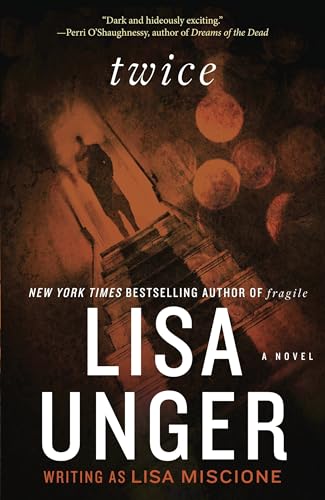
Twice places Lydia inside a particularly disturbing murder case involving artist Julian Ross. Julian is found beside her murdered husband, who has been killed in circumstances resembling the death of her first husband. As Lydia and Jeffrey examine whether coincidence, deception, or something more complicated connects the two killings, Jed McIntyre again becomes a direct threat. The collision between Lydia’s current investigation and the killer associated with her mother forces the long-running conflict with her past toward a reckoning.
By Smoke, Lydia and Jeffrey are married, but domestic stability does not remove them from violence. One of Lydia’s former writing students, Lily, disappears after attempting to contact her. The search becomes connected with questions surrounding the earlier death of Lily’s brother, whose supposed suicide she never believed. The novel was written as the final installment of the Lydia Strong sequence and closes the four-book arc.
Lydia differs from many conventional fictional detectives because investigation is inseparable from authorship. She studies killers professionally, writes about their crimes, and then enters cases herself, creating a dangerous feedback loop between observation and participation. Her empathy for overlooked victims is one of her strongest qualities, but the need to understand violent people can also pull her toward situations from which Jeffrey repeatedly tries to protect her.
The series remains an important foundation for Unger’s later work. Long before Ridley Jones, The Hollows, and her standalone psychological thrillers, Lydia Strong established a recurring pattern in her fiction: the past does not stay buried simply because a crime has been solved, and the people searching for truth are often carrying secrets and wounds as consequential as those belonging to the people they investigate.