
Below is the complete list of Max Brallier’s Last Kids On Earth books in order. For this series, the chronological reading order is the same as the order of publication.
Publication Order of Last Kids On Earth Books


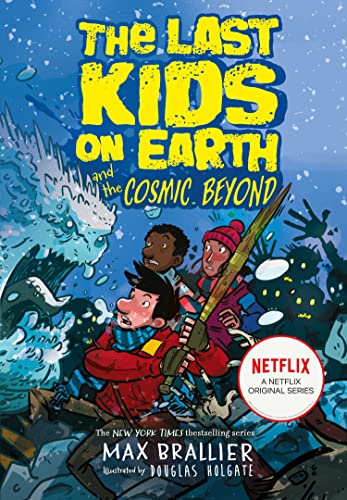


Publication Order of The Last Kids on Earth Graphic Novels Books

About Last Kids On Earth
Max Brallier’s Last Kids on Earth series turns a monster-and-zombie apocalypse into an exuberant middle-grade adventure about friendship, survival, and the strange freedom of a world without ordinary adult rules. Illustrated by Douglas Holgate, the books combine prose with extensive black-and-white artwork, giving the series the speed and visual energy of comics while sustaining a continuing novel-length story. What begins as one boy treating catastrophe like the ultimate video game gradually develops into a much larger conflict involving intelligent monsters, other dimensions, ancient threats, and the possible destruction of Earth.
At the center is thirteen-year-old Jack Sullivan, who initially survives the apocalypse from a fortified tree house stocked with scavenged snacks, video games, and improvised defenses. Jack’s self-appointed heroic identity is part confidence and part protection against a less secure emotional reality. He is soon joined by his brilliant best friend Quint Baker, tough former bully Dirk Savage, and June Del Toro, whose independence makes her far more than someone waiting to be rescued. Together they become a makeshift family, with the tree house serving as both headquarters and substitute home.
The opening novel establishes the basic pleasure of the series: monster battles, ridiculous weapons, quests, jokes, and the idea that surviving the end of civilization can resemble living inside an arcade game. The Zombie Parade begins widening the mythology when disappearing zombies suggest that the catastrophe has forces behind it that Jack does not understand. From there, the books become increasingly serialized. The Nightmare King challenges Jack’s fear that finding other survivors could break apart the only stable family he has known, while later installments expand the importance of supernatural powers, monster allies, the mysterious Tower, and Rezzoch the Ancient, Destructor of Worlds.
That progression is one of the series’ strongest features. The early volumes can feel like self-contained adventures with an accumulating background threat, but the larger narrative becomes more pronounced as Jack and his friends leave familiar territory. The Skeleton Road shifts the group into a road-trip phase, and subsequent books deepen the conflict around the Tower and the forces attempting to bring Rezzoch into their dimension. By The Monster Dimension and the tenth numbered novel, The Destructor’s Lair, the story has moved far beyond local survival in a ruined town. Jack and Quint are navigating another dimension while June and Dirk remain part of a conflict whose consequences reach across worlds.
Brallier keeps that growing scale grounded in the personalities of the four central characters. Jack is the enthusiastic narrator and aspiring hero; Quint approaches danger through invention and intelligence; June is capable, skeptical, and action-oriented; Dirk develops well beyond his initial role as a school bully. Their different temperaments give the books much of their comic rhythm, but friendship is not merely decoration between battles. Jack’s need to belong, his fear of losing people, and the group’s repeated decisions to trust one another provide an emotional structure beneath the spectacle.
The wider bibliography includes stories that sit between numbered installments. June’s Wild Flight, designated as Book 5.5, follows June and bridges events between The Midnight Blade and The Skeleton Road. Quint and Dirk’s Hero Quest, Book 7.5, gives those two characters their own adventure after The Doomsday Race and leads into The Forbidden Fortress. These are more closely tied to the continuing storyline than an ordinary activity book or optional novelty title.
The franchise has also expanded through Thrilling Tales from the Tree House, graphic adaptations, and the separate full-color Last Comics on Earth spin-off, in which Jack, June, Quint, and Dirk create their own comics. A Netflix animated adaptation further broadened the world beyond the original books. Across these formats, the core series remains distinctive for balancing escalating mythology with an uncomplicated central idea: four children confronting an impossible world by turning fear into games, quests, inventions, jokes, and a fiercely defended sense of family.