
Below is the complete list of Louis L’Amour books in order. For each series, the chronological reading order is the same as the order of publication.
Publication Order of Bowdrie Books

Publication Order of Chantry Books


Publication Order of Hopalong Cassidy Books


Publication Order of Kilkenny Books


Publication Order of Louis L’Amour’s Lost Treasures Books






Publication Order of Standalone Books


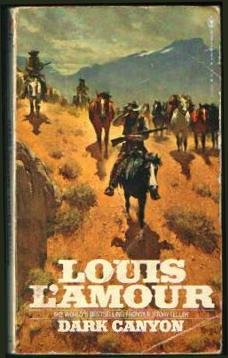
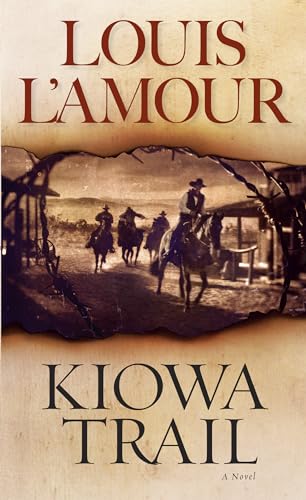


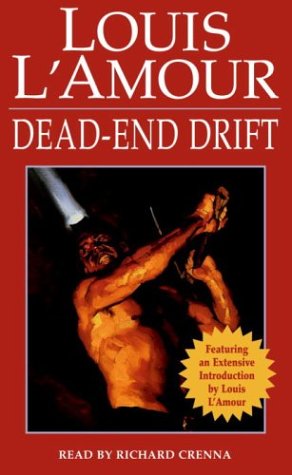


- Love and the Cactus Kid (1999)
Love and the Cactus Kid was published in 1999 and is listed as book #51 in the Standalone series. - Survival (1999)
Published in 1999, Survival is listed as book #52 in the Standalone series. 


- His Brother’s Debt (2008)
His Brother’s Debt was published in 2008 and is listed as book #56 in the Standalone series. 


- That Triggernometry Tenderfoot (2008)
That Triggernometry Tenderfoot was published in 2008 and is listed as book #61 in the Standalone series. 
- Unguarded Moment (2012)
Unguarded Moment is a 2012 release and appears as book #63 in the Standalone series. 


Publication Order of Short Stories/Novellas Books

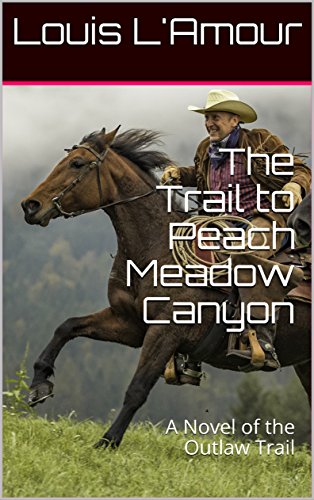
Publication Order of Short Story Collections Books


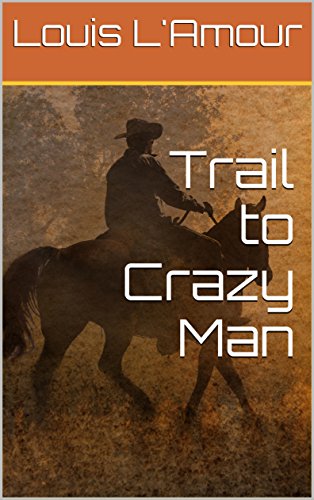


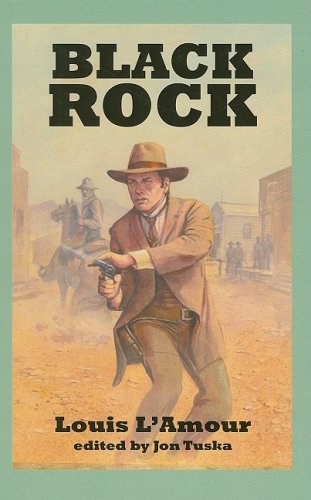


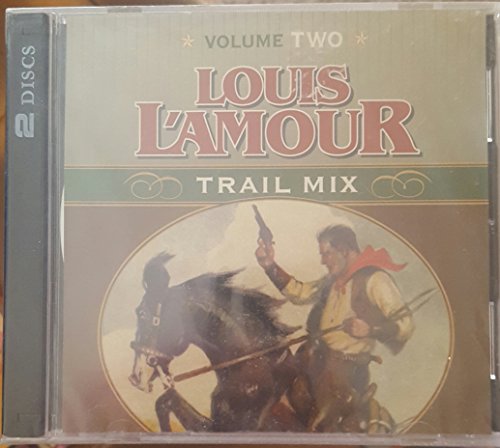


- Big Country, Vol. 3 (2010)
Published in 2010, Big Country, Vol. 3 is listed as book #37 in the Short Story Collections series. 


- We Shaped the Land with Our Guns (2014)
Published in 2014, We Shaped the Land with Our Guns is listed as book #42 in the Short Story Collections series. 

Publication Order of Non-Fiction Books


Publication Order of Talon Books


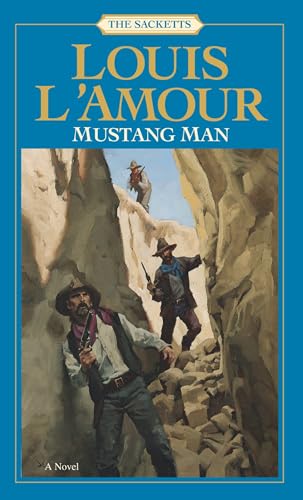
Publication Order of The Sacketts Books




Publication Order of The Golden West Books
with Zane Grey, Max Brand, Jon Tuska, Christopher Lane

About Louis L’Amour
Louis L’Amour was an American novelist and short-story writer whose name became synonymous with the Western, though his fiction also included historical adventure, frontier stories, crime, and poetry. Born Louis Dearborn LaMoore in Jamestown, North Dakota, in 1908, he built much of his reputation on stories of people confronting harsh landscapes, violence, isolation, and the demands of survival. His work frequently drew on American history and frontier experience, but he was less interested in romanticizing the West than in depicting individuals who had to rely on skill, judgment, endurance, and personal codes of conduct.
L’Amour left school as a teenager and spent years traveling widely during the Depression. He worked at numerous jobs, including as a cattle skinner, lumber worker, miner, merchant seaman, and professional boxer, while traveling across the United States and overseas. Those experiences later supplied settings, occupations, and practical details for his fiction. He was also a lifelong reader with a particular interest in history, geography, exploration, and primary accounts of frontier life, building an extensive personal library that became an important research resource.
His early ambition was not specifically to become a Western novelist. L’Amour wrote poetry, adventure stories, boxing fiction, and crime before finding sustained success in Western magazines. During the Second World War he served in the United States Army, working with a tank-destroyer unit in Europe. After the war he returned to writing at a time when Western fiction was flourishing in magazines, paperback originals, radio, and film.
One of his important early successes was the novel Hondo, developed from his short story “The Gift of Cochise” in connection with the 1953 John Wayne film. L’Amour increasingly concentrated on Western novels afterward, producing stories about gunfighters, ranchers, settlers, lawmen, drifters, prospectors, and families trying to establish themselves in dangerous territory. His books are generally fast-moving, but physical action is often grounded in practical knowledge of terrain, water, horses, weapons, travel, weather, and the economic realities of frontier communities.
The Sackett novels became the largest and most recognizable connected part of his bibliography. Rather than following one hero, they trace generations of the Sackett family from England and early colonial America through westward migration and settlement. Characters such as Barnabas, William Tell, Orrin, and Tyrel Sackett allow L’Amour to explore different periods of American expansion while giving the books a continuing family identity. The related Talon and Chantry stories further broaden the network of families and relationships surrounding the Sacketts.
L’Amour also wrote notable stand-alone works. Last of the Breed departs from the traditional American frontier by following a Native American Air Force pilot attempting to escape across the Soviet wilderness. The Walking Drum moves much further back in history, presenting an adventure across twelfth-century Europe and the Middle East. His unfinished education-and-survival novel The Haunted Mesa likewise demonstrates his willingness to move beyond conventional Western formulas.
By the time of his death in 1988, L’Amour had become one of the most commercially successful American popular writers of the twentieth century. He received the Congressional Gold Medal in 1983 and the Presidential Medal of Freedom in 1984. Numerous works continued to appear posthumously from manuscripts, stories, essays, and archival material.
L’Amour’s enormous bibliography is best understood through its recurring concerns rather than simply its volume. Whether writing about the Sacketts, an isolated gunfighter, a wandering sailor, or a historical adventurer, he repeatedly returned to people tested by unfamiliar country and difficult choices. His enduring Western identity grew from that combination of action, historical curiosity, and a belief that character is revealed most clearly when survival depends on what a person knows and is willing to do.