
Below is the complete list of Jo Nesbo’s Harry Hole books in order. For this series, the chronological reading order is the same as the order of publication.
Publication Order of Harry Hole Books





- The Leopard (2009)
The Leopard is a 2009 release and appears as book #8 in the Harry Hole series. 


About Harry Hole
Jo Nesbø’s Harry Hole series follows an Oslo police detective whose brilliance is inseparable from the qualities that make him nearly impossible to manage. Harry is obsessive, confrontational, contemptuous of bureaucracy, and capable of understanding violent offenders with unsettling intimacy. He also struggles with alcoholism, isolation, and a tendency to sacrifice his own stability whenever a case takes hold of him. The result is a crime series in which solving the murder rarely repairs the damage created along the way.
The sequence begins outside Norway. In The Bat, Harry travels to Sydney after a young Norwegian woman is murdered, while Cockroaches sends him to Bangkok to investigate the death of Norway’s ambassador. These early cases introduce his investigative instincts, addiction, and resistance to authority, but the series assumes its fullest identity after returning to Oslo with The Redbreast. From that point, Nesbø develops a continuing police world shaped by political history, institutional corruption, serial violence, and the darker divisions beneath Norway’s orderly public image.
Harry’s method is intuitive but not careless. He notices patterns, studies the psychology behind a crime, and pursues explanations that colleagues dismiss as improbable. His ability to think like the person he is hunting gives him an advantage, yet it also exposes him to the same obsessions, appetites, and moral compromises he investigates. He frequently recognizes evil because he understands the impulse toward self-destruction, not because he stands safely outside it.
The recurring characters provide the series with emotional and professional continuity. Rakel Fauke is the central relationship of Harry’s private life, while her son Oleg becomes the closest thing he has to a child of his own. Their presence offers him the possibility of family, but his work, drinking, and inability to leave danger alone repeatedly threaten that future. Within the police, figures including Beate Lønn, Bjørn Holm, Katrine Bratt, and psychologist Ståle Aune contribute specialized skills while responding differently to Harry’s methods and instability.
The books become increasingly interconnected as they progress. The Redbreast, Nemesis, and The Devil’s Star contain a continuing thread involving corruption within the Oslo police, while later novels carry forward the consequences of Harry’s relationships, professional failures, injuries, and losses. Characters change positions, leave the force, return under different circumstances, or become central to later investigations. A revelation in one book may transform the emotional foundation of the next.
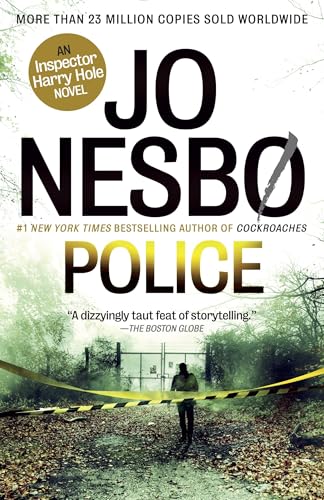
Nesbø also changes the type of threat without abandoning the series’ central character study. The Snowman gives Harry one of his most recognizable serial-killer investigations, while The Leopard expands the scale and geographical reach of the hunt. Phantom places Oleg at the heart of a murder case, making Harry’s personal loyalties inseparable from the evidence. Police, The Thirst, and Knife continue pushing him between professional necessity and emotional collapse.
Killing Moon, the thirteenth published Harry Hole novel, finds him outside the police and attempting to disappear into alcohol in Los Angeles before circumstances draw him back to Oslo. His need to assemble an unofficial investigative team reflects how far he has moved from the conventional detective introduced in the opening books. He remains exceptionally capable, but official authority and personal certainty have both become increasingly difficult for him to retain.
Publication order is the strongest approach because the mysteries may be individually resolved, but Harry’s life never resets. His relationship with Rakel and Oleg, his standing within the police, and his accumulated grief shape every later case. Read sequentially, the series becomes not only an account of murders investigated, but a sustained portrait of a man who can understand almost any killer except the one living within himself.