
Below is the complete list of Jim Butcher’s Codex Alera books in order. For this series, the chronological reading order is the same as the order of publication.
Publication Order of Codex Alera Books



About Codex Alera
Jim Butcher’s Codex Alera series is a completed six-book epic fantasy sequence set in Alera, a world shaped by Roman-inspired politics, military discipline, frontier danger, and elemental beings known as furies. The series begins with Furies of Calderon and continues through Academ’s Fury, Cursor’s Fury, Captain’s Fury, Princeps’ Fury, and First Lord’s Fury. Compared with Butcher’s Dresden Files, Codex Alera is more traditional in scale and structure, but it shares the same strengths: fast plotting, tactical action, clear magical rules, escalating stakes, and a hero who survives by intelligence before power.
The central figure is Tavi, a young man from the Calderon Valley who appears to have no furycrafting ability in a society where almost everyone can bond with or command elemental furies. In Alera, those powers are not decorative magic. They shape status, military capacity, labor, politics, agriculture, healing, communication, and war. Earth, air, fire, water, metal, and wood furies influence nearly every part of public and private life, so Tavi’s lack of a fury makes him vulnerable, underestimated, and socially unusual.
That apparent weakness becomes the series’ engine. Tavi must think more carefully because he cannot rely on the powers others take for granted. He learns strategy, deception, diplomacy, courage, and improvisation under pressure. Butcher uses him as a classic underdog without making him passive. Tavi’s growth from frontier boy to student, agent, soldier, commander, and political figure gives the six books their long arc. The pleasure of the series lies partly in watching someone dismissed as powerless become dangerous through discipline, loyalty, and imagination.
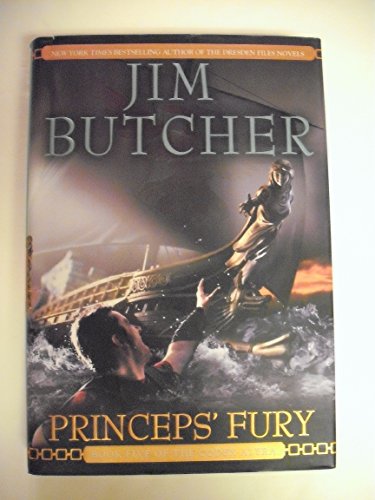
Furies of Calderon establishes the frontier setting and the threats surrounding Alera, including internal betrayal and external enemies. Academ’s Fury moves Tavi into the capital and the Academy, widening the political world while introducing deeper dangers beneath Aleran confidence. Cursor’s Fury and Captain’s Fury shift strongly into military and espionage territory, showing Butcher’s skill at battles, logistics, command decisions, and reversals. Princeps’ Fury expands the conflict beyond Alera itself, while First Lord’s Fury brings the sequence to its full imperial and existential conclusion.
The series is strongly cumulative, so publication order is essential. Each book changes Tavi’s position in the world, reveals more about his origins, and widens the reader’s understanding of Alera’s enemies and history. The Vord, in particular, give the later books a frighteningly alien threat: adaptive, collective, relentless, and difficult to understand through ordinary politics. Their presence pushes the series beyond court intrigue and border war into a struggle for survival.
Codex Alera also succeeds because of its ensemble. Characters such as Isana, Bernard, Amara, Fidelias, Kitai, Gaius Sextus, Max, Ehren, and others give the story emotional and political range. Kitai and the Marat are especially important because they challenge Aleran assumptions about civilization, loyalty, and power. Butcher repeatedly shows that Alera’s strength is real, but its arrogance can be dangerous.
The completed shape of the series is one of its advantages. Codex Alera has a clear beginning, expansion, escalation, and ending, making it satisfying for readers who want a finished epic rather than an open-ended fantasy world. It is a story about power, but also about the limits of inherited strength. Tavi’s journey argues that intelligence, adaptability, trust, and courage can matter more than the gifts a society knows how to measure.