
Below is the complete list of Amanda Flower’s Farm To Table Mysteries books in order. For this series, the chronological reading order is the same as the order of publication.
Publication Order of Farm To Table Mysteries Books


About Farm To Table Mysteries
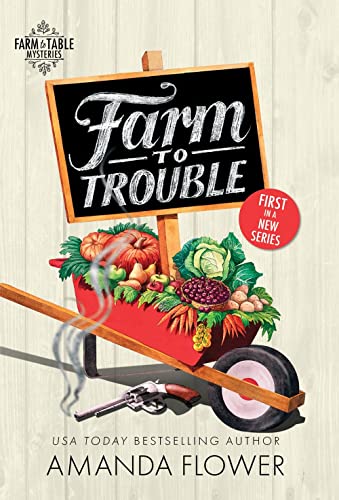
Amanda Flower’s Farm to Table Mysteries are a cozy mystery series set in rural Michigan and centered on Shiloh Bellamy, a woman who returns to her family farm determined to transform it into a sustainable farm-to-table business. Beginning with Farm to Trouble, the series combines murder investigations with agriculture, local food, family history, small-town politics, and the practical difficulties of rebuilding both a farm and a life.
Shiloh comes back to Bellamy Farm after years away, bringing ambitious plans for organic produce, community events, and a more modern business model. Her return is not simply a homecoming. The farm has financial problems, her father has his own ideas about how things should be done, and the surrounding community is not automatically convinced by Shiloh’s plans. Those tensions give the series a grounded foundation before the first murder investigation even begins.
In Farm to Trouble, Shiloh becomes entangled in a murder almost immediately after returning home. The crime threatens her reputation and the future of the farm, forcing her to investigate people she has known since childhood as well as newcomers whose motives are less obvious. Her position is particularly useful for a cozy mystery protagonist because farming connects her to suppliers, customers, neighboring landowners, local businesses, and town events.
Bellamy Farm itself becomes one of the series’ central elements. Flower treats agriculture as more than decorative scenery. Weather, crops, livestock, markets, land use, equipment, and finances all influence Shiloh’s daily decisions. Her farm-to-table ambitions also bring traditional farming practices into conversation with newer ideas about sustainability, tourism, and locally produced food.
The second book, Put Out to Pasture, expands the community surrounding Shiloh while placing another murder close to one of the farm’s public events. As Shiloh works to make Bellamy Farm financially viable, inviting people onto the property becomes necessary for the business—and also creates opportunities for old conflicts to surface. Flower uses festivals and community gatherings effectively because they put residents who might otherwise avoid one another into the same place.
Later mysteries continue combining seasonal farm activity with suspicious deaths. Shiloh’s business develops incrementally rather than succeeding overnight, giving the series an ongoing practical arc alongside the crimes. Each improvement to the farm brings new responsibilities, new relationships, and occasionally new reasons for someone to resent what she is trying to build.
Family continuity is equally important. Shiloh’s decision to return home forces her to reconsider her relationship with her father and the expectations attached to Bellamy Farm. The property represents family history, but Shiloh cannot preserve it simply by repeating the past. Much of her personal conflict comes from trying to respect what earlier generations created while making changes necessary for the farm to survive.
Flower also develops Shiloh’s friendships and romantic life across the series. These relationships give the books continuity beyond individual cases and prevent each installment from functioning as a complete reset. People who initially seem peripheral can become increasingly important as Shiloh settles back into the community and rebuilds connections she left behind.
Compared with Flower’s Amish Candy Shop and Amish Matchmaker Mysteries, the Farm to Table series places less emphasis on Amish culture and more on contemporary rural economic life. The setting is still warm and community-oriented, but the books repeatedly acknowledge how difficult small farming can be. Financial pressure, land ownership, development, local businesses, and changing ideas about agriculture can all become sources of conflict.
The mysteries themselves remain firmly within cozy territory. Violence is not graphically emphasized, and Shiloh relies primarily on observation, conversations, local knowledge, and persistence. Her investigations often succeed because she understands how people, property, and community history fit together rather than because she possesses specialized forensic expertise.
Publication order is the best way to read the Farm to Table Mysteries. Each murder is resolved within its own book, but Bellamy Farm’s transformation, Shiloh’s family relationships, her business plans, and her place within the community develop gradually. Starting with Farm to Trouble provides the necessary context for why restoring the farm matters so much to her.
At its heart, the series is about restoration in several senses. Shiloh is trying to restore family land, repair strained relationships, create a sustainable livelihood, and reclaim a place in a town she once left behind. Murder repeatedly complicates those plans, but it also exposes the histories and loyalties buried beneath the surface of the community she is learning to call home again.