
Below is the complete list of Jeffery Deaver books in order. For each series, the chronological reading order is the same as the order of publication.
Publication Order of Broken Doll Books


Publication Order of Colter Shaw Books


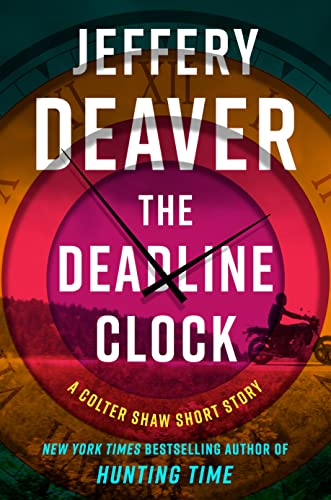


Publication Order of John Pellam Books
as William Jefferies


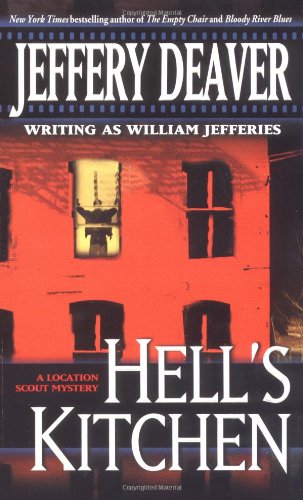
Publication Order of Kathryn Dance Books


Publication Order of Lincoln Rhyme Books


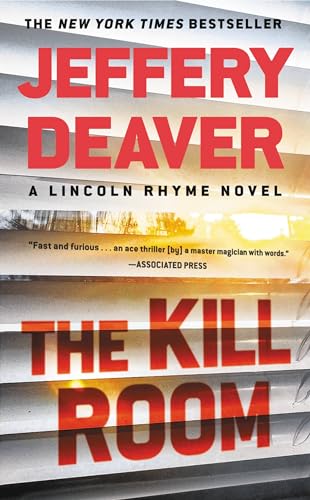


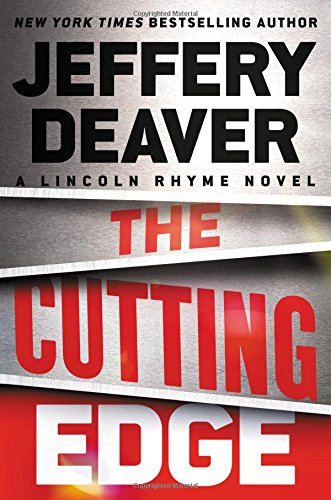


Publication Order of Lincoln Rhyme Short Stories/Novellas Books
with John Sandford


Publication Order of Lucas Davenport vs. Lincoln Rhyme Short Stories/Novellas Books
with John Sandford
Publication Order of Rune Books


Publication Order of Sanchez & Heron Books
with Isabella Maldonado



Publication Order of Special Agent Constant Marlowe Books


Publication Order of Unsettling Books


Publication Order of Standalone Books
- Voodoo (1988)
Voodoo was published in 1988 and is listed as book #1 in the Standalone series. - Always A Thief (1988)
Published in 1988, Always A Thief is listed as book #2 in the Standalone series. 








Publication Order of Short Stories/Novellas Books

- Triangle (1999)
Published in 1999, Triangle is listed as book #2 in the Short Stories/Novellas series. - The First Day of School (2002)
The First Day of School is a 2002 release and appears as book #3 in the Short Stories/Novellas series. - A Dish Served Cold (2006)
A Dish Served Cold was published in 2006 and is listed as book #6 in the Short Stories/Novellas series. 
- Trick or Treat (2008)
Trick or Treat is a 2008 release and appears as book #8 in the Short Stories/Novellas series. 


- Track Day (2016)
In the Short Stories/Novellas series, Track Day is book #19 and was published in 2016. - The Incident of 10 November (2016)
The Incident of 10 November was first published in 2016; within the Short Stories/Novellas series, it is listed as book #20. - Circumstantial (2018)
Circumstantial is a 2018 release and appears as book #23 in the Short Stories/Novellas series. - Connecting the Dots (2019)
Published in 2019, Connecting the Dots is listed as book #27 in the Short Stories/Novellas series. 











Publication Order of Short Story Collections Books

- Dead Ends (2024)
Dead Ends was published in 2024 and is listed as book #6 in the Short Story Collections series.

Publication Order of Non-Fiction Books

Publication Order of Akashic Noir Books

Publication Order of Bibliomysteries Books

Publication Order of Harold Middleton Books


Publication Order of Hush Collection Books

Publication Order of James Bond Books

Publication Order of Transgressions Books

About Jeffery Deaver
Jeffery Deaver is an American thriller writer best known for the Lincoln Rhyme series, the forensic-crime sequence that began with The Bone Collector and established him as one of the most technically precise plotters in modern suspense fiction. His books are built around reversals, concealed motives, forensic detail, procedural pressure, and elaborate games of misdirection. Deaver’s signature is not merely the twist ending; it is the sustained sense that every witness statement, object, timeline, and assumption may have been arranged to mislead both the investigator and the reader.
Born in Illinois, Deaver trained first as a journalist and later as a lawyer, earning a journalism degree from the University of Missouri and a law degree from Fordham University. Before becoming a full-time novelist, he worked in journalism, practiced law, and also performed as a folk singer. Those varied experiences left visible marks on his fiction. His journalism background shows in the clean pace and factual texture of his scenes; his legal training appears in the precision of argument, evidence, and adversarial strategy; and his performance instincts can be felt in the theatrical structure of his plots.
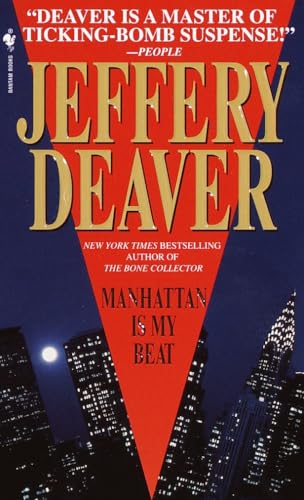
Deaver’s early career included the Rune novels, beginning with Manhattan Is My Beat, and the John Pellam books, beginning with Shallow Graves. These early series already showed his interest in media, performance, investigation, and characters who move through unstable urban or professional worlds. His wider breakthrough came with Lincoln Rhyme, the brilliant quadriplegic forensic criminalist introduced in The Bone Collector. Rhyme’s partnership with NYPD detective Amelia Sachs gave the series its durable center: one character largely confined physically but intellectually ferocious, the other moving through dangerous crime scenes as his eyes, hands, and field partner.
The Lincoln Rhyme novels became Deaver’s defining work because they combine forensic science with relentless plot engineering. Rhyme is not a conventional detective hero. He is abrasive, impatient, exacting, and often difficult, but his mind is superbly disciplined. Sachs brings courage, instinct, and emotional force to the investigations, and their evolving partnership gives the series continuity beyond each individual case. Books such as The Coffin Dancer, The Empty Chair, The Vanished Man, The Cold Moon, The Broken Window, and later entries broaden the series through assassins, illusionists, data crimes, old enemies, and forensic puzzles designed to test Rhyme’s certainty.
Deaver has also built major work outside Rhyme. The Kathryn Dance novels focus on kinesics and interrogation through a California Bureau of Investigation agent skilled at reading behavior. The Colter Shaw series, beginning with The Never Game, follows a professional reward-seeker whose survivalist upbringing and analytical methods give the books a different rhythm from the Rhyme investigations. Shaw’s world is less laboratory-bound and more mobile, often shaped by missing persons, hidden communities, dangerous industries, and family secrets. The character also became the basis for the television series Tracker.
Deaver’s standalones and special projects show his range. The Devil’s Teardrop, The Blue Nowhere, The Bodies Left Behind, and Edge all use high-concept suspense premises, while Carte Blanche placed him within the James Bond continuation tradition. He has also written short fiction and collaborative thrillers, extending his interest in tightly constructed suspense across different formats.
Across his bibliography, Deaver’s central fascination is control: who has it, who thinks they have it, and how quickly it can be taken away. His best novels reward close reading because the story is usually doing two things at once: advancing the investigation and quietly preparing to overturn the reader’s confidence in what seemed obvious.