
Below is the complete list of John Le Carre books in order. For each series, the chronological reading order is the same as the order of publication.
Publication Order of George Smiley Books


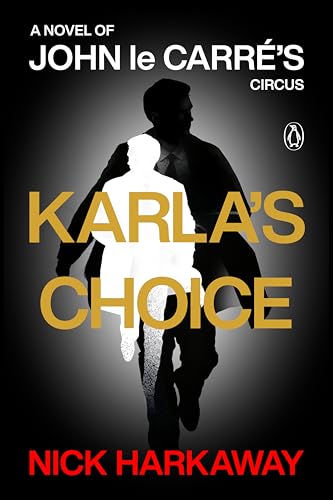
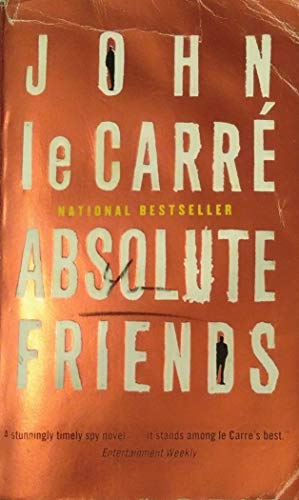
Publication Order of Standalone Books


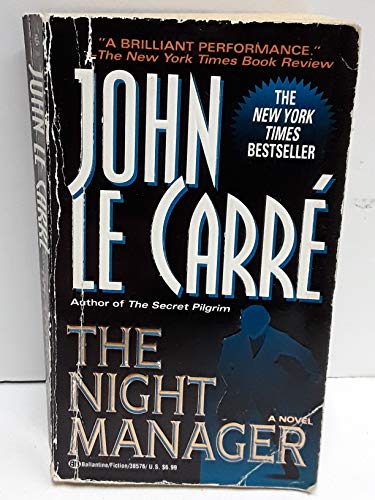
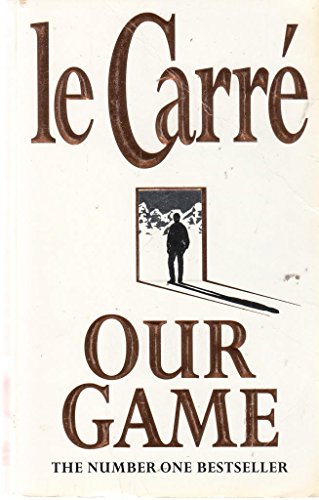

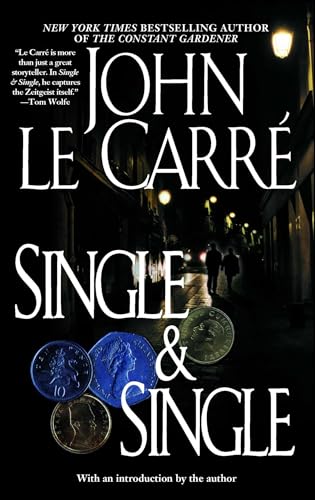



Publication Order of Short Stories/Novellas Books

Publication Order of Short Story Collections Books

Publication Order of Non-Fiction Books


About John Le Carre
John le Carré was the pen name of David John Moore Cornwell, an English novelist who transformed modern espionage fiction by replacing glamorous adventure with bureaucratic rivalry, divided loyalties, compromised agents, and the moral uncertainty of intelligence work. Born in Poole, Dorset, in 1931, he experienced an unstable childhood dominated by his father, Ronnie Cornwell, a charismatic fraudster who repeatedly moved between wealth, debt, schemes, and imprisonment. His mother left the family when he was young. Deception, performance, abandonment, and unreliable authority later became defining concerns in his novels.
Cornwell studied languages in Switzerland before completing his education at Oxford, where he read modern languages and became involved in intelligence-related work. After teaching briefly at Eton, he joined the British Foreign Service and served in both MI5 and MI6 during the Cold War. His duties gave him firsthand knowledge of surveillance, recruitment, interrogation, institutional secrecy, and the uneasy relationship between field agents and their superiors. Because he was still a government employee when he began publishing, he adopted the name John le Carré.
His first novel, Call for the Dead, appeared in 1961 and introduced George Smiley, a quiet, physically unimpressive intelligence officer whose patience and psychological insight made him unlike the heroic spies common in popular fiction. Smiley returned in A Murder of Quality, but it was The Spy Who Came in from the Cold that established le Carré internationally. Published in 1963, the novel presented espionage as a world in which governments manipulate their own people and apparent victories may depend upon betrayal, cruelty, and carefully maintained lies.
Smiley became the organizing figure of le Carré’s best-known fictional world, sometimes serving as principal investigator and sometimes appearing at its edges. His struggle against the Soviet spymaster Karla reaches its fullest expression in Tinker Tailor Soldier Spy, The Honourable Schoolboy, and Smiley’s People. These novels examine treachery within British intelligence while also portraying the service—known as the Circus—as an institution burdened by class assumptions, personal resentment, fading imperial confidence, and political dependence on the United States.
Le Carré’s fiction extended far beyond Smiley. A Perfect Spy, one of his most autobiographical novels, draws heavily upon his relationship with his father to portray a man whose talent for deception has consumed his identity. The Little Drummer Girl examines recruitment and political violence through an actress drawn into the Israeli–Palestinian conflict. After the Cold War, novels such as The Night Manager, The Constant Gardener, A Most Wanted Man, and Our Kind of Traitor turned toward arms dealing, corporate power, counterterrorism, financial corruption, and the compromises of Western foreign policy.
His style combined intricate plotting with close psychological observation. Intelligence operations mattered, but his deepest subjects were betrayal, misplaced loyalty, institutional self-protection, and the emotional cost of living through invented identities. His agents are rarely certain that their work serves justice, while idealists often discover that the organizations employing them are as morally compromised as their enemies. Le Carré also developed a distinctive professional vocabulary—most famously the Circus and its terminology—that made espionage feel like a complete social world rather than a collection of secret missions.
He published the autobiographical collection The Pigeon Tunnel: Stories from My Life in 2016 and continued writing into his final years. Le Carré died in Cornwall in December 2020 at the age of eighty-nine. His final completed novel, Silverview, was published posthumously in 2021 after his son Nicholas Cornwell, the novelist Nick Harkaway, helped prepare the manuscript for publication.
Most of le Carré’s novels stand independently, but the George Smiley books form a substantial connected body whose characters and institutional history accumulate across decades. Together with his later stand-alone works, they constitute a sustained critique of secrecy and power—and a portrait of people who become so skilled at deception that they can no longer separate professional duty from personal betrayal.