
Below is the complete list of Douglas Corleone books in order. For each series, the chronological reading order is the same as the order of publication.
Publication Order of Black Atlas Books


Publication Order of Kevin Corvelli Books


Publication Order of Paul Janson Books


Publication Order of Simon Fisk Books

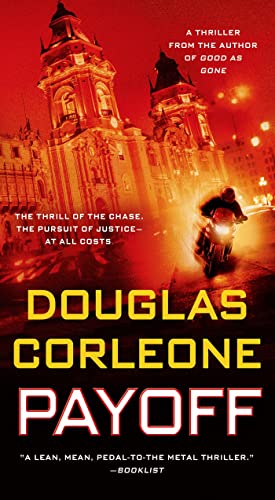

Publication Order of Standalone Books



About Douglas Corleone
Douglas Corleone is an American novelist whose work spans legal mysteries, international thrillers, psychological suspense, survival horror, and speculative disaster fiction. A former New York City criminal defense attorney, he draws on his legal experience without confining himself to courtroom narratives. His books are typically built around damaged protagonists, high-pressure investigations, and crimes whose emotional consequences reach beyond the immediate mystery. Hawaii, where he established his writing career, provides the setting for several of his novels and gives his early work a character distinct from more familiar mainland legal thrillers.
Corleone’s debut novel, One Man’s Paradise, won the Minotaur Books/Mystery Writers of America First Crime Novel Award and was a finalist for the Shamus Award for Best First Novel. It introduced Kevin Corvelli, a Honolulu defense attorney attempting to rebuild his career after a highly publicized professional collapse in New York. Corvelli is talented, cynical, self-destructive, and frequently uncertain whether his clients deserve the effort he invests in defending them. The series continues through Night on Fire and Last Lawyer Standing, combining criminal cases with the pressures of legal practice, local politics, personal compromise, and Corvelli’s uneven search for redemption.
Corleone moved from Hawaiian legal crime into international suspense with Good as Gone, the first novel featuring Simon Fisk. A former United States marshal, Fisk works privately to recover children taken overseas by estranged parents attempting to evade custody rulings. He refuses stranger-abduction cases because his own daughter disappeared years earlier, but the kidnapping of a young American girl in Paris forces him across that boundary. The resulting series follows him through European criminal networks, ransom operations, personal vengeance, and the continuing mystery that has shaped his adult life. Its broader geographical range and faster action distinguish it from the more sardonic, courtroom-oriented Kevin Corvelli novels.
His work with an established thriller franchise began when Robert Ludlum’s estate selected him to write The Janson Equation. The novel continues the Paul Janson series, following the former covert operative and his partner Jessica Kincaid into a conspiracy capable of provoking war on the Korean Peninsula. Corleone preserves the franchise’s interest in hidden power, manipulated intelligence, and international crisis while bringing his own emphasis on personal motive and damaged loyalties to the assignment.
Corleone has also written independent crime and suspense novels that do not require familiarity with his recurring characters. The Rough Cut combines a murder trial with documentary filmmaking, media ambition, and the manipulation of public narratives. More recent psychological thrillers such as Falls to Pieces and Live Through This center on secrecy, disappearance, grief, and the unstable stories people create around traumatic events.
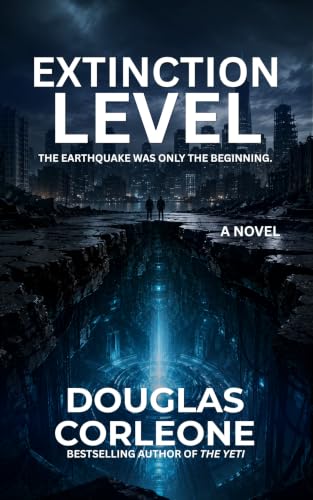
His bibliography has widened further into speculative fiction. The Yeti uses an Everest expedition as the setting for survival horror, while Extinction Level combines catastrophic destruction with a near-future threat to humanity. These books represent a genre shift rather than a complete break from his earlier work: isolation, pursuit, moral pressure, and characters confronting forces larger than themselves remain central.
Corleone’s books are best understood in distinct groups rather than as one connected universe. The Kevin Corvelli novels form a legal-crime sequence, the Simon Fisk books are international recovery thrillers, and The Janson Equation belongs within Ludlum’s continuing Paul Janson franchise. His standalones and speculative novels show a writer increasingly willing to move beyond conventional crime fiction while retaining the tight plotting, troubled protagonists, and escalating danger that established his career.